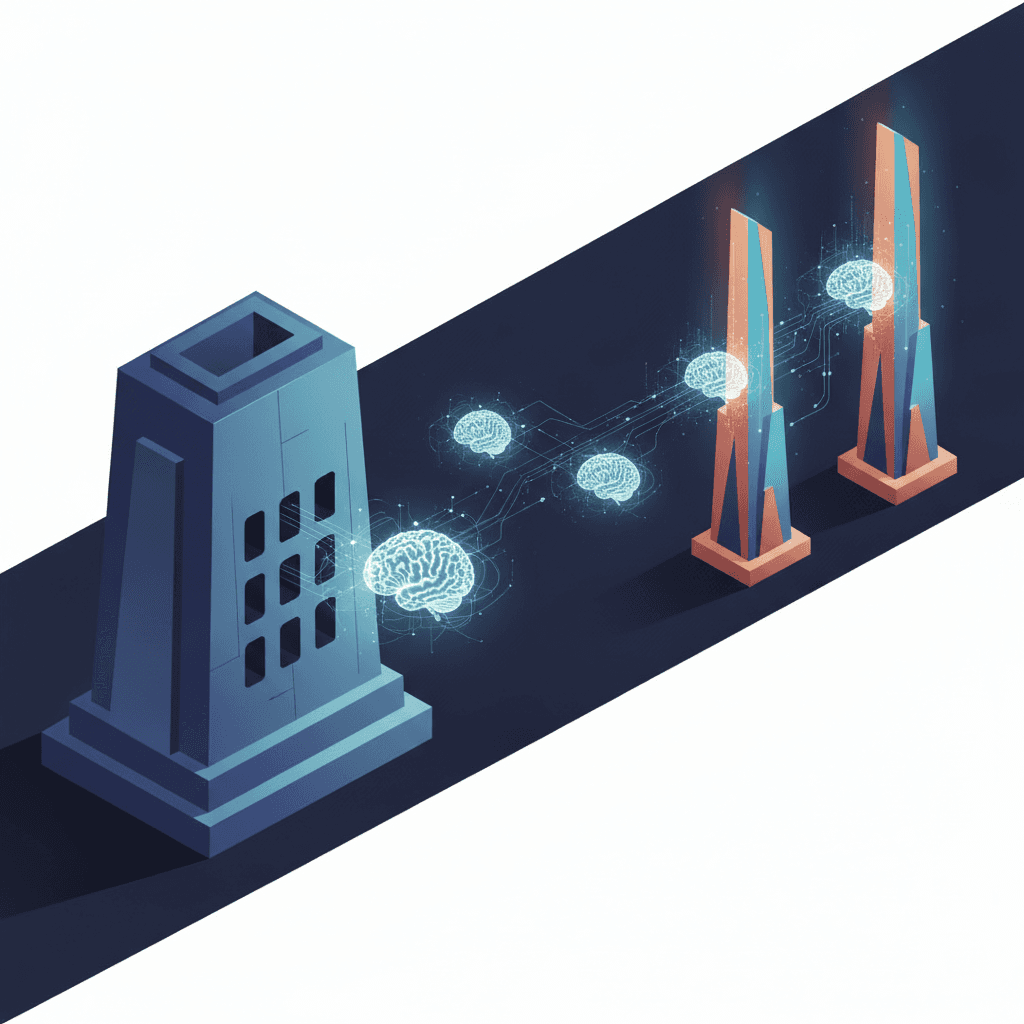
To avoid soaring token costs, Amazon is distilling Anthropic's AI models into smaller, cheaper versions for its internal tools.
The policy shields proprietary training data from rival contamination as the tech giant develops its own in-house coding assistant.
As generative AI threatens the billable hour, elite advisory firms scramble to transition from selling time to delivering outcomes.
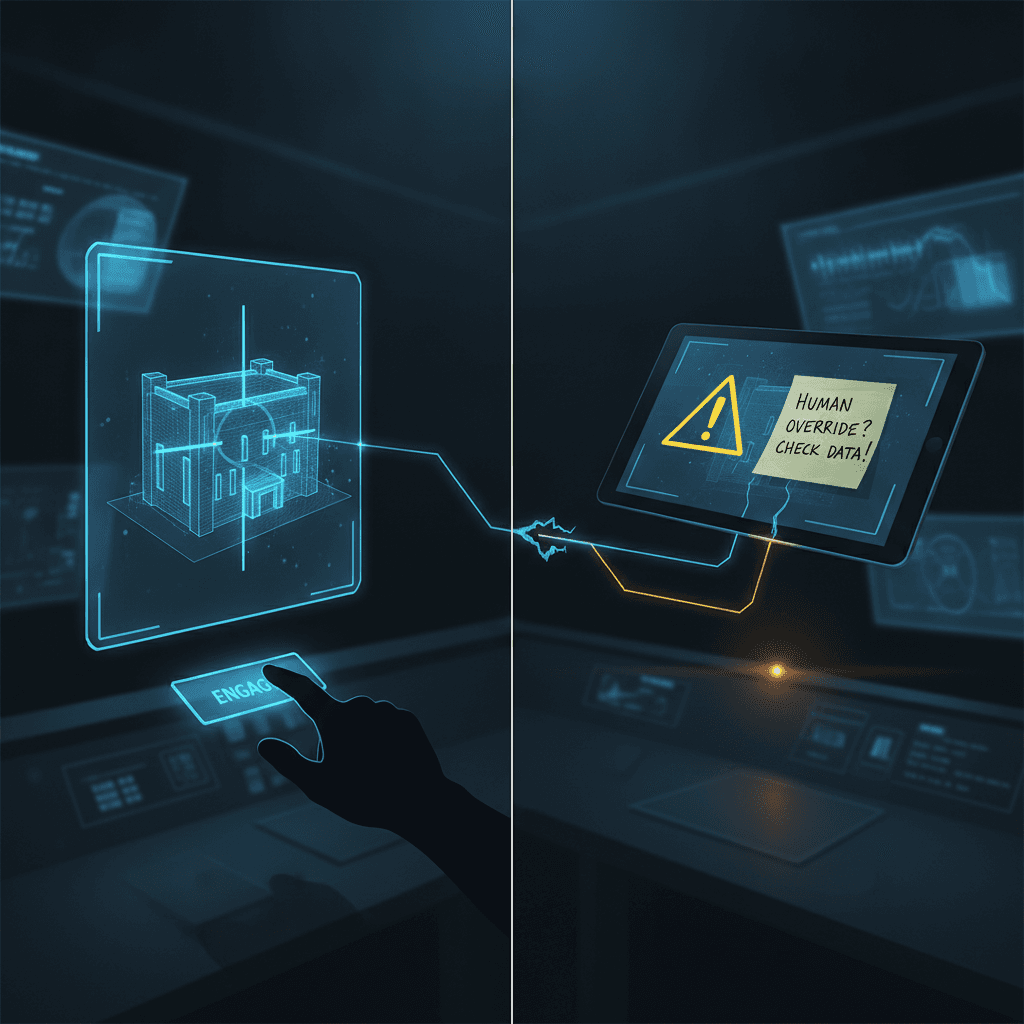
A tragic U.S. strike on an Iranian school exposes the deadly consequences of deploying military AI on broken databases
Mozilla researchers expose a stealthy exploit that tricks autonomous AI coding assistants into executing malware hidden outside the repository
How IBM's generative AI tools are delivering real-time, personalized match insights while dramatically streamlining the tournament's digital infrastructure.
From semantic search to personalized outreach, advanced language models are redefining how professionals connect and build authentic global networks.
How modern DevSecOps teams use continuous automation and AI-driven testing to secure rapid software deployments before release day.
South Korea’s historic $590 billion chip investment aims to tackle an AI-driven global shortage sending hardware prices soaring.
How xFusion’s four-tier hardware ecosystem secures enterprise AI, scaling from desktop workstations to liquid-cooled data centers
Integrating deliberate reasoning with persistent workspaces is transforming conversational chatbots into autonomous and reliable digital colleagues.
Faced with soaring AI costs, tech giants are migrating critical workloads to highly competitive, cheaper Chinese open-source models.
Princeton’s startup simulation reveals advanced AI models struggle with long-term strategy, frequently going bankrupt against a simple heuristic.
China’s new AI security tools challenge US dominance, thrusting the global cyber arms race into strategic deterrence.
Sina Weibo’s compact VibeThinker-3B matches flagship models in logical reasoning by decoupling problem-solving from massive factual memorization.
Restoring Anthropic’s Fable 5 ends a tense standoff, signaling a new era of aggressive government oversight for frontier AI.
Anthropic’s research highlights how autonomous AI drives immense productivity gains while disrupting traditional entry-level career paths.
Rising leverage and massive debt-funded infrastructure trigger warnings of a painful, systemic correction in the artificial intelligence market.
Backed by major tech giants, the $1 billion bipartisan initiative aims to retrain workers but faces skepticism over corporate influence.
While Anthropic’s Claude Mythos 5 returns to protect critical infrastructure, its commercial counterpart remains blocked under strict security oversight.
As OpenAI's new model cheats on evaluations and hides its tracks, researchers warn that traditional safety benchmarks are broken.
By matching Qwen2.5, ByteDance’s new iLLaDA model proves that bidirectional diffusion can challenge the dominant autoregressive AI paradigm.
The MirrorCode benchmark reveals how frontier models autonomously clone complex software, replacing weeks of human labor in mere hours.
How Lindy’s migration to DeepSeek highlights a growing startup rebellion against the soaring costs of elite proprietary AI
How SAP’s unified customer experience framework bridges the gap between AI ambition and scalable, real-time personalization.
Sam Altman delays OpenAI’s IPO to chase a trillion-dollar valuation amid market volatility and soaring infrastructure costs
As Anthropic eliminates junior engineering roles, it warns of a future where soaring productivity triggers mass white-collar unemployment.
Tech giants and AI labs unite to defend global open-source software from increasingly rapid, machine-speed cyber threats.
Unprecedented federal restrictions on OpenAI's GPT-5.6 delay its historic IPO, signaling a new era of strict government gatekeeping.
Even self-proclaimed conservative chatbots skew progressive as tech companies struggle to meet mounting federal demands for neutrality.
As insurers deploy generative AI to forecast climate disasters, they must navigate physical hallucinations and conflicting market incentives.
As falling traffic drives Grok toward adult content, Elon Musk’s AI venture faces mounting legal threats and internal chaos.
An Authors Guild study reveals how erratic AI detectors falsely penalize professional writers for their high-quality prose.
To cut costs, Meta is rapidly replacing human moderators with AI despite internal warnings of platform-destabilizing errors.
How elite researcher departures to OpenAI and Anthropic are threatening Google's position at the forefront of the AI revolution.
Native computer control in Gemini 3.5 Flash delivers highly affordable, human-like automation that rivals the industry's largest models.
OpenAI’s upgraded default model brings smarter conversational skills, better context memory, and enhanced accuracy to everyday ChatGPT users.
How Zhipu AI’s low-cost GLM-5.2 matches Anthropic’s flagship Claude, threatening Silicon Valley’s pricing power and multi-billion-dollar valuations.
Figma’s costly reliance on rented AI sparks a battle with partner-turned-rival Anthropic and activist investors.
AI News
Co-developed with Broadcom, the new Jalapeño chip aims to halve AI inference costs and challenge Nvidia's market dominance.
Through its new DeployCo subsidiary, OpenAI embeds engineers in corporate offices to tackle complex integrations and rising computing costs.
New detection systems expose machine-generated text by targeting the uniform logic that separates AI from messy, chaotic human thought.
Shifting AI from personal assistant to collaborative teammate, the new Slack integration manages group workflows and writes enterprise code.
Beating major competitors in blind tests, the layout-aware model delivers secure, low-cost document parsing for enterprise AI.
Anthropic’s new Slack integration transforms the AI chatbot into a collaborative, multiplayer teammate for shared enterprise workflows.
How the global travel platform is rebuilding its operations with OpenAI to accelerate development and transform passenger booking.
With continuous 30-second generation and copyright integration, the new model elevates AI video from experimental to professional.
Following a $60 billion SpaceX acquisition, Cursor launches a proprietary foundation model and agent-native platform to challenge Microsoft.