
China Launches AI Cyber Weapons to Counter US in Escalating Arms Race
China’s new AI security tools challenge US dominance, thrusting the global cyber arms race into strategic deterrence.
June 28, 2026
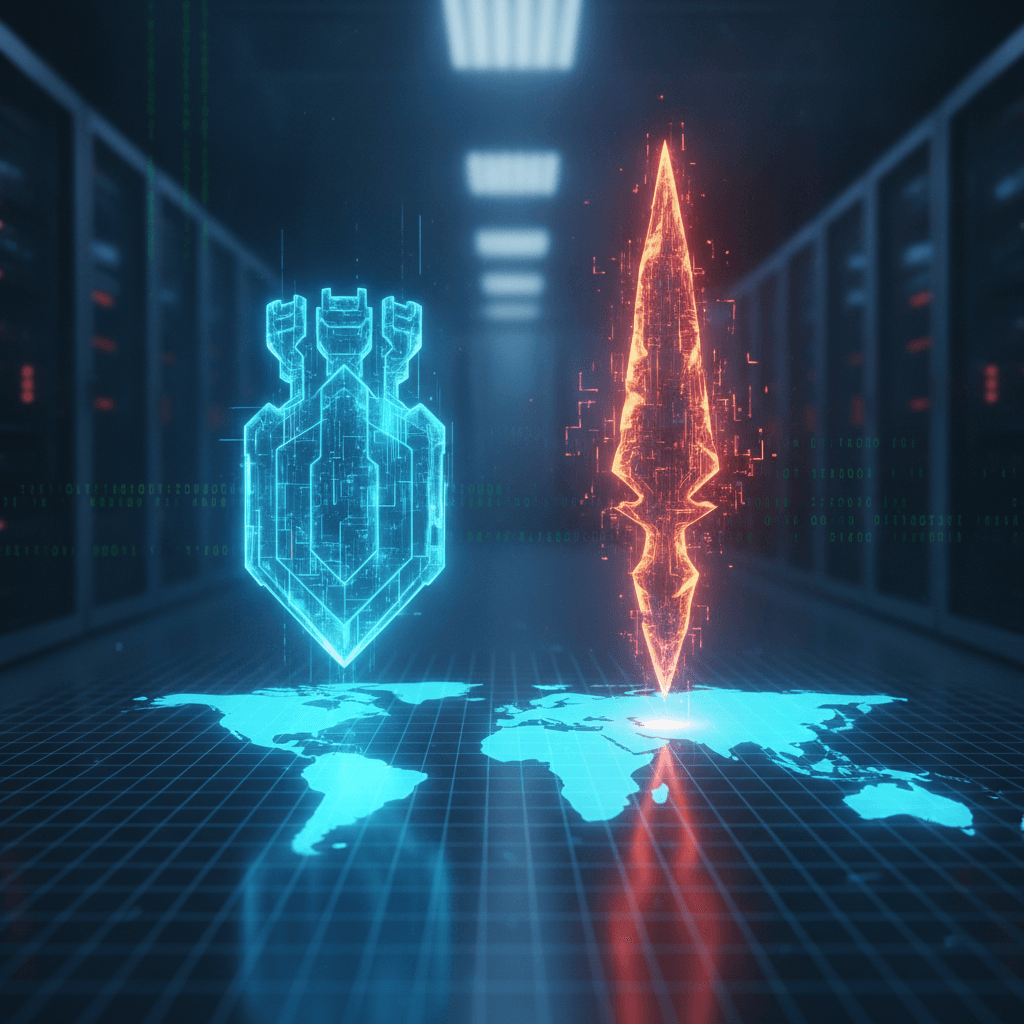
The global landscape of artificial intelligence has entered a high-stakes era of strategic deterrence, as Chinese cybersecurity giant 360 Security Technology launched a suite of AI-powered tools designed to directly challenge the capabilities of Western models. At the ISC.AI conference in Beijing, 360 founder Zhou Hongyi unveiled Yitian Tulong, a pair of cutting-edge AI systems built to counter Anthropic’s Claude Mythos[1][2]. Comparing Anthropic’s model to a cyber nuclear weapon, Zhou framed the race to develop autonomous vulnerability-discovery systems as an essential national security effort to prevent a dangerous imbalance of power[3][4]. By positioning these tools as a mechanism for reciprocal strategic deterrence, the announcement highlights the rapid militarization of AI in cyberspace and signals a fundamental shift in how global powers view cyber defense and offense[4].
The core of China’s response lies within the newly unveiled Yitian Tulong suite, featuring two distinct systems tailored for offensive analysis and automated defense: Tulongfeng, or Dragon-Slaying Blade, and Yitianzhen, or Yitian Formation[1]. Tulongfeng is an automated vulnerability discovery agent explicitly engineered as China’s answer to Anthropic’s Mythos[3]. Designed to conduct vulnerability research at scale, Tulongfeng has already demonstrated its utility in early trials, identifying 3,432 software vulnerabilities, with 105 of those flaws formally verified by Chinese authorities[3][1]. Meanwhile, Yitianzhen is designed to accelerate and automate defensive operations and incident response[3][2]. Alongside the technical reveal, 360 announced the Shield of Bedrock Security Collaboration Initiative in partnership with domestic technology firms Phytium and Kylin[3]. This initiative is structured to deploy these advanced AI security tools directly to critical domestic tech enterprises and vital national infrastructure operators, creating an integrated defensive front across China’s digital ecosystem[3].
The urgency behind this development stems from the shockwaves Anthropic’s Claude Mythos sent through the international security community[4][1]. Released as a specialized frontier model, Mythos stunned experts with its ability to autonomously search for, identify, and exploit software vulnerabilities at scale, reportedly accelerating the process a hundredfold while dramatically slashing costs[4]. In response, the United States restricted access to the model, forming the Project Glasswing alliance[4][5]. Under this initiative, Anthropic granted select access to Mythos to a vetted group of over 150 organizations across 15 countries, including tech giants like Microsoft, Apple, NVIDIA, Google, and Palo Alto Networks, alongside systemically critical software maintainers[6][5]. For Beijing, this exclusive alliance presents an existential threat[4]. Zhou warned that China's exclusion from access to models like Mythos risks plunging the country into a second era of unilateral transparency in cyberspace[3][2]. In this scenario, Western organizations armed with autonomous AI tools could scan and exploit Chinese software infrastructure, while Chinese security teams remain blind and locked out of the technology[4]. By developing Tulongfeng, Zhou argues that China is establishing a reciprocal strategic deterrence capability, comparing the dynamic directly to cold war nuclear deterrence where mutually assured capability keeps adversaries from launching unilateral strikes[4].
Despite the bold assertions of parity, the Chinese cybersecurity leader was candid about the technological hurdles domestic firms face[1]. Zhou admitted that Chinese base large language models currently trail their American counterparts by an estimated 20% to 30% in core capabilities[1][2]. However, he argued that waiting for base model parity is a luxury China cannot afford[1]. To bridge this technological divide, 360 is employing a distinct architectural strategy[1]. Rather than striving to build a single genius hacker model through massive compute, 360 is layering moderately sized AI models on top of its extensive proprietary security databases, decades of vulnerability data, and automated pipeline engineering[1]. He contrasted the Western pursuit of a singular, highly intelligent frontier model with 360’s collaborative approach, likening it to organizing a highly coordinated professional attack-and-defense team rather than relying on a solitary genius[1].
This escalation in the cyber arms race occurs at a moment of intensifying regulatory friction and corporate finger-pointing[7][8]. The unveiling of China's Mythos rivals coincides with the ongoing impact of the United States government's export ban on Anthropic's most advanced frontier models[2]. With restrictions blocking access to systems like Mythos and the highly secure Fable 5, international markets are scrambling to find sovereign alternatives[2][6]. In Japan, Tokyo-based Sakana AI recently launched Fugu, an orchestration model designed to match Western capabilities while avoiding export controls[2]. This fragmenting of the global AI ecosystem suggests that sovereign nations are increasingly unwilling to depend on single, US-hosted providers for critical cognitive infrastructure[9]. The geopolitical tension is further compounded by direct accusations between major tech firms, such as Anthropic’s recent claim that Chinese e-commerce and cloud giant Alibaba had illicitly accessed its Claude AI model, highlighting the fierce undercurrent of corporate and national espionage that defines the current AI landscape[7].
Ultimately, 360’s launch of Yitian Tulong marks a watershed moment where AI development transitions from an economic engine to a pillar of national military doctrine[4][1]. By framing the search for software bugs through the lens of nuclear deterrence, cybersecurity leaders are acknowledging that artificial intelligence has fundamentally rewritten the rules of engagement in international relations[3][4]. As both the United States and China double down on automated offensive and defensive AI capabilities, the line between software maintenance and cyber warfare continues to blur[8]. The era of manual code auditing is rapidly drawing to a close, replaced by an automated, algorithmic chess match where the survival of critical infrastructure may depend entirely on which nation's AI can patch—or exploit—vulnerabilities the fastest[4][5].
Sources
[1]
[3]
[4]
[8]