
SpaceX Acquires Cursor Parent for Sixty Billion Dollars to Dominate Autonomous Software Engineering
Following a $60 billion SpaceX acquisition, Cursor launches a proprietary foundation model and agent-native platform to challenge Microsoft.
June 23, 2026
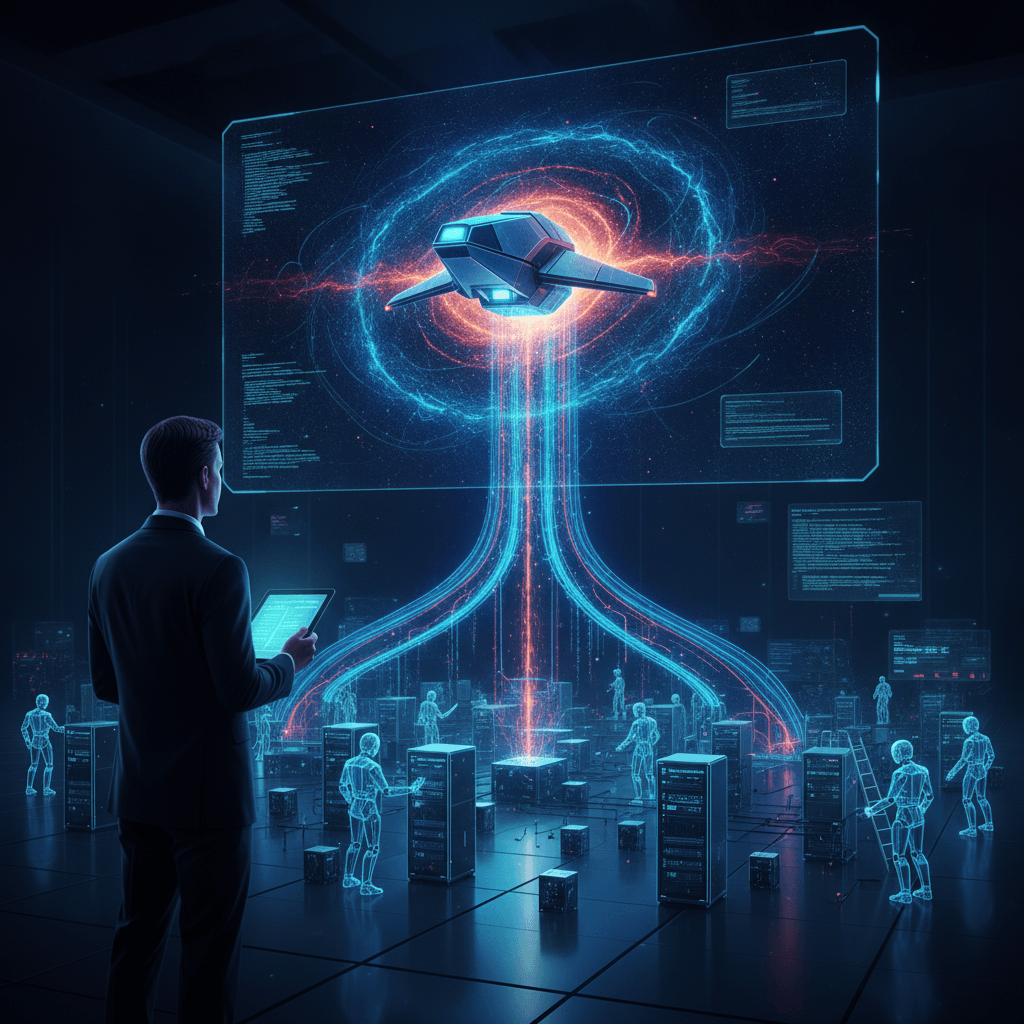
In a major bid to redefine the landscape of software engineering, AI-native programming assistant Cursor has unveiled a series of massive updates that position the platform at the forefront of the artificial intelligence race[1]. At its inaugural Compile developer conference in San Francisco, the startup announced three foundational pillars of its future roadmap: its first-party large language model trained entirely from scratch, an agent-native code-hosting platform called Origin, and an official mobile application[1][2]. This highly coordinated product rollout occurred alongside the blockbuster announcement that SpaceX has acquired Anysphere, Cursor's parent company, in a staggering sixty billion dollar all-stock transaction[3][4]. Together, these moves signal a profound structural shift in software engineering, marking the transition from human-centric programming environments to a vertically integrated, fully autonomous agentic development stack[5][6].
At the core of Cursor's new development paradigm is a massive, proprietary artificial intelligence model trained entirely from scratch[2]. The upcoming frontier model boasts more than one point five trillion parameters and is being trained on a massive compute cluster of over one hundred thousand GPUs, a feat made possible through the startup's integration with the Colossus infrastructure managed by SpaceX and its AI affiliate, xAI[7][8]. This shift to first-party training represents a crucial strategic pivot for Cursor[9]. In previous iterations, the company faced considerable scrutiny from the developer community when its Composer models were revealed to be continued pre-training wrappers built on top of third-party open-source systems[7][10]. By abandoning external base models and training its core intelligence in-house, Cursor is asserting its independence from other frontier labs[9][11]. The new model, which will be co-deployed within Cursor and Grok Build, leverages ten to twenty times more compute resources than the startup's previous training runs, allowing it to compete directly with the highest-tier models from OpenAI and Anthropic on complex, repository-wide reasoning and long-term planning tasks[7][2][12].
Beyond refining the intelligence behind its editor, Cursor is making a bold bid to challenge established code repositories with the introduction of Origin, a Git-compatible code-hosting platform built natively for autonomous AI agents[1]. While legacy version control platforms like GitHub were designed in an era when human programmers authored code in highly structured, sequential commits, Origin starts from the premise that the primary users of the codebase will increasingly be autonomous AI agents[5]. The platform is built on the technological foundation of Graphite, a code-review startup focusing on stacked pull requests and merge queues that Cursor acquired late last year[13]. In live demonstrations, Origin showcased the ability to handle extreme developer-agent concurrency, processing over twenty commits per second within a single repository alongside hundreds of thousands of repository clones and tens of thousands of pushes per hour[13][14]. By incorporating built-in, AI-powered automated merge conflict resolution and deep integration with the Model Context Protocol, Origin aims to become the definitive operating environment for high-throughput, agent-driven software development teams[15].
To complete this seamless development ecosystem, the startup also unveiled its official mobile application, allowing engineers to manage complex software operations on the go[1]. The new mobile app, which initially launched in beta via iOS TestFlight, enables developers to spin up, monitor, and direct cloud-based AI coding agents directly from a smartphone or tablet interface[16][2]. Rather than attempting to manually write lines of code on a small screen, developers can use natural language prompts to initiate entire feature builds, system-wide refactors, or intricate bug fixes[16][2]. While the agent executes these tasks in the background, developers can track progress through interactive visual updates and push notifications, or even integrate the agent with team communication platforms like Slack[16]. When the developer returns to their primary desktop setup, the agent's complete work is already waiting as a neatly organized pull request, drastically reducing context-switching and democratizing software creation for developers who are away from their desks[16][2].
The combination of a trillion-parameter foundation model, an agent-native version control platform, and mobile accessibility marks a significant escalation in the battle for the future of software development[1][2]. By assembling these pieces, SpaceX and Cursor are constructing a vertically integrated ecosystem that spans the entire software lifecycle, from the physical silicon and training supercomputers to the code editor, the AI reasoning engine, and the hosting infrastructure[6]. This comprehensive stack poses a direct threat to Microsoft's long-standing dominance with VS Code and GitHub[5][6]. Furthermore, it reflects a philosophical evolution in the tech industry, shifting from simple autocomplete assistants to autonomous fleets of agents where human engineers transition from active typists to orchestrators and high-level reviewers[17]. However, this level of vertical integration also raises concerns about vendor lock-in, with some developers expressing caution about handing over both their autonomous agent fleets and their raw code repositories to a single, highly centralized tech conglomerate[1][6].
Ultimately, Cursor's ambitious trifecta of announcements signals that the software engineering industry is crossing a major threshold[1][2]. The transition from isolated AI helper tools to a unified, agent-first ecosystem promises to accelerate the pace of software creation to speeds previously deemed impossible[5][17]. As these technologies roll out to the public later this year, the success of Cursor and its new corporate parent will depend not just on raw parameter counts or repository throughput, but on their ability to build a secure, reliable, and trustworthy platform that developers are willing to adopt[1][18]. What is certain is that the paradigm of software development has been permanently altered, and the race to define the next era of computing has entered its most competitive phase yet.
Sources
[1]
[2]
[4]
[5]
[6]
[9]
[10]
[11]
[12]
[13]
[14]
[15]
[16]
[17]
[18]