
Omio rebuilds as AI-native travel platform with OpenAI, boosting development speed by 80 percent
How the global travel platform is rebuilding its operations with OpenAI to accelerate development and transform passenger booking.
June 23, 2026
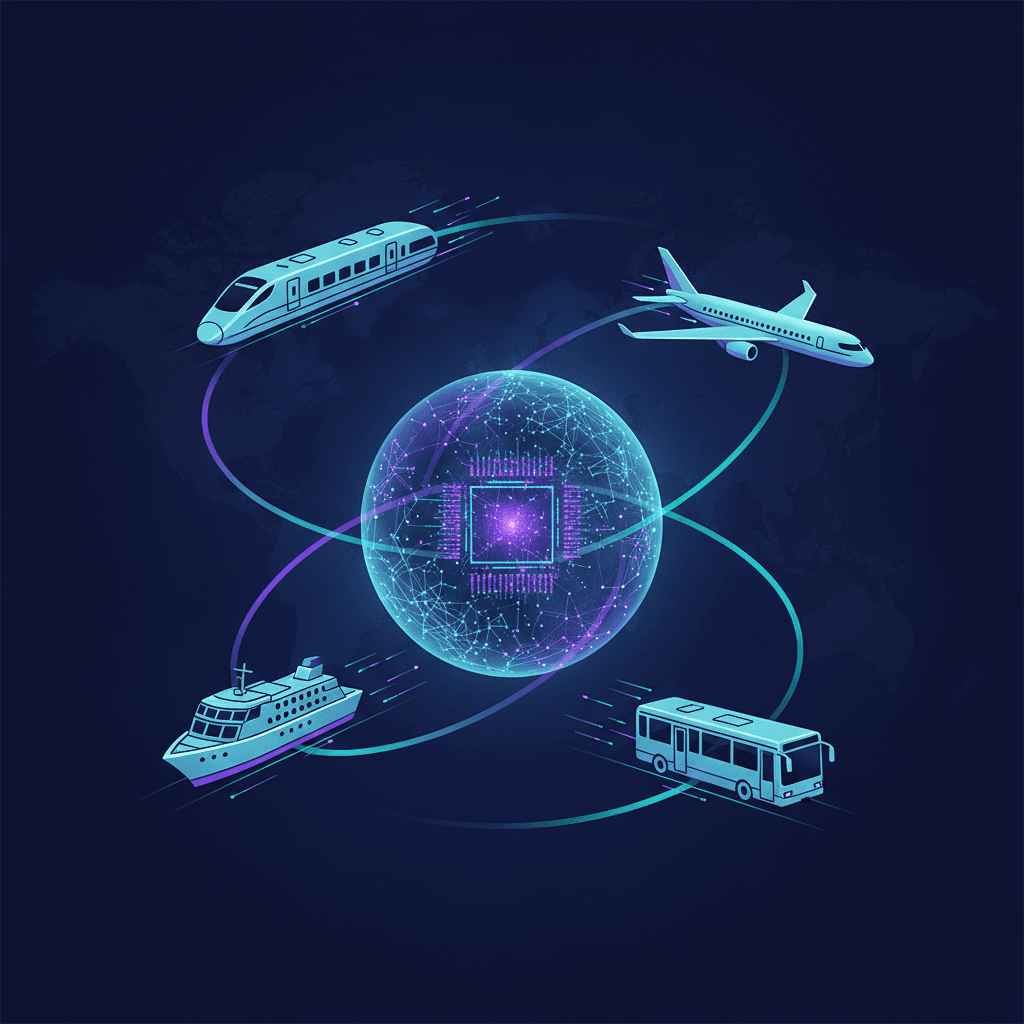
In an era where tech companies are rushing to adopt artificial intelligence, the multimodal travel platform Omio is charting a path that goes far beyond superficial integrations. Operating on a massive global scale, Omio connects millions of travelers with over three thousand transport providers—spanning trains, buses, flights, and ferries—across forty-seven countries[1][2]. Serving over one billion users annually, the company manages highly complex logistical and transactional data on a daily basis[2]. Under the technical leadership of Chief Technology Officer Tomas Vocetka, alongside Founder and Chief Executive Officer Naren Shaam, Omio has embarked on a profound operational transformation powered by OpenAI models[2][3]. The company’s core strategy explicitly rejects the standard industry practice of layering modern artificial intelligence tools on top of outdated internal legacy structures[3]. Instead, Omio is implementing a bottom-up redesign of its operational framework, converting the entire company into an AI-native enterprise[3]. By deeply embedding OpenAI's conversational and coding models into its internal workflows and consumer-facing applications, Omio is establishing a new benchmark for how global travel platforms can utilize artificial intelligence to accelerate product development, streamline engineering, and reshape the traveler experience[1][4].
At the heart of Omio’s tech-driven evolution is a complete overhaul of its internal engineering operations using OpenAI’s specialized models, particularly Codex[1][3]. Tomas Vocetka’s mandate required all internal functions to completely redesign their operational execution frameworks to operate natively with artificial intelligence[3]. The rollout began systematically, first by granting base ChatGPT access to the entire corporate workforce to foster experimentation and build a baseline familiarity with generative models[3]. Once this foundation was established, Omio proceeded to embed OpenAI Codex directly into its core engineering pipeline[3]. Today, every software engineer at Omio utilizes Codex throughout the entire software development lifecycle, applying the model to preliminary research, architectural planning, active coding, automated testing, code reviews, and ongoing system maintenance[3]. To maximize the impact, the engineering division constructed proprietary internal connectors that link Omio’s private databases directly to these AI tools[3]. This architecture allows developers to bypass basic information retrieval and proceed directly to active code execution within their integrated development environments[3]. By replacing traditional, fragmented development processes with this integrated AI workflow, Omio has reported that its engineering teams can now build and launch travel products up to eighty percent faster[5].
This organizational transformation has matured beyond technical divisions, expanding into non-technical corporate functions and establishing a robust model of human-in-the-loop governance[3][6]. Omio’s management is actively scaling the use of custom AI connectors across the wider business to streamline operations in logistics, marketing, and customer support[3][7]. Throughout this rapid scaling process, the company has maintained a strict principle regarding responsible deployment and operational safety[6]. Vocetka has emphasized that while artificial intelligence helps the company develop and analyze faster, final responsibility and accountability remain firmly with human employees[6]. This balance of broad, democratic access to OpenAI tools and structured human oversight ensures that the company can scale its operations without compromising quality or data security[6]. By building custom integrations that connect proprietary enterprise workflows directly to AI tools, Omio has transitioned from a model of information gathering to one of active execution[8]. This approach offers a critical blueprint for other global enterprises, showing that the true power of artificial intelligence is unlocked when human expertise is paired with highly automated, secure engineering systems[6].
The efficiency gains achieved within Omio’s internal operations have directly translated into pioneering consumer experiences, turning travel planning from a laborious multi-site search into a fluid, conversational journey[1]. Historically, travelers planning trips had to navigate multiple localized websites, weigh transit modes, and manually piece together disjointed itineraries[4]. To address this friction, Omio has leveraged its collaboration with OpenAI to launch a dedicated ChatGPT application, bringing its massive real-time multimodal travel search engine directly to ChatGPT’s global user base of over nine hundred million weekly active users[2]. This customer-facing platform is powered by OpenAI's advanced models, enabling passengers to plan, compare, and book journeys entirely within a conversational interface using natural language queries[2][9]. Travelers can ask highly specific questions, such as comparing the travel times of trains versus flights between major European cities or requesting the most budget-friendly ferry routes, and receive actionable, real-time results in seconds[2][9]. Naren Shaam has highlighted this shift as a fundamental turning point in the travel industry, noting that travel discovery is moving decisively from static search queries to dynamic, interactive conversations[2].
Omio’s deep integration of OpenAI models provides a compelling case study for the global technology sector as it navigates the transition from experimental AI pilots to enterprise-wide infrastructure[10]. At major international events, including the GITEX AI Europe conference, Vocetka and other tech leaders have discussed how large language models are rapidly becoming the new economic infrastructure of the continent[10]. Vocetka has noted that Europe's regulatory landscape and highly fragmented operational environment can actually serve as a competitive advantage[11]. Because European travel involves navigating diverse national transit networks, distinct regulatory rules, and multiple languages, it requires highly flexible and adaptable software architectures[11]. Artificial intelligence is uniquely suited to handle this complexity, allowing Omio to orchestrate bookings across thousands of disjointed regional transit operators seamlessly[1][2]. This demonstrates a broader implication for the global AI market: companies that focus on re-engineering their entire workflows to handle fragmented, real-world complexity will capture far greater value than those using AI simply as a superficial customer service layer[3][12].
Ultimately, Omio’s journey underscores a critical shift in how modern businesses must approach technological adaptation in the age of generative artificial intelligence[1]. By aligning its internal development pipelines with its consumer-facing conversational tools, the company has created an integrated, highly efficient ecosystem where product iteration and user feedback loop continuously[1][6]. This approach not only speeds up the time-to-market for new features but also ensures that the platform remains highly responsive to the shifting demands of modern travelers[1]. As artificial intelligence continues to mature, the success of travel tech companies will increasingly depend on their ability to build intelligent systems that anticipate passenger needs before a journey even begins[13]. Omio’s proactive stance demonstrates that the true measure of enterprise innovation lies in an organization’s willingness to dismantle traditional processes, proving that becoming AI-native is no longer a futuristic goal but an immediate operational necessity[2][3].