
Google Loses Elite AI Scientists to Rivals OpenAI and Anthropic, Threatening Its Market Dominance
How elite researcher departures to OpenAI and Anthropic are threatening Google's position at the forefront of the AI revolution.
June 25, 2026
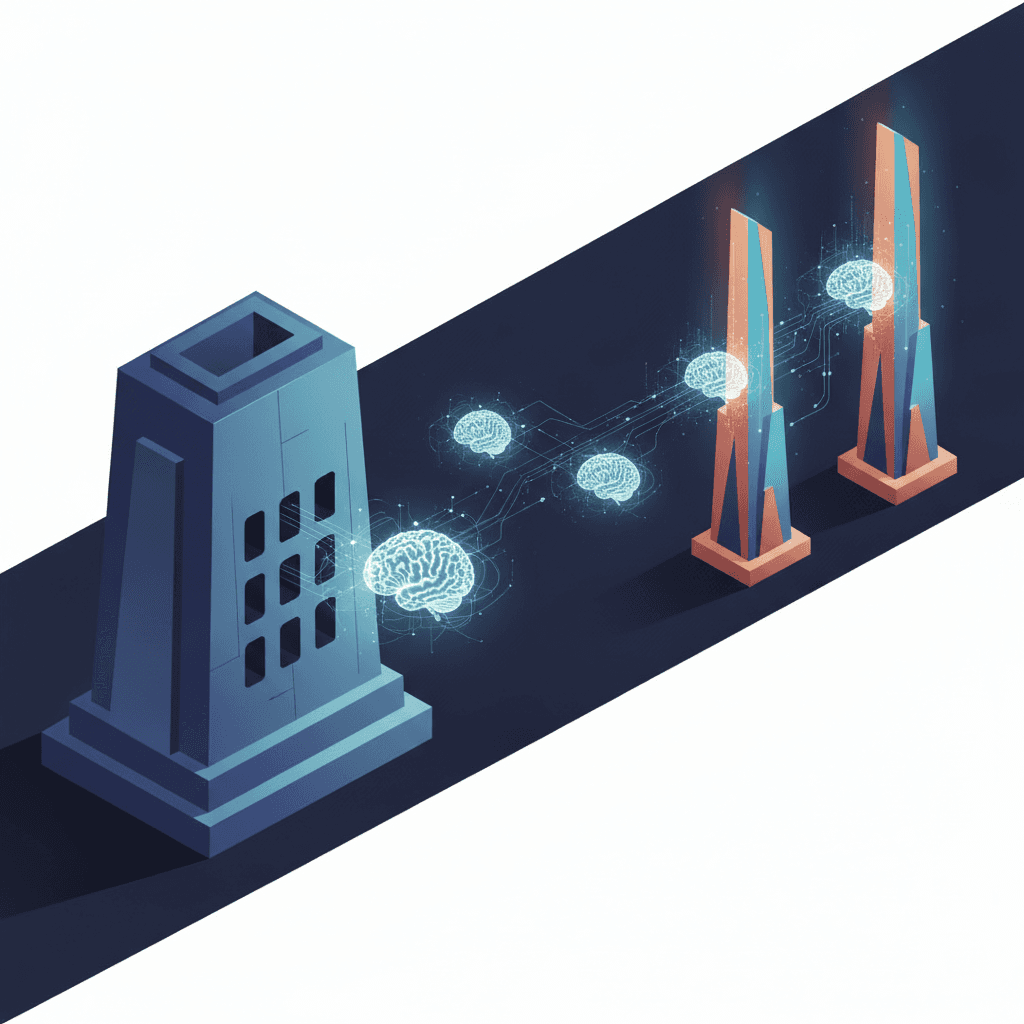
The competitive landscape of artificial intelligence is experiencing a seismic realignment as Alphabet's Google faces a high-stakes talent drain of its most celebrated researchers[1]. A succession of high-profile departures to prominent rivals like OpenAI and Anthropic has rattled investors and placed a spotlight on Google's internal research culture[2][3]. This talent migration is not merely a human resources challenge; it represents a major threat to the tech giant's ambitions of leading the generative AI era[4][5]. For a company that pioneered many of the foundational breakthroughs powering the modern AI boom, losing the very minds behind those innovations risks undercutting its market position[4][6]. The financial impact of this exodus was felt immediately on Wall Street, where Alphabet's stock experienced a sharp decline following reports of back-to-back exits[7][3]. As the industry races toward artificial general intelligence, the movement of these elite scientists serves as a leading indicator of where the next major technological breakthroughs are likely to occur[8][6].
The magnitude of Google's retention crisis is best illustrated by the loss of two of its most iconic figures within a span of just a few days[2][3]. Noam Shazeer, a co-lead of Google's flagship Gemini models and a co-author of the landmark academic paper that introduced the Transformer architecture, recently announced he was departing to join OpenAI[2][1]. Shazeer’s exit is particularly stinging for Google, which had paid a staggering two point seven billion dollars to acquire his startup, Character.ai, and bring him back into the fold less than two years prior[5][1]. Almost simultaneously, Google DeepMind suffered an equally devastating blow when John Jumper, a vice president of the division and recipient of the Nobel Prize in Chemistry, announced his departure for Anthropic[2][1]. Jumper achieved global renown for leading the development of AlphaFold, a revolutionary AI system capable of predicting protein structures that has transformed medical and biological research[7][6]. The consecutive departures of Shazeer and Jumper sent a clear signal that even Google's vast financial resources and historically prestigious reputation are no longer guaranteed to secure its top tier of talent[7][6].
Beyond these marquee names, the brain drain appears to be spreading deeper into the ranks of Google's core engineering teams[4][9]. Reports have emerged that two more senior AI researchers, Jonas Adler and Alexander Pritzel, are preparing to leave the company to join Anthropic, the developer of the Claude AI models[4][9]. Adler, who worked on Google’s advanced AI coding initiatives, and Pritzel, who specialized in training large-scale language models, were both recognized internally as vital contributors to the Gemini project[4][10]. This follows the earlier departure of David Silver, the highly respected researcher behind AlphaGo, who left the search giant to launch his own independent venture[11][5]. Because training frontier-class AI models requires highly specialized expertise in managing massive distributed computing networks, refining model architecture, and shaping behavioral outputs, losing multiple core contributors in quick succession leaves a void that is exceptionally difficult to fill[9][10]. The collective loss of these researchers threatens to slow Google's development cycles at a time when its competitors are releasing model updates at a relentless pace[12].
Several compounding factors explain why elite talent is increasingly looking outside Google's walls[4][13]. Insiders point to shifting organizational priorities and friction over the allocation of highly coveted computing resources as primary drivers of discontent[4]. In one notable instance, precious compute power dedicated to a project led by Shazeer was reportedly reassigned to a separate team at Google DeepMind shortly before his departure, reflecting the bureaucratic hurdles that often plague massive tech conglomerates[4]. Furthermore, smaller, highly focused startups like OpenAI and Anthropic offer researchers a level of operational agility that is difficult to maintain within Alphabet’s sprawling corporate structure[12][10]. There is also a powerful financial incentive at play; both OpenAI and Anthropic are widely viewed as being on the cusp of potential public offerings[4][13]. Joining these startups at this critical juncture offers researchers a rare opportunity for monumental financial windfalls through pre-initial public offering equity, a prospect that even well-compensated Big Tech employees find difficult to ignore[4].
This ongoing migration has created a stark competitive asymmetry that favors Google’s direct competitors, particularly Anthropic[14]. An analysis by the venture capital firm SignalFire revealed that researchers at Google DeepMind are approximately eleven times more likely to leave for Anthropic than the reverse[15][14]. This striking statistic underscores Anthropic's successful positioning as a premier, research-first laboratory that appeals deeply to academic-minded scientists[13][14]. By focusing heavily on the scientific applications of AI—such as the intersection of machine learning and biotechnology—Anthropic has managed to draw talent that aligns closely with projects like AlphaFold[13]. The broader implication for the technology sector is profound; because the global supply of scientists capable of training frontier-level artificial intelligence remains extremely limited, the concentration of this talent in a few rival labs could rapidly shift the balance of power in the market, threatening Google's long-standing dominance in search, cloud computing, and developer tools[4][9].
In response to the mounting concern, Google's leadership has sought to project confidence[15]. Demis Hassabis, the chief executive officer of Google DeepMind, recently pushed back against the narrative of a damaging brain drain, arguing that Google possesses the deepest and most capable research bench of any AI laboratory in the world[15]. He emphasized the company's unmatched infrastructure, immense capital, and a continuous pipeline of world-class engineers who remain eager to work on Google’s massive global platform[15][6]. Nevertheless, the symbolic weight of losing Nobel laureates and foundational pioneers of modern deep learning to direct rivals cannot be easily dismissed by public relations assurances[6][1]. As the race to build increasingly advanced and capable artificial intelligence systems intensifies, Google's ability to maintain its technological edge will depend not just on the size of its server farms, but on its capacity to cultivate and retain the brilliant minds necessary to program them[6].