
OpenAI brings Codex to mobile apps to enable remote oversight of autonomous AI coding agents
OpenAI’s mobile integration enables developers to supervise autonomous AI agents and manage secure remote workflows from any location.
May 15, 2026
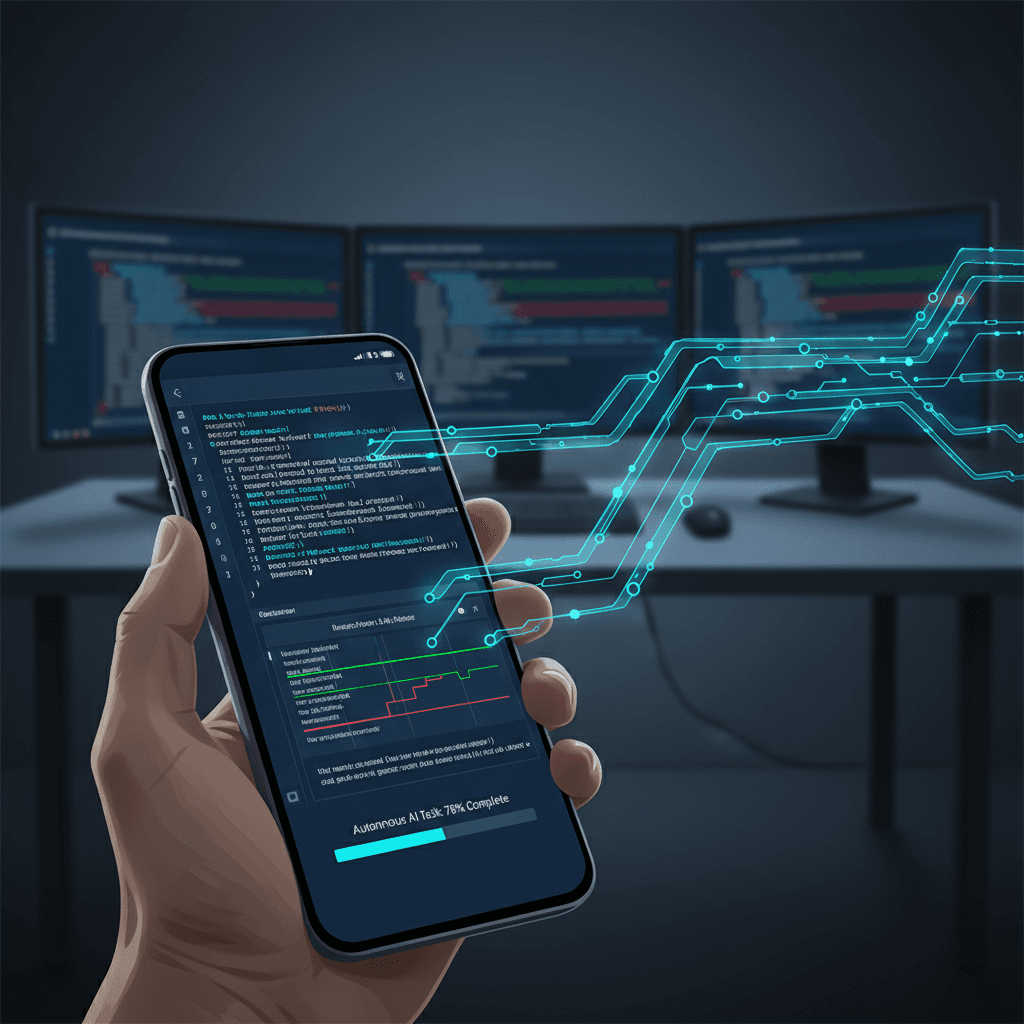
OpenAI has significantly expanded the accessibility of its specialized artificial intelligence coding suite by integrating the Codex assistant into the official ChatGPT mobile application for iOS and Android.[1][2] This strategic move marks a transition for the company from desktop-based development tools to a more flexible, cross-platform ecosystem designed to support software engineers throughout their entire workday. Historically, coding assistants have been tethered to integrated development environments and high-powered workstations, but this update allows developers to monitor, direct, and approve complex programming tasks directly from their smartphones. By bringing Codex into the mobile fold, OpenAI is addressing a growing need for "human-in-the-loop" oversight as AI agents take on increasingly long-running and autonomous software engineering projects.[3]
The mobile integration is not designed to turn a smartphone into a primary coding environment, but rather to act as a secure, high-fidelity bridge to the developer’s primary workspace.[2] Through a new secure relay layer, the mobile app connects to the user’s local machine, devbox, or managed remote environment without exposing those systems to the public internet.[2][3][1][4] This architecture ensures that sensitive files, credentials, and security policies remain on the original workstation while critical updates are streamed to the mobile device in real time.[3][2] Developers can now view code diffs, terminal outputs, and test results from their phones, allowing them to maintain project momentum while away from their desks.[1][5][2][6] This functionality is particularly relevant for the modern development cycle, where AI agents might spend hours refactoring legacy codebases or running extensive test suites that occasionally require human intervention to resolve ambiguities or provide specific architectural guidance.
Under the hood, the mobile experience is powered by the latest iterations of OpenAI’s large language models, specifically the GPT-5.5 series, which has been optimized for agentic coding.[7] This model architecture allows Codex to function as more than a simple auto-complete tool; it can now manage multi-step engineering workflows that include investigating bugs, proposing refactor options, and even synthesizing updates across communication platforms like Slack and email to prepare briefings.[1] The mobile app enables users to receive push notifications when Codex reaches a decision point, such as choosing between two different implementation patterns. By allowing these decisions to happen on the go, OpenAI claims that development teams can significantly reduce project downtime that previously occurred when tasks were paused until a human returned to their desktop.[8]
The rollout comes at a time of intensifying competition in the AI sector, specifically as rivals like Anthropic gain ground with specialized developer tools such as Claude Code.[6] Industry analysts view the mobile expansion of Codex as a direct response to the increasing demand for "agentic" capabilities that move beyond the chat interface. While early versions of Codex were primarily delivered via a command-line interface or as an API for tools like GitHub Copilot, the 2026 version of the platform has matured into a comprehensive system that spans a standalone desktop application, a browser extension, and now a mobile presence. This multi-surface strategy is part of a broader vision internally referred to at OpenAI as the "Superapp" project, which seeks to unify ChatGPT’s conversational abilities with Codex’s technical proficiency and the Atlas web browser into a single, cohesive productivity environment.
Beyond the convenience for individual developers, the update includes several enterprise-grade features aimed at large organizations and regulated industries. OpenAI has officially introduced HIPAA compliance for Codex within Enterprise workspaces, a milestone that opens the door for the tool's use in healthcare software development and clinical data processing. Additionally, the company has introduced a feature called Hooks, which allows security and legal teams to customize the assistant’s behavior.[8] Using Hooks, organizations can implement real-time scripts that scan prompts for sensitive company data or log interactions for regulatory compliance. This focus on governance is a clear signal that OpenAI is positioning Codex not just as a tool for hobbyists, but as a core piece of infrastructure for the modern enterprise software factory.
The technical specifications of the mobile release also highlight the general availability of Remote SSH support. This allows Codex to connect directly to managed cloud environments, including those with pre-approved dependencies and specific compute resources. The system can automatically detect hosts from a user’s existing SSH configuration, creating a seamless transition between local and remote development.[3] Once a connection is established, the mobile app loads the live state of that environment, syncing active threads and project context across all authorized devices.[2][1][5] This ensures that a developer starting a task on a Mac in the office can continue the same conversation and review the same code execution results on an iPhone during a commute, without losing the progress of the underlying AI agent.
From a broader industry perspective, the availability of Codex on mobile reflects a shift in how the software engineering profession is being redefined. As AI models become more capable of handling the "toil" of programming—such as writing boilerplate code, updating documentation, and fixing minor bugs—the role of the human developer is shifting toward that of a reviewer and orchestrator.[3] By providing a mobile interface for this orchestration, OpenAI is facilitating a workflow where engineering oversight can happen anywhere.[2][5][3][1] This democratization of access could lower the barrier to entry for managing complex technical projects, though it also raises questions about the permanent "always-on" nature of modern software work.
The economic implications are also significant, as the update includes features designed to reduce unnecessary token usage. By allowing developers to interrupt an AI agent via mobile if it begins implementing a non-optimal solution, teams can prevent the wasted compute costs associated with erroneously completed tasks.[8] As AI infrastructure costs remain a major concern for growing tech companies, the ability to provide precise, real-time guidance to autonomous agents is seen as a vital cost-control measure. OpenAI’s decision to include Codex in its "Go" and "Free" tiers, albeit in a preview capacity, further suggests an aggressive move to capture user loyalty before competing tools become the industry standard.
As the software development lifecycle becomes increasingly automated, the release of Codex for iOS and Android suggests that the future of coding is no longer confined to the terminal. The integration represents a sophisticated blend of remote access, secure networking, and advanced agentic reasoning.[3] While the primary work of writing and testing code will likely remain centered on high-performance desktop environments for the foreseeable future, the "connective tissue" provided by the mobile app ensures that the human element of software engineering is never more than a few taps away. This launch effectively marks the end of the era where coding was a desk-bound activity, signaling a new age of mobile-augmented engineering where the distance between an idea and its implementation continues to shrink.