
Microsoft unleashes 100 autonomous AI agents to detect and prove critical vulnerabilities in Windows
Microsoft’s MDASH system leverages over 100 specialized AI agents to autonomously discover, debate, and prove critical software vulnerabilities.
May 14, 2026
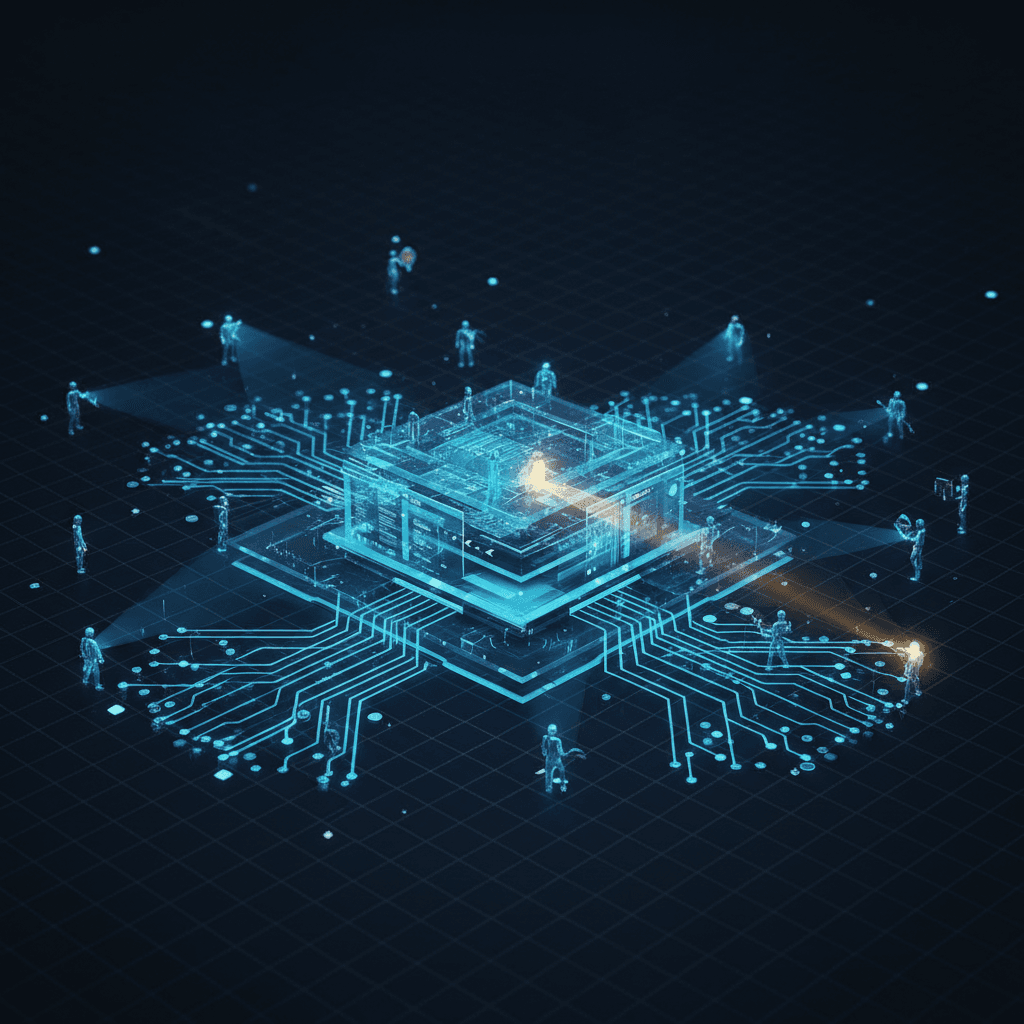
In a significant shift for the cybersecurity industry, Microsoft has unveiled a new autonomous defense system that utilizes a massive network of artificial intelligence agents to secure its software ecosystem.[1][2][3][4][5][6][7][8] The system, known as the Multi-Model Agentic Scanning Harness, or MDASH, represents a departure from traditional automated security tools by orchestrating more than 100 specialized AI agents to discover, validate, and prove vulnerabilities within complex codebases.[3][7][2][5][6][1] During its initial production rollout, the system demonstrated immediate efficacy by identifying 16 previously unknown security flaws in Windows. Of these vulnerabilities, four were classified as critical, marking one of the most successful applications of agentic AI in defensive software engineering to date.
The development of MDASH comes at a time when the tech industry is increasingly focused on the intersection of generative AI and offensive security. While researchers have long experimented with using large language models to find bugs, MDASH is unique in its scale and architecture. Rather than relying on a single, monolithic AI model, Microsoft’s system employs an ensemble of both frontier and distilled models.[7][3][2][1][9][5][6] This multi-agent approach allows different specialized agents to fulfill distinct roles within a structured five-stage pipeline.[1] The process begins with prepare and scan stages, where auditor agents analyze source code to map the attack surface and identify potential weaknesses.[5][3] Following this, a debate stage occurs, in which separate agents argue for and against the validity of a suspected flaw.[3][2][1] This adversarial collaboration is designed to eliminate the false positives that have historically plagued automated security scanners.
The effectiveness of this "debate" mechanism was a cornerstone of the system's performance during internal testing. Microsoft reported that when MDASH was run against a test driver containing 21 deliberately planted vulnerabilities, it correctly identified every single one with zero false positives.[7][8][5] This high degree of accuracy is attributed to the fact that the system does not simply flag a suspicious line of code; it requires a "prover" agent to actually construct a functional input that triggers the bug, effectively demonstrating exploitability before a human engineer ever sees the report. This end-to-end automation allows the system to approximate the capabilities of professional offensive researchers but at a speed and scale that human teams cannot match.
The real-world impact of the system became clear during a recent Patch Tuesday cycle. The 16 vulnerabilities uncovered by MDASH were found in some of the most sensitive areas of the Windows operating system, including the networking and authentication stacks.[5][6][9] Among the critical flaws were remote code execution vulnerabilities in the Windows kernel TCP/IP stack, tracked as CVE-2026-33827, and a double-free vulnerability in the IKEv2 service, tracked as CVE-2026-33824.[8][3] These types of flaws are particularly dangerous because they can often be reached by unauthenticated attackers over a network, potentially allowing for the full takeover of a target machine. By finding and fixing these issues before they could be exploited by malicious actors, Microsoft has demonstrated that AI-driven defense can provide a meaningful advantage in the ongoing cybersecurity arms race.
Technically, MDASH outperformed several prominent competitors on the CyberGym benchmark, a leading industry standard for evaluating the ability of AI to reproduce real-world vulnerabilities.[2][5] The system achieved a score of 88.45 percent, surpassing other high-profile AI security initiatives such as Anthropic’s Claude Mythos and OpenAI’s GPT-5.[2]5. While Microsoft has remained tight-lipped about the specific underlying models powering each of the 100-plus agents, the company has emphasized that the "durable advantage" of the system lies in the agentic architecture rather than any individual model.[2] The harness is designed to be model-agnostic, allowing Microsoft to swap in more advanced reasoning models or smaller, faster distilled models as they become available. This flexibility ensures that the defensive system can evolve alongside the very AI tools that attackers might use to find new exploits.
The strategic implications for the broader AI and software industries are profound. The success of MDASH suggests that the industry is moving toward a future of "autonomous code security," where software is constantly being audited by AI agents throughout its entire lifecycle. This move is a central pillar of Microsoft’s Secure Future Initiative, a multi-year commitment to overhaul the company’s security culture following several high-profile breaches in recent years. By integrating MDASH into its development pipeline, Microsoft is signaling that manual security reviews, while still necessary, are no longer sufficient to secure modern, complex software at the pace of today’s threats.
However, the rise of such powerful vulnerability discovery tools also presents a double-edged sword. If an AI system can find 16 flaws in Windows in a single pass, there is a risk that similar tools could be developed by state-sponsored hacking groups or cybercriminal organizations. The same reasoning capabilities that allow MDASH to defend software can also be used to weaponize exploits.[4] This reality has led Microsoft to keep MDASH largely for internal use, though the company has begun a limited private preview for a small set of enterprise customers.[2] The goal is to provide organizations with the same "machine speed" defensive capabilities while carefully controlling access to the technology to prevent misuse.
The industry is also grappling with what this shift means for the human element of cybersecurity. Some experts worry that the extreme efficiency of AI agents could marginalize human security researchers, while others argue that it will simply elevate their roles. In the MDASH framework, humans are still required to verify the final proofs and develop the necessary patches. Rather than spending weeks or months hunting for obscure memory leaks or logic flaws, human researchers can focus on high-level architecture and complex system-wide threats that AI may still struggle to comprehend. The system acts as a force multiplier, clearing out the "backlog" of vulnerabilities that typically take up the majority of a security team's time.
Looking ahead, the success of MDASH is expected to lead to a significant increase in the volume of security updates as AI-driven auditing becomes the norm. Microsoft has already warned customers to expect "larger Patch Tuesdays" in the future.[4] As AI agents become more adept at understanding the nuances of proprietary codebases that are not part of public training data, the number of discovered flaws is likely to rise before it stabilizes. For the AI industry, this represents a major validation of the agentic paradigm—proving that multiple specialized agents working in a structured environment can solve complex, high-stakes problems that a single LLM cannot handle alone.
Ultimately, the deployment of over 100 AI agents to hunt for Windows vulnerabilities marks a permanent change in the landscape of digital defense.[5] It transitions cybersecurity from a reactive discipline to a proactive, automated engineering problem.[5] As Microsoft continues to refine the MDASH system and potentially expand its reach, the focus will remain on whether these autonomous defenders can stay one step ahead of the increasingly sophisticated AI-powered threats emerging on the global stage. The era of manual bug hunting is not over, but it has officially been superseded by an age of machine-on-machine warfare where the fastest and most accurate agentic systems will define the boundaries of safety in the digital world.