
US Department of War Slams Anthropic AI Guardrails as Dangerous Supply Chain Pollution
Defense leadership labels Anthropic’s ethical guardrails as supply chain pollution, warning that safety filters threaten critical combat reliability.
March 12, 2026
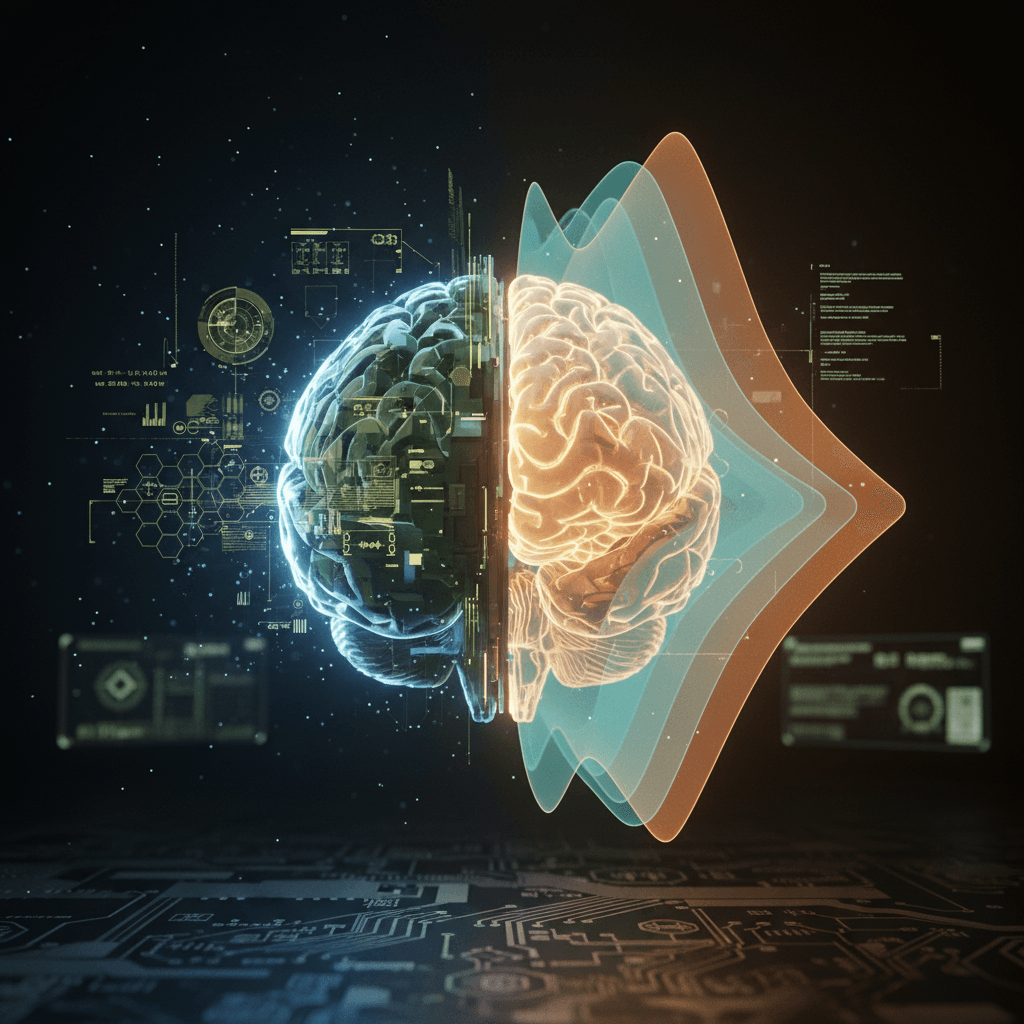
The friction between Silicon Valley’s ethical guardrails and the operational requirements of the United States military reached a new level of intensity this week as the Chief Technology Officer of the US Department of War issued a sharp critique of Anthropic. In a series of public statements and internal policy memos, the technology chief characterized the built-in ethical constraints of Anthropic’s Claude models as a form of pollution within the defense supply chain. The argument suggests that the very safety mechanisms designed to prevent AI from causing harm or generating biased content are now being viewed by defense officials as a strategic liability that could compromise national security. By embedding specific moral and political values into the core architecture of its large language models, the CTO argued that Anthropic is effectively introducing an unpredictable layer of software refusal that mirrors the ideological controls used by geopolitical adversaries.
The core of the Department of War’s grievance centers on the concept of Constitutional AI, the proprietary method Anthropic uses to train its models to follow a specific set of principles. While these principles are intended to make AI helpful, harmless, and honest for the general public, the military leadership contends that such constraints are fundamentally incompatible with the realities of modern warfare. In tactical environments, an artificial intelligence must be capable of processing information and offering recommendations on lethal force, kinetic strikes, and psychological operations without the intervention of a pre-programmed moral filter that might trigger a refusal. The CTO’s office expressed concern that if a combat officer relies on an AI system for rapid decision-making, a model that suddenly decides a request is unethical or violates a built-in safety guideline could lead to catastrophic delays or mission failure. This unpredictability is what the department now defines as pollution—a non-technical, ideological interference that degrades the reliability of the software in high-stakes scenarios.
This critique marks a significant shift in the rhetoric used by the Pentagon regarding commercial technology partnerships. For years, the Department of Defense has sought to integrate the best of civilian innovation into its systems, but the specific implementation of AI alignment at companies like Anthropic is creating a widening rift. The CTO’s comparison to China’s approach to artificial intelligence is particularly pointed. In China, the Cyberspace Administration requires all AI models to reflect fundamental socialist values and strictly adhere to state-approved narratives. The US Department of War now argues that by enforcing a specific set of Western liberal ethics through hard-coded safety layers, American AI firms are engaging in a mirror image of that same state-led ideological control. The concern is that the US military is being forced to consume models that have been pre-censored or biased toward a specific world view, which could blind the systems to certain tactical realities or prevent them from carrying out lawful orders that the software developers personally find objectionable.
The potential for a ban on Anthropic’s models within the military supply chain poses a massive challenge to the startup’s business model and the broader AI industry. Anthropic has long marketed itself as the safe and responsible alternative to its competitors, attracting billions in investment from tech giants on the premise that its models are less likely to "go off the rails." However, the defense sector is one of the largest potential customers for advanced AI, and a formal exclusion based on these safety features could force a reckoning within the company. Industry analysts suggest that if the Department of War successfully removes Claude from its procurement lists, it would send a signal to other government agencies and international allies that high-safety AI is synonymous with low-utility AI in the context of statecraft and defense. This creates a binary choice for developers: either maintain a single, ethically aligned model and lose defense contracts, or develop a bifurcated system where the military is provided with an unfiltered, raw version of the technology.
Beyond the immediate procurement issues, the CTO’s stance highlights a deeper technical debate about the nature of AI alignment. The Department of War is essentially advocating for a return to raw computational power and objective analysis, free from the subjective layers of Reinforcement Learning from Human Feedback that characterize modern conversational AI. Defense officials argue that the ethics of AI use should be determined by the human operator and the existing Laws of Armed Conflict, not by the software engineers in San Francisco. By building ethics into the code, Anthropic is seen as usurping the authority of the chain of command. The CTO’s office noted that a weapon system or a strategic analysis tool should not have a "conscience" that can overrule its user; rather, it should be a neutral instrument that performs precisely as instructed within the legal frameworks established by the state.
The implications for the future of the AI industry are profound, as this conflict may lead to the emergence of a new class of "sovereign AI" models designed specifically for military use without the safety guardrails found in commercial versions. If the Department of War decides that commercial supply chains are indeed polluted by built-in ethics, it may shift funding toward domestic, closed-door projects that prioritize "unaligned" capabilities. This would represent a departure from the collaborative spirit that has defined much of the recent progress in AI, where public-sector agencies have leveraged private-sector breakthroughs. It also raises difficult questions for Anthropic and its peers about their responsibility to the state. If a company refuses to provide an unfiltered model for national defense, it could be accused of hindering the country’s technological edge against rivals who face no such ethical dilemmas in their own AI development.
Ultimately, the clash between the US Department of War and Anthropic illustrates a growing realization that AI is not a neutral tool, but one that carries the values of its creators. The technology chief’s assertion that built-in ethics are a form of supply chain pollution suggests that the military views these values as a vulnerability to be mitigated rather than a feature to be celebrated. As the integration of AI into global military infrastructure accelerates, the tension between the desire for safe, aligned technology and the demand for raw, uninhibited performance will likely become a defining theme of the decade. The outcome of this dispute could determine whether the next generation of AI development splits into two distinct paths: one governed by the ethical considerations of civilian society, and another governed solely by the cold logic of strategic necessity and the requirements of the battlefield.