
Elon Musk launches ground-up xAI rebuild after admitting the startup was fundamentally mismanaged
Musk overhauls the $250 billion startup through leadership exits and SpaceX integration to build a high-cadence engineering powerhouse.
March 13, 2026
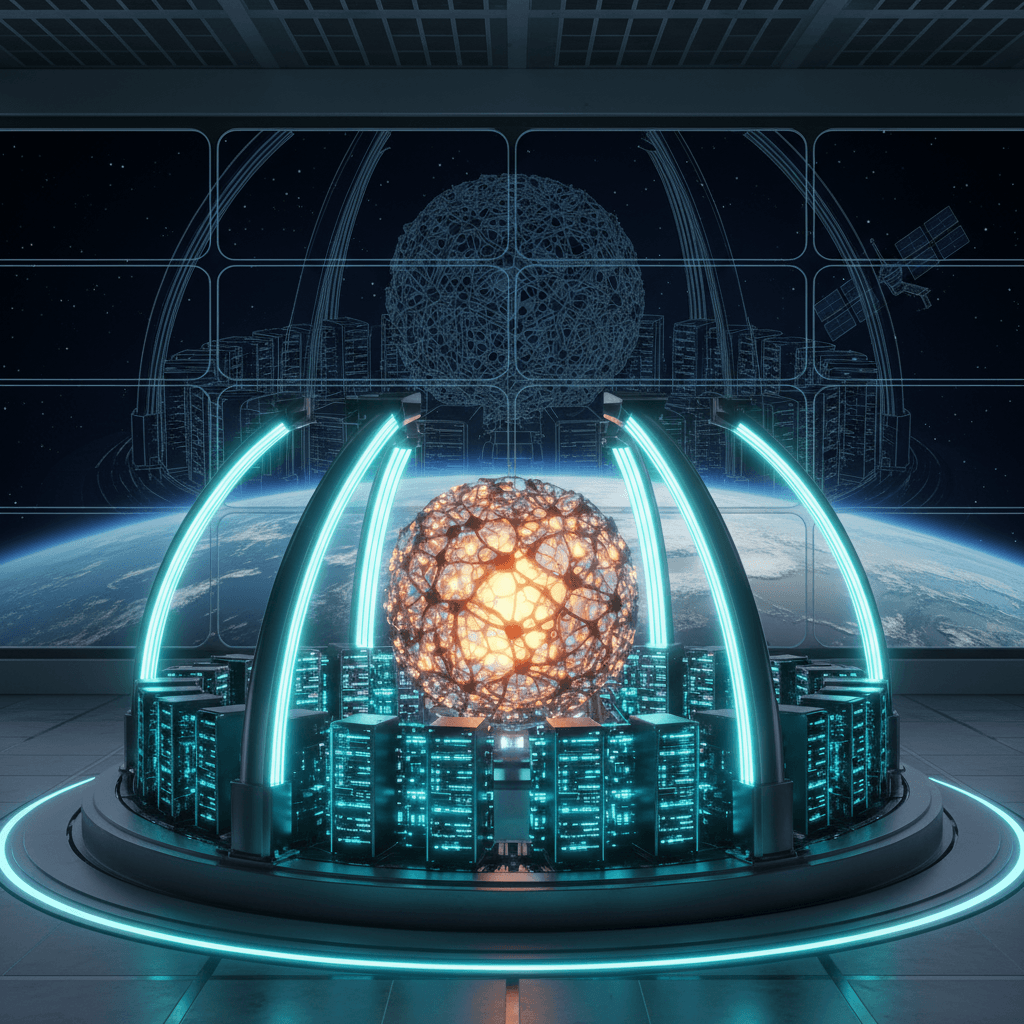
In a candid admission that has sent shockwaves through the artificial intelligence industry, Elon Musk has acknowledged that his AI venture, xAI, was fundamentally mismanaged from its inception.[1][2][3] The billionaire entrepreneur revealed that the company was not built right the first time around and announced a comprehensive, ground-up restructuring designed to salvage the startup’s ambitious goals. This admission, delivered via a series of posts on X, signals a dramatic pivot for a company that was recently valued at a staggering 250 billion dollars following its controversial merger with SpaceX.[4] The restructuring comes at a critical juncture as xAI attempts to transition from a research-oriented startup into a high-cadence engineering firm capable of challenging established giants like OpenAI and Google.
The rebuild is characterized by a massive organizational overhaul and a near-total turnover of the company’s original leadership. Of the twelve founding members who launched xAI in March 2023 with the goal of understanding the true nature of the universe, only two—Manuel Kroiss and Ross Nordeen—reportedly remain at the firm. The exodus reached a fever pitch this week with the high-profile departures of co-founders Zihang Dai and Guodong Zhang.[5] Zhang, who had been leading the Imagine visual intelligence team and efforts to improve Grok’s coding capabilities, was reportedly relieved of his primary duties after Musk expressed deep dissatisfaction with the company’s technical progress. This "talent drain" is not merely a side effect of the restructuring but appears to be a deliberate consequence of a rigorous internal audit. Musk has reportedly deployed fixers from Tesla and SpaceX to scrutinize xAI’s operations, leading to a culture clash between the original academic research roots and the military-grade engineering intensity synonymous with Musk’s other ventures.
Central to this new phase is the partitioning of xAI into four specialized technical pillars: Grok, Coding, Imagine, and Macrohard.[6][7] The Grok unit remains focused on the core conversational AI and real-time information processing that integrates with the X platform. However, the Coding division has been a particular point of contention.[8] Insiders suggest that Musk was frustrated by the slow pace of automated software engineering tools, leading him to hire external leads from the AI coding startup Cursor—Jason Ginsberg and Andrew Milich—to spearhead a rescue effort for the product. Meanwhile, the newly formed Macrohard project, a name that playfully nods to Musk’s long-standing rivalry with Microsoft, is tasked with developing "general computer use" agents. These agents are designed to execute complex engineering tasks across standard operating systems, with the ultimate goal of allowing AI to handle everything from business modeling to the full design of rocket engines.
The restructuring is also driving a radical shift in xAI’s recruitment strategy. In a rare public apology, Musk admitted that the company’s previous hiring processes were flawed, noting that many talented individuals had been unfairly declined offers or even interviews during the startup's first two years. To rectify this, Musk and xAI talent engineering head Baris Akis are reportedly revisiting the company’s entire interview history to reach back out to previously rejected candidates.[4] This "re-recruitment" drive highlights the desperate need for fresh talent as the company scales its physical infrastructure. The Memphis-based Colossus supercomputer, which already utilizes hundreds of thousands of NVIDIA GPUs, is slated for a massive expansion to over one million units.[9] This hardware-centric approach mirrors the philosophy of SpaceX, where raw computational power and rapid iteration are prioritized over theoretical research.
Financially, the restructuring is backed by the deep pockets of the Musk ecosystem. The recent all-stock merger between SpaceX and xAI has effectively turned the AI startup into a division of the world’s most successful private space company. This merger allowed Tesla to convert its initial two-billion-dollar investment in xAI into a stake in SpaceX, a move recently cleared by federal regulators.[1] By aligning xAI with SpaceX, Musk aims to bypass the traditional venture capital constraints that have slowed other AI labs. The integration also hints at broader strategic goals, such as the "Sentient Sun" initiative, which envisions moving massive AI compute clusters into orbit to solve terrestrial energy and cooling limitations. This long-term vision positions xAI not just as a software company, but as a critical component of a multi-planetary infrastructure.
However, the industry remains skeptical of whether a structural rebuild can overcome the "catch-up phase" that has plagued xAI. Former employees have expressed concerns that the company has been perpetually chasing milestones reached by OpenAI a year prior, rather than innovating on new frontiers.[5] The lack of a dedicated, functional safety team in the new organizational chart has also raised alarms among AI ethics researchers. As xAI prepares for the launch of Grok-5, which is rumored to feature six trillion parameters and native multimodal capabilities, the stakes could not be higher. The coming months will determine if Musk’s "foundations up" rebuild can transform xAI into a legitimate contender for artificial general intelligence, or if the company's early structural missteps have already given its rivals an insurmountable lead. For now, the professional AI community is watching closely as one of the world’s most valuable startups attempts to change its engines while in mid-flight.