
TCS and AMD Alliance Targets Enterprise AI Production to End Pilot Stagnation
Breaking the stagnation: Their strategic alliance delivers production-grade, industry-specific Generative AI solutions from cloud to edge.
January 14, 2026
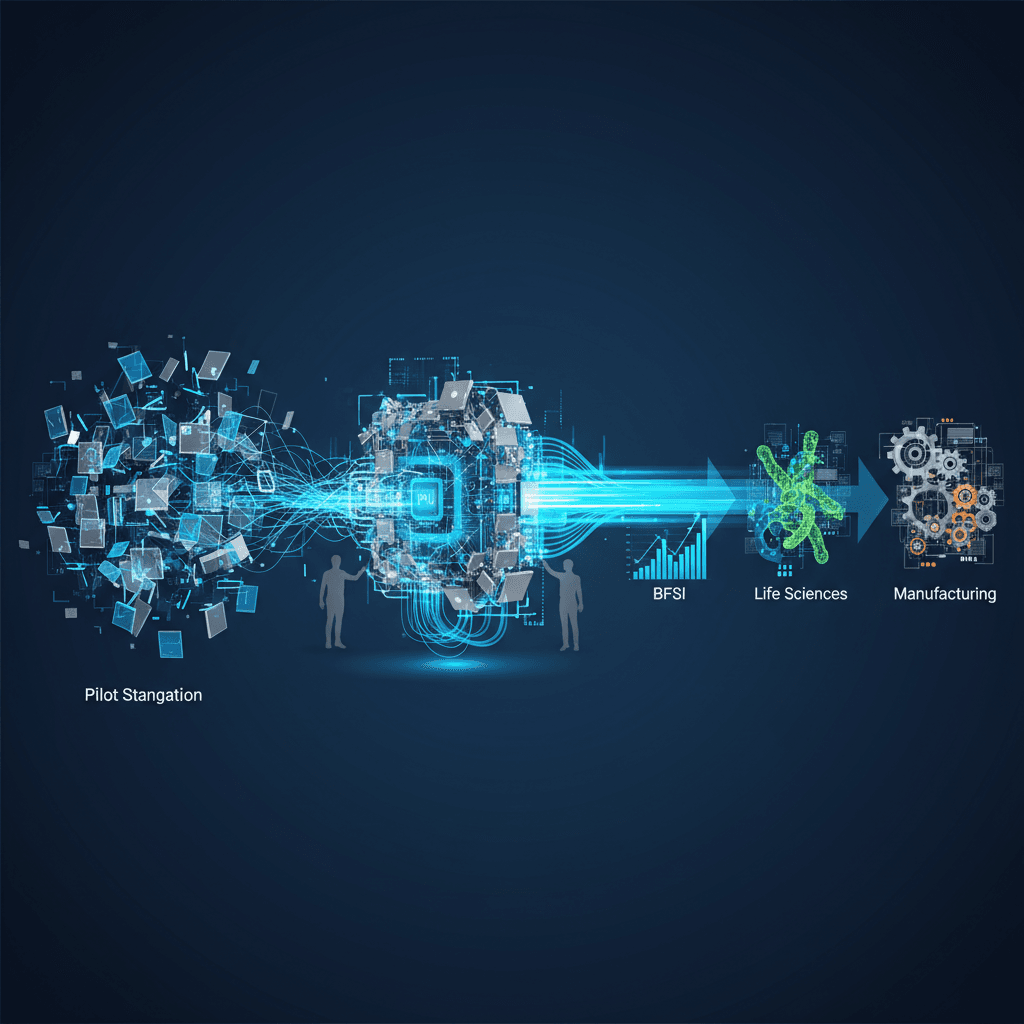
A landmark strategic collaboration between Tata Consultancy Services and Advanced Micro Devices is set to fundamentally reshape the landscape of enterprise Artificial Intelligence, aiming to break the pervasive stagnation that has kept countless AI initiatives mired in the pilot phase. The partnership represents a decisive industry move to deliver production-grade AI at scale, combining the high-performance computing and hardware portfolio of the American chipmaker with the deep domain expertise and global systems integration capabilities of the Indian IT services giant. This alliance is not merely a reseller agreement; it is a co-development effort focused on creating tailored, industry-specific Generative AI solutions and a joint investment in a global talent pool, signaling a major push to modernize the foundational infrastructure required for AI-led business transformation across the globe.
The primary obstacle preventing enterprise AI projects from translating initial success into meaningful business impact has long been the complexity of scaling pilot models into reliable, cost-effective, and secure production environments. This collaboration directly addresses this 'pilot-to-production' chasm by architecting a new class of AI-ready hybrid cloud and edge infrastructure. The solution leverages the full spectrum of AMD's compute portfolio, positioning it as a powerful alternative for enterprise data centers and end-user computing. Specifically, the initiative will utilize AMD EPYC central processing units, AMD Instinct graphics processing units, and specialized AI accelerators to power high-performance computing environments essential for complex AI training and large-scale inference workloads across hybrid cloud settings[1][2][3]. Complementing this data center focus, the partnership will also integrate AMD Ryzen CPU-powered client solutions to facilitate a secure, AI-powered digital workplace transformation, bringing localized AI processing capabilities directly to the employee's machine[1][4][3]. Furthermore, for industrial digitization and edge computing, the collaboration plans to harness AMD's embedded computing portfolio, including adaptive System-on-Chips and Field-Programmable Gate Arrays, ensuring AI can be deployed reliably and with low latency in manufacturing plants, remote sites, and other operational technology environments[2][3]. By aligning the hardware architecture from the cloud to the edge, the companies are constructing an end-to-end compute foundation designed to eliminate the performance bottlenecks and integration hurdles that typically stall large-scale AI deployment[1][2].
A critical component of the joint effort involves the co-development of industry-specific Generative AI frameworks designed to solve complex business challenges with measurable outcomes. This strategy moves away from generalized AI tools to deploy specialized solutions in high-value sectors, accelerating the path to return on investment for clients[1][2]. In the life sciences sector, the focus is on accelerating drug discovery by utilizing high-performance computing to analyze massive datasets, potentially identifying promising compounds and reducing research timelines[2][5][6]. For the manufacturing industry, the partners are developing frameworks for cognitive quality engineering and smart manufacturing, which aim to automate factory oversight, improve efficiency, and reduce waste through real-time AI analysis[2][5][6]. The Banking, Financial Services, and Insurance (BFSI) sector will see the implementation of intelligent risk management systems, leveraging AI for fraud detection, real-time market prediction, and overall risk posture analysis[2][5][3]. This targeted approach reflects an understanding that true enterprise AI adoption requires deep domain knowledge, which TCS brings, combined with the raw computational power and optimized software stack provided by AMD’s technology[1][4].
Beyond the immediate technological integration, a foundational pillar of the collaboration is the joint investment in talent development, recognizing that the human capital shortfall is a significant barrier to scaling AI[1][2][5]. The companies plan to build a deep pool of experts capable of co-innovating and delivering next-generation AI solutions by rapidly upskilling and certifying TCS associates on AMD’s cutting-edge hardware and software platforms[1][2][3]. This initiative supports TCS’s stated ambition to become the world’s largest AI-led technology services company and builds upon its internal drive to make every employee an ‘AI practitioner’[7][8][9]. By creating a certified workforce that understands how to optimize and deploy AI solutions on high-performance AMD architectures, the partnership ensures clients have access to the necessary expertise for successful, production-grade AI rollouts[6][2]. The upskilling effort is a direct response to the market’s transition from AI experimentation to disciplined, large-scale GenAI rollouts that are explicitly tied to business outcomes[9][8].
The combined efforts of TCS and AMD signal a significant moment in the evolution of enterprise AI adoption, moving the conversation from proof-of-concept curiosity to industrial-grade necessity[1][10]. As enterprises globally seek to operationalize AI at scale while simultaneously modernizing legacy technology stacks and managing rapidly rising compute demands, this alliance offers a comprehensive stack—from talent and domain expertise to high-performance, cost-efficient hardware—to enable that transition[2][10]. The collaboration not only challenges the prevailing computational status quo but also aims to democratize AI deployment, providing enterprises with tailored accelerators, frameworks, and best practices to boost both AI training and inference performance[1][5][3]. This partnership exemplifies a crucial trend in the AI industry: the deepening integration between hardware vendors and systems integrators to deliver complete, production-ready AI ecosystems that are essential for unlocking the next phase of global economic growth and technological transformation[1].