
Male researchers adopt autonomous AI coding agents at twice the rate of female peers
An Anthropic study reveals how stark gender and institutional divides in AI coding agent adoption could worsen academic inequality.
May 31, 2026
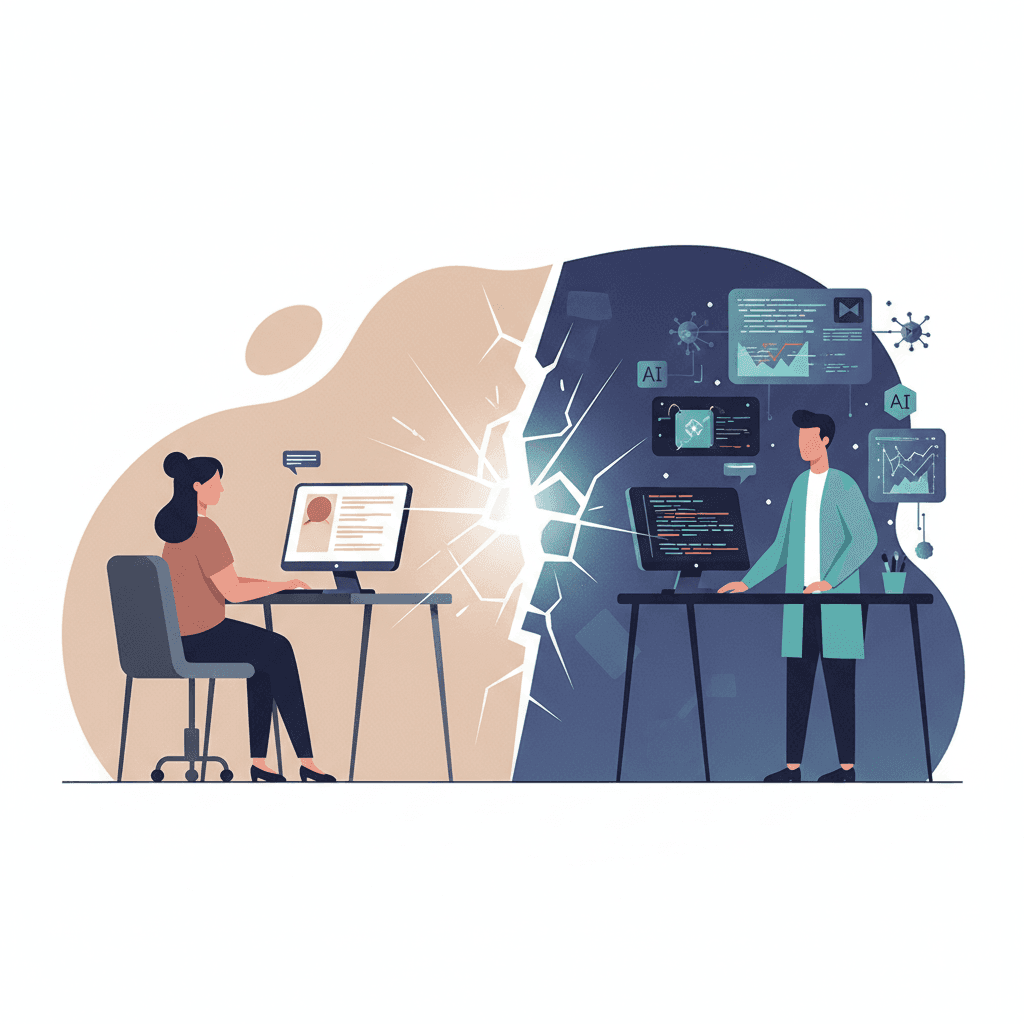
A newly released study by artificial intelligence safety and research company Anthropic has unveiled a deep demographic divide in the adoption of AI-driven coding agents among social science researchers[1][2]. While general-purpose AI chatbots have quickly integrated into the academic landscape, the transition to autonomous agentic systems that can write, execute, and iterate on complex software remains highly uneven[3][4]. Conducting a comprehensive survey of quantitative social scientists, Anthropic's researchers found that although more than four-fifths of respondents have experimented with basic large language models, only a small fraction have integrated highly automated coding agents into their weekly research pipelines[3][4]. Most strikingly, the study highlights a profound gender gap, revealing that researchers with typically male names are adopting these advanced agentic systems at more than twice the rate of their female peers[3][2]. This disparity, which persists even when accounting for identical disciplines and career stages, exposes critical questions about who is leading the technological frontier in academic research and how these tools might exacerbate existing systemic inequalities[3][2].
The gender divide identified in the Anthropic report is particularly notable because it dwarfs the far milder gender differences observed in general AI chatbot usage[1][2]. While men and women across various academic circles access standard conversational interfaces at roughly similar rates, the specialized integration of coding agents—which operate directly within command-line interfaces to independently process datasets and generate analysis—remains heavily male-dominated[3][1]. Beyond gender, the research details a steep divide based on institutional prestige and career stage[1][2]. Scholars affiliated with top-ranked universities are forty percent more likely to deploy autonomous coding agents compared to their colleagues at lower-ranked institutions[3][1]. Furthermore, the technology has established a stronger foothold among early-career researchers than among established academics[2][4]. More than a quarter of doctoral students and postdoctoral fellows report utilizing coding agents at least weekly, while the adoption rate among tenured professors drops by more than half[2][4]. These junior scholars, who face immense pressure to publish and are often more technically agile, are acting as the primary vanguard for agentic AI, even as their senior counterparts remain more cautious or reliant on traditional research methodologies[2][4].
Academic disciplines within the social sciences also exhibit massive variances in their willingness to adopt autonomous coding technology, revealing a stark contrast in research cultures[2][4]. Quantitative economists have emerged as the undisputed leaders in this space, with thirty-nine percent of surveyed economists reporting that they regularly use coding agents[1][2]. Political scientists follow at a distant second, with twenty-five percent utilizing the tools[2][4]. By comparison, fields that traditionally place less emphasis on heavy command-line programming, such as public health, communication, and education, report single-digit adoption rates, with education researchers sitting at the bottom of the spectrum at just four percent[1][2]. When it comes to the specific software being used, Anthropic's own Claude Code has captured the vast majority of the market, with eighty-six percent of regular coding agent users adopting it for their daily workflows, while platforms like OpenAI's Codex trail significantly behind at thirty-one percent[2][4]. This high concentration of usage within select disciplines suggests that the utility of coding agents is currently tied to highly structured, code-dependent data analysis environments, leaving other areas of social science research largely untouched[5].
The primary value proposition of coding agents lies in their ability to automate the highly tedious process of data cleaning, statistical analysis, and software development, which accounts for ninety-seven percent of their documented use[1]. In contrast, using these tools for drafting academic text remains a secondary application, with only about fifty-four percent of coding agent users and less than thirty percent of other AI users utilizing them for prose[1]. This targeted automation of coding tasks appears to translate directly into early-stage research productivity[3][6]. According to the study, researchers who regularly utilize coding agents report starting more projects, producing more working papers, and submitting a higher volume of grant applications compared to non-users of the same career stage[3][6]. Interestingly, this surge in early-stage output does not yet translate to a higher rate of final peer-reviewed journal publications or faster journal resubmissions[7]. This discrepancy suggests that while coding agents are exceptionally effective at accelerating the initial launch and empirical analysis phases of research, they still fall short when it comes to the rigorous, nuanced human intellect required for the final stages of perfecting a paper for publication[7].
Despite their enthusiasm for personal productivity gains, social scientists remain deeply ambivalent about the broader systemic impacts of artificial intelligence on their respective fields[3][1]. When surveyed, an overwhelming eighty-eight percent of respondents expressed high optimism regarding how AI would boost their individual research output, with half of the participants rating their personal productivity expectations at an eight or higher on a ten-point scale[1]. However, this optimism drops significantly when researchers are asked to evaluate the net effect of AI on the social sciences as a whole[3][1]. Many scholars express concern over the potential for a deluge of low-quality papers—often derisively labeled as academic AI slop—that could overwhelm an already strained peer-review system[3]. Additionally, there are rising concerns about cognitive offloading, where researchers who rely too heavily on automated tools may fail to fully grasp the nuances of the code their agents generate, ultimately eroding the foundational skills required to spot subtle errors in complex statistical models[8].
As AI continues to transition from a conversational novelty into an autonomous workspace partner, the findings from Anthropic's study signal critical challenges for both the technology sector and academic institutions[3][4]. The significant gender, institutional, and disciplinary disparities in coding agent adoption warn of a future where technological benefits are highly concentrated, potentially widening the equity gap in academia[3][1]. If male researchers at elite universities continue to leverage agentic tools to produce working papers and secure grants at vastly superior rates, systemic biases in hiring, funding, and promotion could become even more entrenched[3][1]. To prevent this divide from hardening, developers of AI agents must design interfaces and training programs that lower the barrier to entry for underrepresented groups and less tech-centric fields[9]. Simultaneously, academic departments must establish clear guidelines that balance the undeniable productivity benefits of agentic automation with the preservation of critical thinking, ensuring that the next generation of social scientists remains capable of guiding and validating the powerful machines they employ[8].