
SoftBank commits 75 billion euros to build massive AI data centers in France
A €75 billion partnership leveraging French nuclear power to secure Europe’s digital sovereignty in the global AI race
May 31, 2026
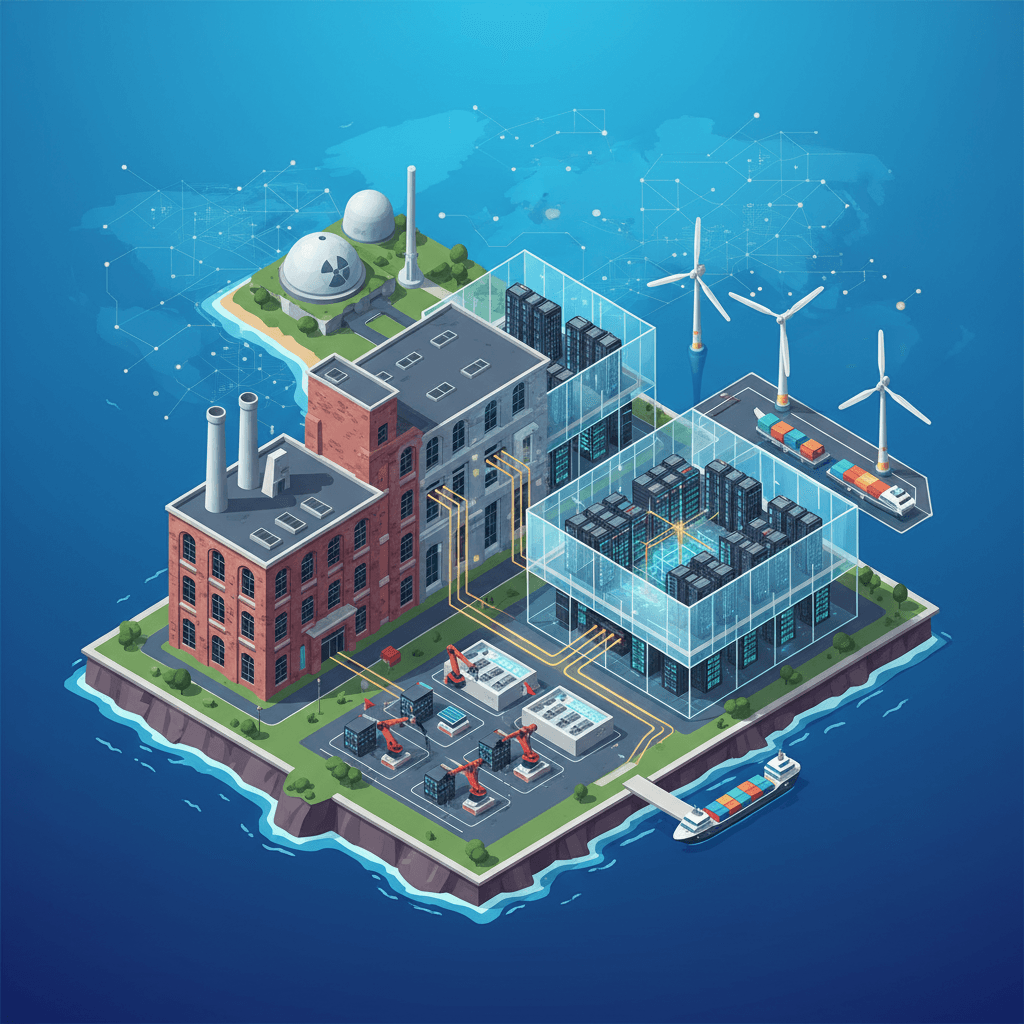
In a move that signals a dramatic escalation in the global race for artificial intelligence computing power, SoftBank Group has announced a monumental plan to construct up to five gigawatts of AI data center capacity in France. Representing an investment of up to 75 billion euros, the project marks the Japanese conglomerate’s largest artificial intelligence infrastructure commitment in Europe to date[1][2]. The sweeping initiative was unveiled in conjunction with the annual Choose France summit hosted by President Emmanuel Macron, representing a massive geopolitical and economic victory for the French government as it seeks to position the country as Europe’s premier technological hub[3][2]. The deal, which was catalyzed by a private meeting between Macron and SoftBank Chief Executive Masayoshi Son in Tokyo, underscores how the competition for next-generation technology has shifted from software development to the physical infrastructure required to power it[2][4].
The execution of this gargantuan infrastructure project will begin with a heavily funded initial phase[3]. SoftBank has committed 45 billion euros to develop 3.1 gigawatts of data center capacity in the northern Hauts-de-France region, with a targeted completion date of 2031[3]. This initial buildout is concentrated across three strategic locations: Dunkirk, Bosquel, and Bouchain[3]. To secure the necessary land and infrastructure, SoftBank is partnering with France’s state-owned utility giant EDF, which is providing the site of a former power plant in Bouchain for redevelopment[5]. By transforming legacy energy infrastructure into state-of-the-art computational hubs, the project exemplifies the physical transition of the industrial economy into the digital age, bringing high-performance computing resources closer to major European metropolitan areas including London, Brussels, and Amsterdam[2].
What sets this development apart from typical data center announcements is its integrated industrial strategy, designed to anchor advanced manufacturing directly within France[3]. SoftBank is partnering with the French energy management and industrial automation specialist Schneider Electric to build a massive production cluster at the Port of Dunkirk[3]. This localized supply chain initiative will feature two key facilities: one operated by SoftBank that will utilize advanced robotics and automation to manufacture specialized server enclosures, and another operated by Schneider Electric to assemble and integrate critical data center power modules[3]. By manufacturing critical infrastructure components locally rather than relying entirely on global supply chains, the partnership aims to mitigate the severe equipment bottlenecks that have plagued data center developers worldwide, while simultaneously creating high-skilled industrial jobs in northern France[3][6].
The decision to anchor this massive network of data centers in France highlights the critical role that clean energy and national policy play in the layout of the global AI landscape[3]. As AI models grow exponentially in complexity, they demand unprecedented amounts of electricity to run high-performance chips. France, with its robust and reliable fleet of nuclear reactors, stands out as a rare European energy exporter capable of meeting these massive electricity demands[2][4]. During their bilateral discussions, President Macron heavily pitched France’s plentiful nuclear power and the government's willingness to fast-track administrative and environmental approvals for strategic technology projects[2]. Currently, France’s entire installed data center capacity sits at roughly 1.5 gigawatts; the addition of SoftBank’s proposed five-gigawatt network will more than triple the nation's computational footprint, providing Europe with the sovereign compute capacity needed to compete with the United States and China[2][4].
While the scale of the announcement has sent shockwaves through the technology sector, industry observers note that turning such a massive pledge into operational reality will be an uphill battle[6]. SoftBank and its visionary leader, Masayoshi Son, have a long history of making jaw-dropping announcements that carry high execution risks[7][6]. While SoftBank's early bet on Alibaba and its acquisition of chip designer Arm are regarded as legendary successes, the firm has also faced high-profile setbacks with speculative real estate and tech plays, most notably WeWork[6]. Critics point out that a project of this magnitude will require years of complex engineering, massive grid connection approvals, and intensive resource allocation[6]. Local communities and environmental advocates are also likely to raise questions regarding the sheer volume of water and power these facilities will consume, meaning SoftBank will need to maintain close cooperation with French authorities to navigate regulatory hurdles[6].
Ultimately, the success of SoftBank's French initiative could reshape the balance of power in the global artificial intelligence sector[6][8]. By building out significant independent compute capacity in Europe, the project offers a viable alternative to the handful of American hyperscalers that currently dominate the cloud computing market[6]. For European startups, academic researchers, and heavily regulated industries like healthcare and finance, local access to such vast computational power could accelerate innovation while ensuring compliance with stringent European data sovereignty laws[6]. If SoftBank can successfully transition the Hauts-de-France sites from high-profile political announcements to active construction zones on schedule, it will not only solidify France's status as the capital of European AI but also validate Son's high-stakes gamble on the physical foundation of the cognitive revolution[6].