
Specialized Anthropic Agents Execute Complex Finance and Legal Workflows.
Specialized plugins grant knowledge workers autonomous agents that read, write, and execute multi-step business deliverables.
January 30, 2026
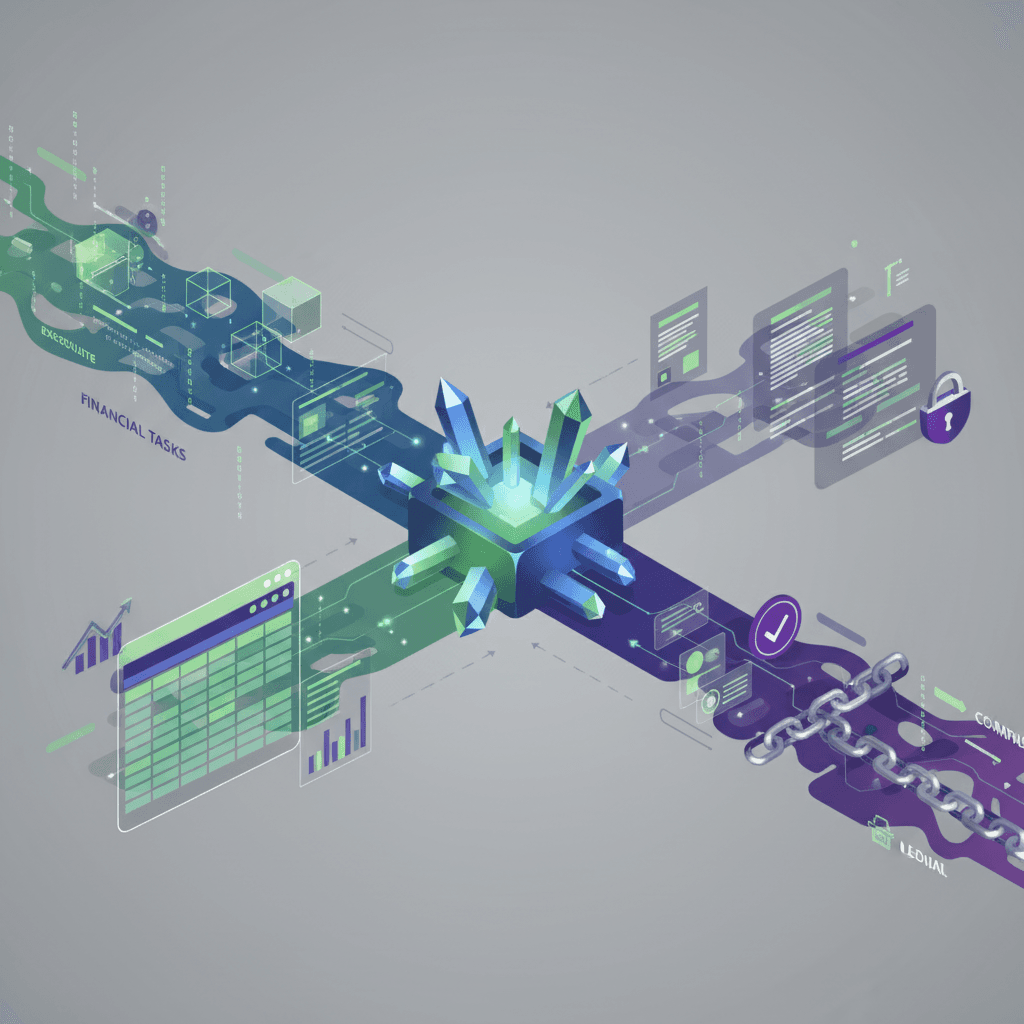
The release of Anthropic’s new Cowork plugins represents a pivotal moment in the evolution of artificial intelligence, moving large language models beyond general-purpose assistants into the realm of specialized, departmental agents for knowledge workers. This development transforms Claude, Anthropic’s flagship AI model, into a series of highly focused collaborators for critical functions such as sales, legal, and finance, fundamentally changing how non-technical professionals interact with and delegate tasks to AI. The core innovation lies in the plugins’ ability to bundle domain-specific skills, proprietary data connections, and bespoke commands into role-specific AI assistants, creating a powerful, agentic tool that can operate directly within a user’s local computing environment.[1][2]
The Cowork platform itself, which launched a short time before the plugin release, is an extension of the agentic architecture that powered Anthropic’s Claude Code, an AI tool initially designed for developers.[3][4][2] Cowork translates this sophisticated, operational capability into a user-friendly interface for knowledge workers who do not write code, allowing them to delegate complex, multi-step tasks.[3][2][5] Unlike traditional conversational AI, which merely suggests actions or generates text, Cowork is operational, granting Claude direct access to a user-specified local folder to read, write, move, and edit files, and even coordinate parallel workstreams by utilizing sub-agents.[3][4][6] The introduction of plugins takes this agentic capability to the next level of specialization, offering a suite of tailored tools covering everything from general productivity and customer support to biology research.[2]
The specialization is most clearly demonstrated in the plugins built for high-value business functions. For the finance sector, the new plugins enable Claude to analyze financial data and build complex forecasting models.[2] Anthropic has already been expanding Claude’s capabilities for financial services, a domain where the model is used by major banking, asset management, and insurance companies for tasks ranging from client experience in the front office to risk and compliance in the middle office.[7] Updates have included an Excel add-in in beta, allowing users to work directly with Claude in a sidebar to analyze, modify, and create new Excel workbooks with full transparency, including tracking and explaining its changes.[7] Furthermore, pre-built Agent Skills, like constructing discounted cash flow models and initiating coverage reports, connect Claude to real-time market data through partners like LSEG and proprietary company data from Moody’s, demonstrating a deep integration into financial workflows.[7] This move allows the AI to augment intelligence with solutions for critical, time-consuming financial tasks.[7]
Similarly, the sales and marketing plugins are engineered to enhance crucial go-to-market activities. They integrate Claude with essential tools like Customer Relationship Management (CRM) platforms and internal knowledge bases, offering capabilities such as prospect research, deal preparation, content drafting, and campaign planning.[2] The plugins incorporate 'slash commands' to initiate specific, multi-step workflows, such as starting prospect research or finalizing call follow-ups with a simple command, essentially streamlining complex business processes.[2] For legal professionals, dedicated plugins focus on managing enterprise search, analyzing legal documents, and ensuring compliance, reflecting the broader industry trend of deploying AI to automate document-heavy, high-stakes tasks.[2] The entire system is made flexible for corporate environments by including a 'meta-plugin' for creating and customizing other plugins, which removes the complexity of editing files directly and allows non-developers to tailor the agents to their company's unique processes and specific business needs.[2]
The introduction of specialized plugins marks a significant shift in the competitive landscape of the AI industry, transitioning the focus from monolithic, all-encompassing large language models to a more fragmented, agent-centric ecosystem. While general-purpose AI platforms continue to serve broad needs, the move toward deep specialization—particularly in the context of agentic capabilities—positions Anthropic to capture enterprise market share by offering immediate, demonstrable return on investment for specific job roles. This trend suggests that the future of enterprise AI will be defined by the quality and depth of specialized agent toolkits that can execute multi-step workflows autonomously, rather than just the raw intelligence of the base model. The Cowork agent, operating directly on the user’s desktop and executing work in an isolated virtual machine environment, promises professional outputs like spreadsheets with working formulas and formatted presentations, effectively bridging the gap between AI generation and final deliverable.[4]
However, the agentic nature of Cowork, which allows Claude to read, write, and execute tasks on the local file system, introduces unique risks and considerations.[4][6] As a research preview, the platform requires users to exercise caution, as granting file access presents potential data privacy and security risks, and vague instructions could lead to unintended file modifications or deletions.[4][6] Anthropic has noted that Cowork activity is not captured in standard Audit Logs or Compliance APIs, necessitating careful usage, particularly for regulated workloads.[4] This highlights an ongoing tension in the AI industry: the push for greater agency and productivity must be balanced with robust security, governance, and transparency measures, especially as these tools move from technical teams into the broader enterprise environment.[8][4]
Ultimately, Anthropic’s Cowork and its new plugin system represent a strategic evolution toward the concept of an AI collaborator rather than a mere assistant. By allowing knowledge workers to delegate complex, time-consuming tasks and return to a finished deliverable, the platform promises to substantially increase output volume and free up human capital for strategic work.[9][6][5] This move not only capitalizes on the observed internal trend—where engineers used the coding agent for non-code tasks—but also democratizes agentic AI, making a powerful automation tool accessible to every knowledge worker, from the analyst to the project manager, and signaling a new paradigm for productivity in the digital workplace.[3][10][5]