
OpenAI prices ChatGPT ads at $60 CPM, rivaling NFL broadcast costs.
OpenAI demands $60 CPM for ChatGPT ads, positioning conversational attention as premium inventory.
January 26, 2026
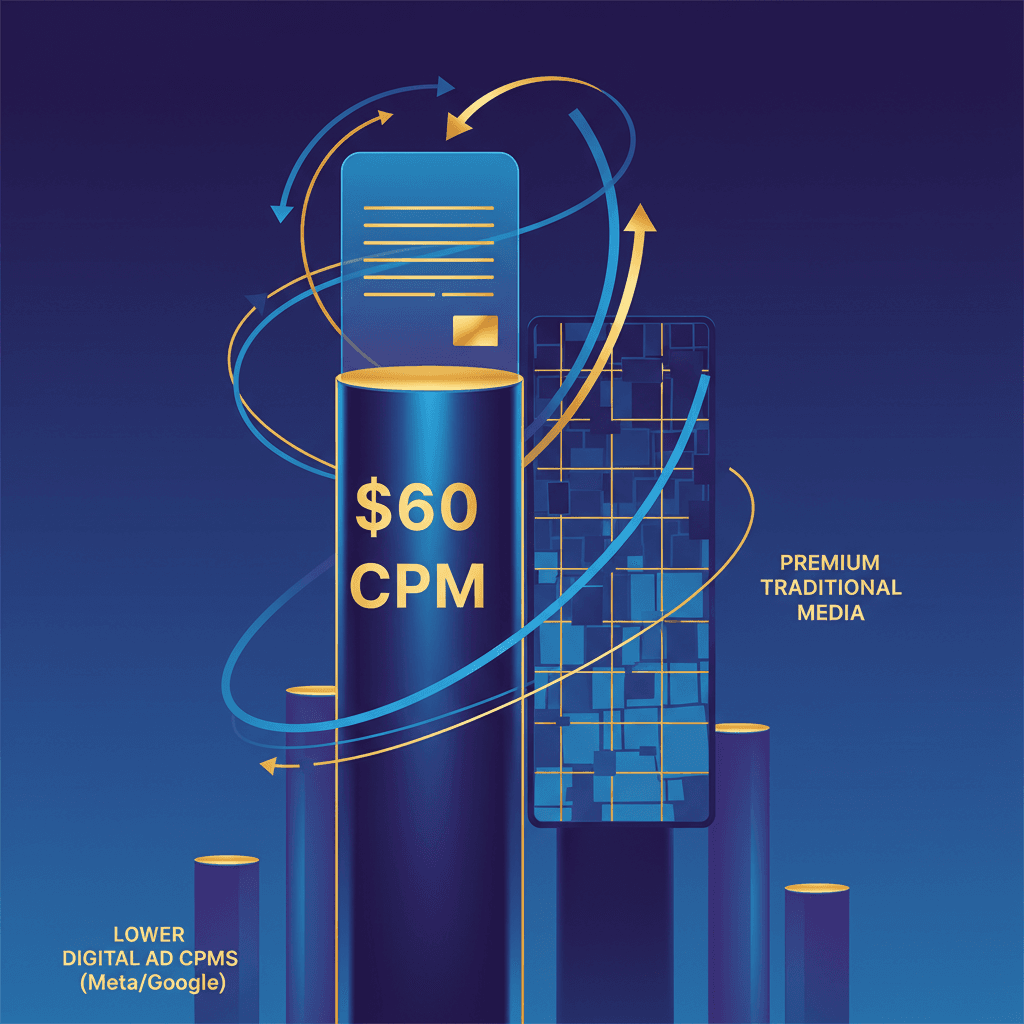
In a move that signals the AI industry's aggressive push toward monetization, OpenAI is reportedly launching an advertising program for its flagship product, ChatGPT, with an unprecedented pricing structure that rivals the cost of premium traditional media. The company is asking advertisers for a Cost Per Mille (CPM), or cost per 1,000 impressions, of approximately $60, a rate that positions its conversational AI platform alongside top-tier video inventory like live NFL broadcasts and premium streaming services, according to reports from media buyers familiar with the early trials. This high-water mark for digital advertising far exceeds the typical CPMs on established platforms like Meta, which commonly hover below $20, marking a bold and controversial gambit to value the attention within an AI-driven conversation as a premium commodity.[1][2][3]
The strategic decision to price ads at a premium is compounded by a non-traditional billing model for online platforms: cost per impression, rather than the industry-standard pay-per-click (PPC) or cost-per-acquisition (CPA) model favored by performance marketers. This impression-based approach, which is more akin to traditional television advertising, ensures OpenAI generates revenue regardless of user interaction with the ad.[4][5] Industry analysts suggest that the choice of CPM reflects an expectation of low click-through rates, which is inherent to the nature of a conversational AI tool where users seek comprehensive answers directly within the chat, reducing the incentive to navigate to an external link.[5] By adopting this model, OpenAI is effectively positioning the ads as a brand awareness vehicle rather than a direct-response channel, prioritizing revenue certainty for the company over the detailed, measurable performance metrics that digital advertisers have come to expect.[4][5]
This pricing audacity is notable because, in its initial phase, the ad platform is providing advertisers with limited performance data, offering only high-level insights such as total impressions and clicks—a metric suite more comparable to traditional television networks than to the granular user and conversion data provided by Google and Meta.[1][2] The absence of sophisticated ad technology, such as conversion tracking and detailed audience segmentation, is a significant limitation for performance-focused brands, forcing them to bet on the inherent value of reaching a user at the critical moment of intent formation within the conversational interface.[1][2] Advertisers who commit to the pilot program, which reportedly involves spending under $1 million each, are essentially taking a long-term position, aiming to influence the formats, pricing, and standards of conversational AI advertising before the platform scales broadly.[4]
The ad placement itself is designed to integrate minimally, appearing as clearly labeled, separate text-based units at the bottom of the conversational response, which OpenAI insists will not influence the core answer provided by ChatGPT.[6][7][8] The ads will roll out on the free tier and the recently introduced, lower-cost ChatGPT Go subscription tier, priced at $8 per month, while the premium Plus, Pro, Business, and Enterprise tiers will remain ad-free.[9][10][8] This tiered strategy is framed by OpenAI as a way to expand access to its powerful AI tools, using ad revenue to offset the high computational cost of running large-scale models.[6][8] For users, this introduces a new dynamic: the proximity of a commercial element to the final, synthesized answer provided by a trusted AI assistant. Unlike traditional search, where ads sit alongside many organic links, an AI's single, coherent recommendation holds a distinct authoritative position, raising complex questions about user trust and the subtle reshaping of the user-system relationship.[11][12]
OpenAI's foray into advertising represents a decisive break from the early, "ad-free" idealism often associated with breakthrough technology and is a clear acknowledgment of the massive infrastructure costs required to sustain and develop next-generation AI.[13][11][8] Chief Executive Officer Sam Altman has previously described advertising as a “last resort,” underscoring the necessity of revenue diversification to fund the company’s ambitious, compute-intensive roadmap.[4] The move positions OpenAI as a formidable, if nascent, competitor to the digital ad dominance of Alphabet's Google and Meta Platforms, challenging the fundamental mechanics of search and content discovery. The shift from keyword-based search to context-aware, intent-driven conversational promotion heralds a new phase for digital advertising—one where brands must pivot from optimizing for links (SEO) to optimizing for AI-generated answers and recommendations (Answer Engine Optimization, or AEO).[13][12] As the platform evolves, the industry anticipates the introduction of interactive ad formats, allowing users to ask follow-up questions or check product availability directly within the conversation, blurring the lines between information retrieval and agentic commerce.[14] The $60 CPM is, therefore, a strategic marker, valuing not just an impression, but an impression at the nexus of user intent and AI-mediated decision-making, setting a high initial bar for what is likely to become a central monetization channel for the AI industry at large.[2][12]