
OpenAI Acquires Convogo Team to Master AI User Experience and Full-Stack Control.
Acquiring Convogo’s team accelerates OpenAI’s goal to own the full AI stack and master enterprise utility.
January 10, 2026
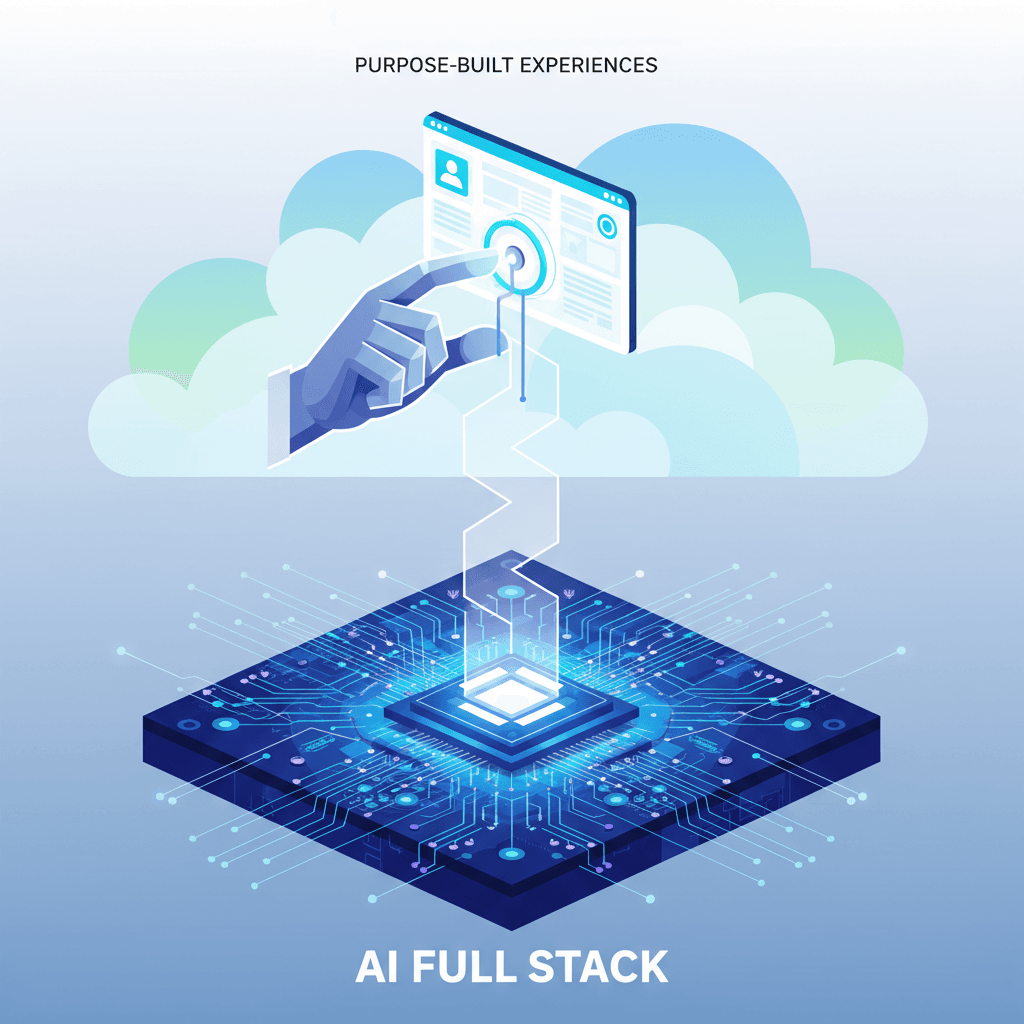
The hiring of the founding team from executive coaching startup Convogo by OpenAI signals a strategic acceleration in the generative AI giant’s mission to achieve "full-stack" control over its technology and bridge the critical gap between raw AI model potential and practical, real-world utility for professionals across industries. This move, which is structured as an acqui-hire for talent rather than an acquisition of intellectual property or product, underscores OpenAI’s commitment to not only building the most powerful foundational models but also mastering the user experience and cloud infrastructure required to deliver them as indispensable enterprise tools. The founders of Convogo—Matt Cooper, Evan Cater, and Mike Gillett—will now contribute their expertise in crafting "purpose-built experiences" to OpenAI’s “AI cloud efforts,” a department central to the company’s broader strategy of vertical integration.[1][2][3][4][5][6][7]
Convogo’s entire staff, including its three co-founders, are joining the ranks of OpenAI in an all-stock transaction, marking the company’s ninth such acqui-hire within the past year.[8][4][5] The focus of this deal is explicitly on human capital and applied domain expertise, leading to the discontinuation of Convogo’s existing executive coaching platform.[2][8][4] Convogo, which originated from a weekend hackathon project, used AI to automate the labor-intensive task of generating leadership assessments and feedback reports for thousands of executive coaches, consultants, and HR teams.[2][3][4] This hands-on experience in streamlining complex professional workflows is precisely the specialized knowledge OpenAI is seeking to integrate into its core development, contrasting with a simple product merger.[9][7] The founders themselves noted that their work revealed a broader challenge: the need for better tooling to translate the ever-increasing intelligence of new AI model releases into tangible, real-world outcomes. They believe that "thoughtful, purpose-built experiences" are the key to bridging this disparity, a philosophy they are now bringing to OpenAI.[2][3][5]
The Convogo team’s arrival is a clear reinforcement of OpenAI's overarching and ambitious strategy to own the "full stack" of artificial intelligence delivery, from the underlying infrastructure to the final user application. This vertical integration effort involves major capital spending on building proprietary data centers, developing custom hardware, and integrating its software services to achieve cloud independence and move beyond its deep reliance on partners like Microsoft Azure.[10][11][12] The goal is to gain greater control over performance, reduce long-term operational costs, avoid vendor lock-in, and accelerate product roadmaps by eliminating integration handoffs.[10][11][13] By embedding the Convogo founders into its AI cloud organization, OpenAI is directly enhancing the part of its stack responsible for delivering models reliably and intuitively to enterprise customers.[3][9][7] The expertise in applied AI and domain-specific workflow automation, demonstrated by the Convogo platform in the demanding professional development sector, will be instrumental in designing and scaling next-generation, cloud-native AI experiences across all industries.[3][4][9][7]
This talent-first acquisition strategy is a significant indicator of the current state of the AI industry, where the competition for specialized human capital is as fierce as the race to build the most advanced models. OpenAI's series of acqui-hires over the past year demonstrates a pattern of prioritizing teams with deep operational experience in applying generative AI to solve specific, high-value business problems.[8][5][14] By absorbing teams that have successfully navigated the complexities of enterprise integration, HR technology, and leadership assessment workflows, OpenAI gains an invaluable perspective on what it takes to transform a powerful language model into a product that delivers measurable business value.[7] This practical, user-centric approach is critical for the company to solidify its position as a dominant infrastructure and application provider, a dual role that many industry analysts believe is the ultimate goal of the full-stack gambit.[10][12][15] The integration of the Convogo team suggests a shift in focus from merely demonstrating AI's power to ensuring its reliability, accessibility, and utility for professional users in every major sector.[2][9]
In essence, the addition of the Convogo team is more than just a talent grab; it is a tactical investment in the final, most crucial layer of the AI stack: the user experience.[3][9] The founders' dedication to creating "purpose-built experiences" to close the gulf between theoretical AI capabilities and practical use is a direct reflection of the market’s demand for sophisticated, domain-specific AI solutions.[2][3] This move positions OpenAI not just as a technology leader but as a market-facing enterprise solutions provider that understands the nuances of professional workflows, from HR to other complex white-collar tasks. As the company continues to build out its full-stack infrastructure—from energy and custom chips to data centers and developer platforms—the human expertise acquired from Convogo will play a vital role in ensuring that the monumental technical investment translates into elegant, scalable, and genuinely transformative enterprise-ready AI products for professionals globally.[10][9][15]
Sources
[1]
[2]
[4]
[10]
[11]
[12]
[13]
[15]