
Nvidia's Open-Source PersonaPlex Creates Seamless, Interruptible Human-Machine Conversations
The full-duplex model eliminates lag and allows "barge-ins," creating deeply customized, truly human-like digital agents.
January 26, 2026
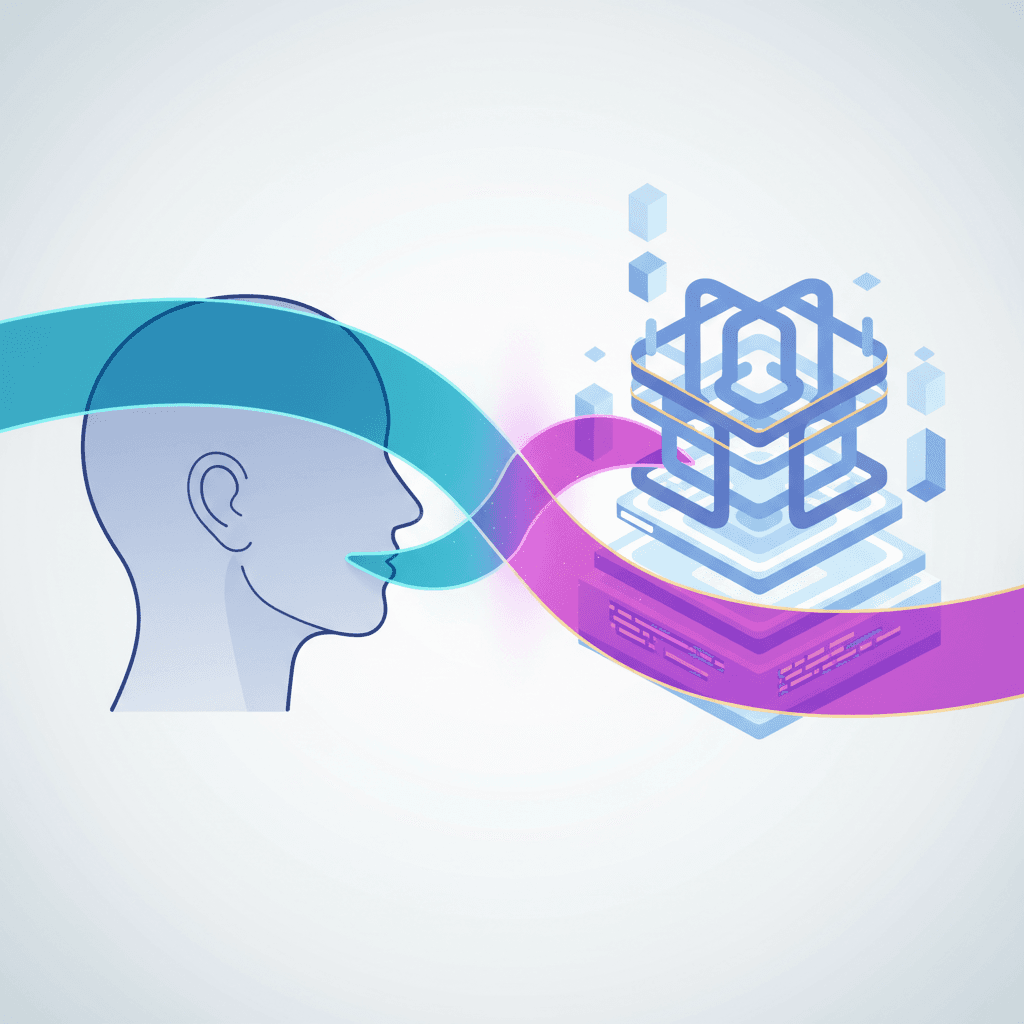
Nvidia has fundamentally challenged the prevailing architecture of conversational artificial intelligence with the open-source release of PersonaPlex-7B, a 7-billion-parameter neural network designed to eliminate the inherent trade-off between real-time responsiveness and deep customization. PersonaPlex is billed as a full-duplex conversational model, capable of simultaneously listening to a user’s speech and generating its own spoken response, a capability that closely mimics the natural, interruptible flow of human dialogue. This key technical breakthrough addresses the awkward, low-latency pauses and inability to handle "barge-ins" that have plagued prior generations of voice assistants, promising to unlock new levels of realism and utility in human-machine interactions across various sectors. The model's open availability, governed by the Nvidia Open Model License Agreement, is poised to democratize the development of highly natural and customized voice AI applications.[1][2][3][4]
The core innovation that enables PersonaPlex’s simultaneous listening and speaking capability is its unified, end-to-end architecture, which dramatically departs from the traditional, sequential pipeline of conversational AI systems. Older systems operate in three discrete stages: first, Automatic Speech Recognition (ASR) transcribes the entire user utterance; second, a Language Model (LM) processes the text and formulates a text response; and finally, Text-to-Speech (TTS) synthesizes the audio output. This assembly-line process inherently introduces noticeable delays, often resulting in interaction latencies exceeding human reaction time and creating a "push-to-talk" or "wait-your-turn" feel. PersonaPlex, conversely, is built on the Moshi architecture and utilizes a dual-stream configuration to operate concurrently. Incoming user audio is continuously encoded into tokens and fed to the model, which jointly performs streaming speech understanding and speech generation. It autoregressively predicts both text tokens and audio tokens, allowing it to begin speaking before the user has finished their sentence. This integrated design, which also utilizes the Helium language model for reasoning and generalization and the Mimi speech encoder/decoder for high-quality audio, achieves a significantly reduced response time, which has been measured in some cases at just 170 milliseconds, making the conversation feel responsive and instantaneous.[1][2][5][4]
Beyond its ultra-low latency, the model's namesake strength lies in its ability to create and maintain a highly specific, customized persona throughout an extended conversation. PersonaPlex overcomes the limitations of earlier full-duplex systems, which were often restricted to a fixed voice and a generic, assistant-style role, by introducing a Hybrid System Prompting mechanism. This mechanism allows developers to condition the model's behavior using two distinct inputs: a text prompt and a voice prompt. The text prompt is a plain-language description defining the character's role, background, and desired conversational tone, such as a "friendly consultant" or an "astronaut handling an emergency." The voice prompt, which requires only a short audio sample, enables zero-shot voice cloning, establishing the specific timbre, accent, and speaking style of the AI agent. This combination allows for dynamic persona creation that remains stable over long interactions, preventing the tone or behavior from drifting. The model's training methodology, which combined thousands of hours of real human conversations for natural speech patterns with a synthetic corpus of role-based dialogues for task accuracy, is credited for its ability to adhere strongly to its assigned role and maintain consistency. Evaluation on benchmarks like the Service-Duplex-Bench, an extension of the Full-Duplex-Bench that covers multi-role customer service scenarios, demonstrates its superior performance in role adherence, voice similarity, and dialog naturalness compared to previous state-of-the-art models.[1][2][6][3][7][5]
The open-source nature of PersonaPlex-7B marks a pivotal moment for the voice AI market, shifting the competitive landscape and accelerating innovation. By releasing a model with such advanced capabilities under a permissive license, Nvidia is effectively placing a state-of-the-art full-duplex system into the hands of developers and enterprises without the typical high API fees associated with commercial systems. This move is expected to dramatically lower the barrier to entry for creating sophisticated, custom voice agents across a multitude of industries. Potential applications span highly realistic virtual characters for gaming and metaverse environments, advanced customer service agents capable of nuanced, interruptible interactions, and specialized personal assistants in domains like medical office intake and tutoring. The model's optimization for Nvidia GPU-accelerated systems, such as the A100 and H100, reinforces the company's hardware-centric strategy, positioning its chips as the ideal platform for deploying this next generation of demanding, real-time AI. The widespread adoption of PersonaPlex will likely spur further research and development in duplex speech models and role-conditioning, solidifying the full-duplex paradigm as the new standard for highly interactive, conversational AI systems.[1][2][5][4]
PersonaPlex represents a significant leap from the stilted, turn-based interactions that have long defined digital assistants and voice-based services. By achieving the dual feat of simultaneous listening and speaking, coupled with unparalleled voice and role customization, Nvidia has delivered an open model that pushes conversational AI closer to the ideal of truly human-like dialogue. The open-source model’s capabilities will serve as a foundational element for a new ecosystem of voice applications, promising a future where AI interactions are not just functional but also emotionally aligned, engaging, and indistinguishable in rhythm from a natural conversation.[2][6][4]
Sources
[2]
[4]
[5]
[6]
[7]