
Desperate Apple Outsourced Its Core AI to Google After Internal Crisis.
Years of mismanagement and indecision forced the tech giant into a chaotic, eleventh-hour alliance with its fiercest rival.
January 26, 2026
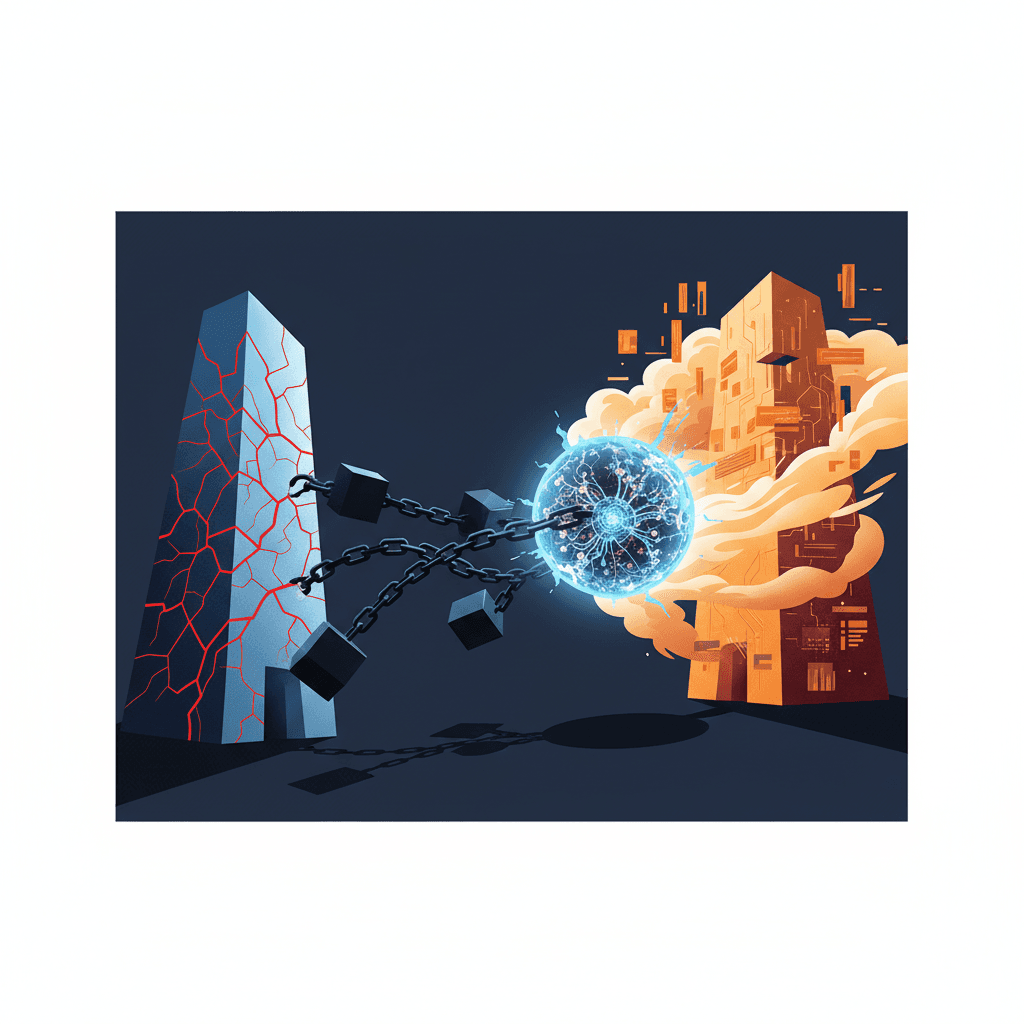
The decision by Apple to partner with Google’s Gemini for its next generation of artificial intelligence capabilities was not a strategic move born of foresight, but rather a chaotic pivot driven by years of internal mismanagement, a failure to keep pace with the generative AI revolution, and a desperate eleventh-hour search for a powerful outside solution. Revelations from within the company paint a picture of a tech titan wrestling with a systemic crisis, ultimately forced to outsource the cognitive core of its flagship operating system to its fiercest competitor.
The internal struggles within Apple’s artificial intelligence and machine-learning division, sometimes internally referred to as "AIMLess," reached a boiling point in recent years as the company fell dramatically behind rivals in the generative AI race[1]. The corporate culture, marked by indecision and a lack of appetite for the significant risks and investment required for modern large language models, created an environment of chaos, burnout, and embarrassment[2][1]. This turmoil led to a significant talent exodus, with many top AI engineers accepting lucrative, nine-figure compensation packages from competitors like Meta, which Apple's counter-offers were unable to match[3]. The perennial underperformance of the company's digital assistant, Siri, which employees derisively called a "hot potato" continually passed between teams, underscored the depth of the platform gap[1][4].
The internal crisis peaked following reports that Apple was exploring external AI partnerships, a claim that prompted an emergency all-hands meeting in June[5]. During this high-stakes meeting, Mike Rockwell, the senior director overseeing Siri at the time, reportedly dismissed the notion of an outside collaboration as "bulls--t," a blunt attempt to rally the demoralized troops and defend the company’s internal foundation models team and the billion-dollar infrastructure they commanded[5]. This public denial, however, failed to reassure the staff, who could read the writing on the wall. Within weeks of the meeting, a fresh wave of talent departed, including Ruoming Pang, the leader of the foundation models group, as engineers recognized the hollow nature of the leadership’s commitment to their in-house efforts[5]. The company’s own internal systems, despite years of development, simply could not compete with the capabilities offered by industry leaders, necessitating the strategic reversal its leadership had just publicly denied.
Once the leadership acknowledged that an external partner was necessary to avoid a crippling competitive disadvantage, Apple’s quest for a solution led to a series of failed, high-stakes, billion-dollar negotiations with key players in the generative AI space[6]. The initial focus was on two primary candidates: Anthropic and OpenAI. Talks with Anthropic quickly stalled, primarily due to financial demands[5]. Anthropic reportedly sought a multi-year contract requiring a multibillion-dollar annual fee that would escalate sharply each year[3]. For a company known for its aggressive negotiation tactics and tight control over supplier costs, the steep financial terms were untenable[5]. Negotiations with OpenAI presented a different, but equally insurmountable, set of strategic problems[6]. The prospect of relying on a company that was actively poaching Apple’s engineers and whose CEO, Sam Altman, was engaged in a competing hardware venture with former Apple design chief Jony Ive, was deemed a profound strategic risk[5]. Handing over a crucial layer of its ecosystem to a company simultaneously competing for its talent and hardware market proved to be a mathematical equation that simply did not work for Apple’s executive team[5].
With other options eliminated, the company turned to Google, a move facilitated by the long-standing, multi-billion dollar agreement that makes Google the default search engine on Safari[3]. The new partnership is an extension of this strategic alliance, with Google’s Gemini models set to power a significantly revamped, conversational version of Siri, internally codenamed "Campos," deeply integrated across the company's device operating systems[7][3]. While the financial details were not officially disclosed, the agreement is a multi-year, multi-billion dollar deal, with some analysts estimating the annual license fee Apple will pay to Google to be around $1 billion[8][5]. Apple is attempting to mitigate the core strategic risk by using its own Private Cloud Compute servers to handle most requests, only sending anonymized, highly scoped data to Google’s Gemini for the most complex inference tasks, thereby preserving its long-held privacy standards and customer relationship control[9][10].
The pivot to Google Gemini represents a profound strategic concession for Apple and has been widely characterized by industry observers as an "expensive Strategic Tax on Failure"[8]. For a company whose success has been built on the principle of a fully integrated, "Walled Garden" ecosystem—controlling everything from the chips to the software and services—outsourcing the core intelligence of its platform constitutes a massive crack in its structural foundation[8]. Conversely, the deal is a monumental victory for Alphabet, giving its Gemini models access to Apple's installed base of over two billion active devices and effectively locking Google into a dominant position in the global smartphone AI landscape[10][4]. This collaboration is a stark reminder that even the world’s most valuable technology company is not immune to fundamental strategic failure, forcing a crisis-driven partnership that reshapes the competitive dynamics and future of the entire AI industry. The long-term implications of ceding control over the crucial, user-facing layer of its AI interaction to a competitor will define Apple's trajectory in the post-smartphone era of computing[8].