
AI Didn't Cause Tech Layoffs: Study Finds Economic Downturn Started Earlier
The labor market slump began months before ChatGPT, fueled by macroeconomic tightening, not sudden AI adoption.
January 25, 2026
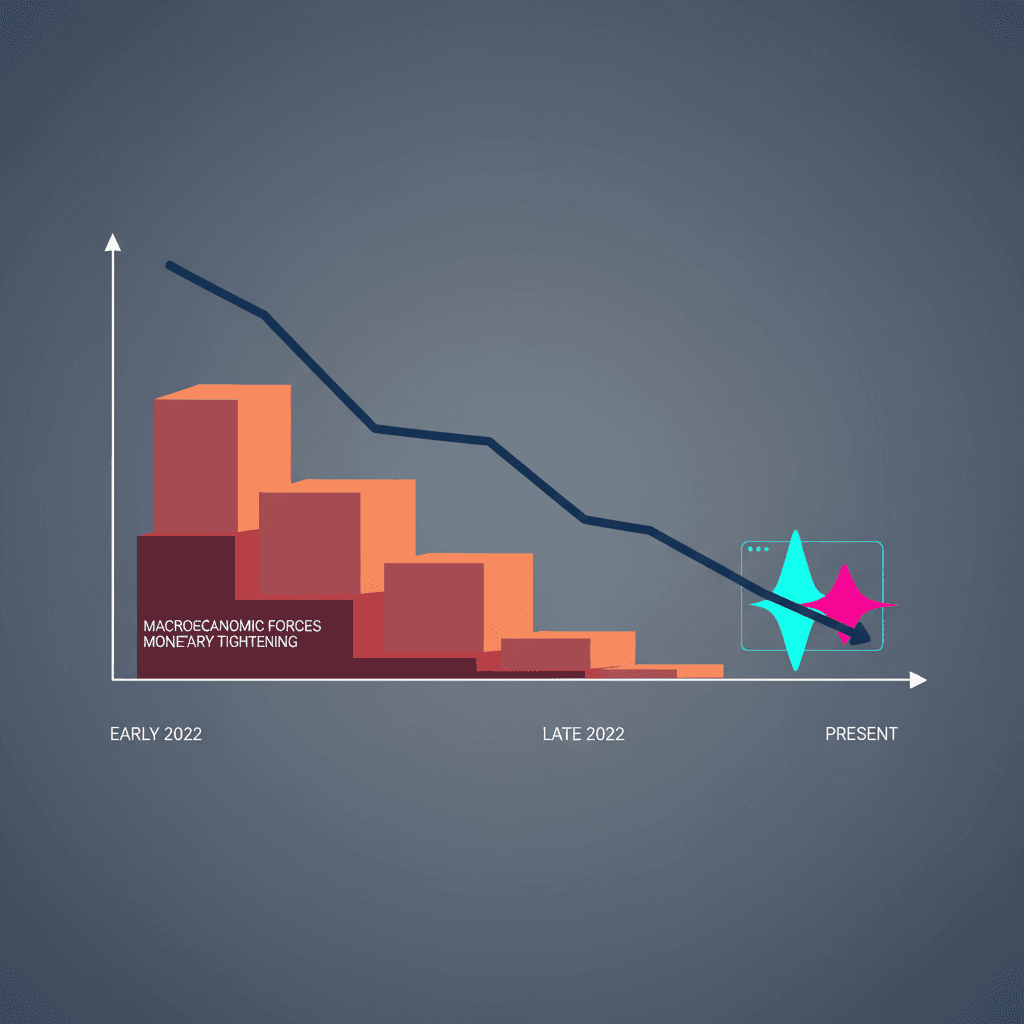
The widespread public narrative that the sudden emergence of generative artificial intelligence, epitomized by the launch of ChatGPT in late 2022, was the primary catalyst for a contraction in tech and white-collar jobs is being challenged by new academic research. The story of a rapid, technology-driven "jobpocalypse" gained significant traction as high-profile layoffs hit sectors like software engineering and digital content creation[1]. However, a comprehensive new study utilizing vast labor market data suggests a much more nuanced timeline, indicating that the labor market downturn in AI-exposed fields began long before the world first encountered the consumer-facing chatbot[2][3]. This recalibration of the chronology fundamentally shifts the conversation from a singular AI-shock event to one intertwined with broader, pre-existing macroeconomic forces, raising critical questions for industry forecasting and policy response[4].
Researchers from a collaboration of US universities, led by a team including Morgan Frank from the University of Pittsburgh, analyzed an array of high-volume datasets to construct a detailed picture of occupational trends in the lead-up to and following the generative AI boom[3][2]. The analysis incorporated monthly U.S. unemployment insurance records to track occupation- and location-specific unemployment risk, over ten million LinkedIn profiles to monitor graduate hiring patterns, and three million university syllabi to gauge the value of AI-relevant education[2][3]. Their central finding dramatically refutes the popular timeline: unemployment risk for professionals in occupations highly exposed to Large Language Models (LLMs), such as computer and mathematics jobs, did not suddenly spike with ChatGPT's November 2022 debut[2][3]. Instead, the increase in unemployment risk in these roles was already underway, having commenced in early 2022, months before the chatbot's release[2]. In a counterintuitive turn, the study found that the increase in unemployment risk actually appeared to level off following the high-profile launch of ChatGPT, rather than accelerating into the expected crisis[3].
Further analysis of hiring for early-career workers corroborated this pre-existing deterioration in the labor market. The researchers tracked millions of LinkedIn profiles and found that university graduate cohorts starting from 2021 onward entered AI-exposed jobs at lower rates compared to earlier cohorts, with the employment gaps opening up before the latter part of 2022[2][5]. This timing discrepancy suggests that corporate hiring and staffing decisions, particularly for junior roles, were already being affected by factors that had begun to materialize well before the technology had achieved its mass-market tipping point[4]. The sheer implausibility of firms redesigning complex technological infrastructure, overhauling workflows, and executing national-scale staffing changes within a mere six months of a consumer chatbot's launch has been noted as a central weakness in the purely AI-driven displacement hypothesis[4].
A more plausible explanation for the downturn in white-collar hiring—especially for junior workers who are the most susceptible to shifts in new recruitment—points toward classic macroeconomic cycles[4]. The period leading up to and encompassing the supposed AI-shock saw the sharpest monetary policy tightening cycle in four decades, a move designed to combat inflation[4]. This shift, which preceded the November 2022 event, led to a significant hiring slowdown across many sectors, and online vacancies for the most AI-exposed occupations peaked in early 2022 before declining sharply for the remainder of the year[4]. From this perspective, the subsequent decline in employment levels is seen as the natural, lagged consequence of a pre-existing hiring freeze, where routine attrition was no longer being offset by new recruitment[4]. For entry-level workers, who are entirely reliant on new hiring inflows to maintain their cohort numbers, this macroeconomic shock would have an immediate and disproportionately harsh effect[4]. The data, therefore, positions AI as an amplifier of an existing slowdown rather than its singular cause[6].
Crucially, the study also offers a positive long-term outlook for those with relevant skills, providing a counter-narrative to the widespread fear of automation. Graduates whose university curricula were classified as more exposed to AI-relevant skills, such as writing and programming, continued to find value in their education[5][3]. Following the release of ChatGPT, these graduates experienced both higher first-job pay and shorter job search times, suggesting that the underlying skills which generative AI excels at are also the ones that complement the technology, thus retaining significant market value[2][5]. This finding underscores that the displacement channel of technological change is only one part of the equation, which also includes the productivity and reinstatement channels—where new tasks and roles that integrate and manage AI tools are created[6]. The emergence of roles like "Forward-deployed Engineers," which help customize and integrate AI workflows, provides early evidence of this reinstatement effect[6]. The new findings call for a more cautious and data-driven approach to attributing labor market shifts to technological change. Treating the post-ChatGPT downturn as purely an AI phenomenon risks leading to inappropriate remedies and obscures the complexity of the forces at play in a dynamic global economy[4]. The real impact of AI on the labor market will depend on the balance between displacement and the creation of new roles and higher productivity, a balance that remains highly uncertain[6].