
Meta AI Glasses Now Filter Noise for Clear Conversations.
Conversation Focus and multimodal AI elevate smart glasses into hands-free assistants for noisy environments and key global markets.
December 19, 2025
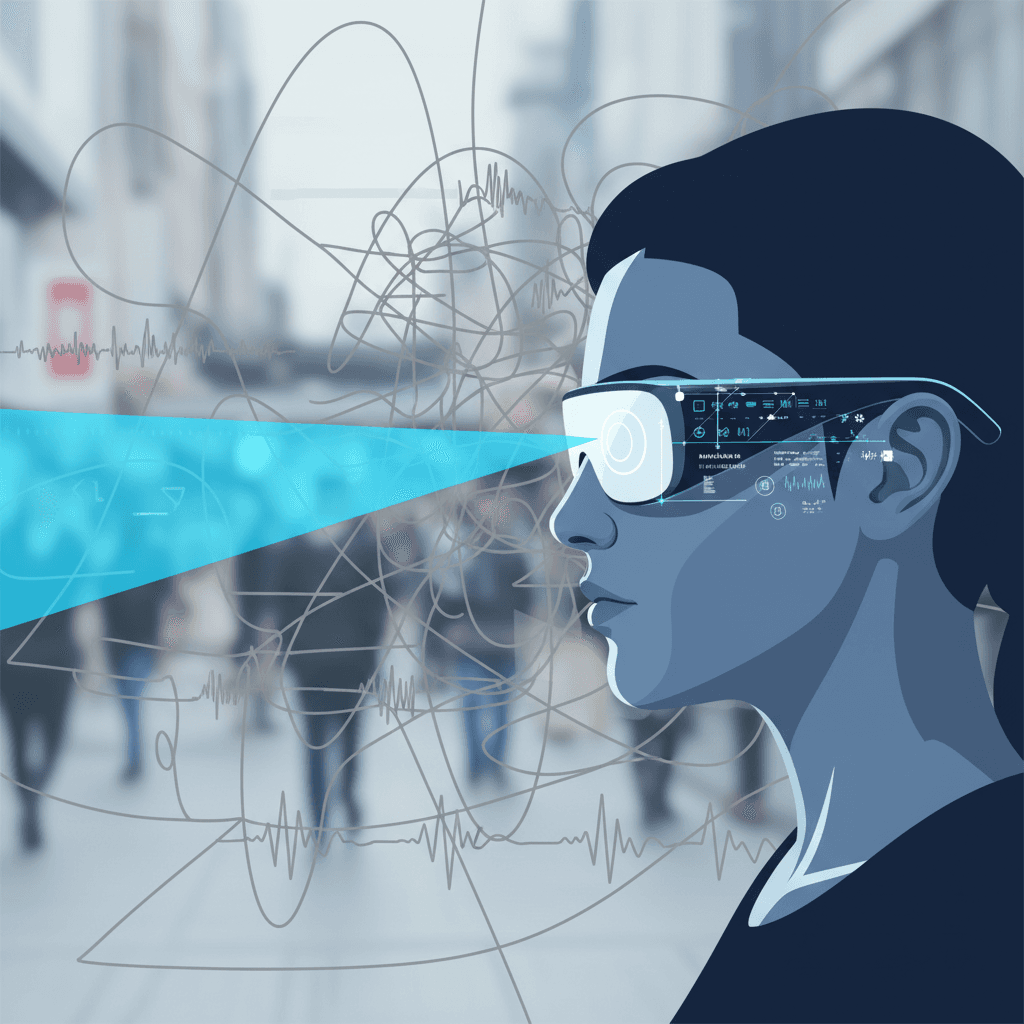
Meta Platforms has rolled out the v21 software update for its AI-powered smart glasses, including the Ray-Ban Meta and Oakley Meta HSTN models, introducing a suite of features that significantly enhance the devices' audio functionality, conversational utility, and deep localization efforts, particularly for the burgeoning Indian market. The update is a strategic maneuver that positions Meta's wearables not just as a camera-equipped accessory, but as a more integrated, context-aware artificial intelligence platform. The headline enhancements include a conversation-focus feature for noise filtration, a multimodal music experience via Spotify integration, and the expansion of regional language support in India with the addition of Telugu and Kannada.
The most immediately practical new feature is Conversation Focus, which addresses the common challenge of trying to hear someone in a noisy environment. This technology utilizes the glasses' built-in directional microphones and open-ear speakers, coupled with on-device artificial intelligence, to create a focused audio zone. The system is designed to isolate and amplify the voice of the person a user is speaking with, filtering it over ambient background noise in settings such as busy restaurants, trains, or crowded events. Users can adjust the level of amplification with a simple swipe on the right temple or through the device settings, providing a degree of control that is essential for an effective real-world application. While Meta has not marketed the feature as an assistive hearing technology, its function is comparable to conversation-boosting capabilities found in other high-end audio wearables. The use of open-ear speakers is a deliberate design choice that allows users to maintain environmental awareness, a critical differentiator from traditional, noise-isolating headphones or earbuds, thus enhancing the safety and social utility of the smart glasses. The initial rollout of Conversation Focus is being deployed through the Early Access Program in the United States and Canada.[1][2][3][4][5][6]
The update also unveils a novel collaboration with Spotify, described by Meta as its first multimodal AI music experience for its AI glasses. This feature marries the glasses' computer vision capabilities with Spotify's expansive music catalogue and personalization engine. Users can now leverage their visual surroundings to initiate music playback by saying a command like, "Hey Meta, play a song to match this view." The glasses will analyze the visual context—such as identifying an album cover and playing music from that artist, or recognizing festive decorations and suggesting holiday-themed music—to generate a contextually relevant playlist or track. This integration represents a significant step forward in making AI assistants more proactive and context-aware, demonstrating a commitment to synchronizing real-world visual cues with digital actions within Meta's ecosystem. The Spotify multimodal feature is seeing a broader international rollout, available in English across a diverse list of markets including India, the United Kingdom, and several countries in Europe and the Americas.[1][2][7][4][5][8][9][10][11]
Perhaps the most culturally and strategically significant element of the v21 update is the expansion of regional language support in India. Meta has rolled out support for Telugu and Kannada on its AI glasses, adding to the pre-existing English and Hindi language options. This move significantly strengthens Meta AI's multilingual capabilities and accessibility within the world's most populous nation, making the smart glasses more intuitive for millions of regional language speakers. The hands-free interaction allows users to leverage voice commands in their preferred language for a comprehensive range of tasks, including asking questions, obtaining information, capturing photos and videos, answering calls and messages, and controlling music. This deep localization effort is closely timed with the recent launch of the Ray-Ban Meta Gen 2 and Oakley HSTN AI glasses in the Indian market, as well as the wider retail availability of the first-generation glasses. By supporting Telugu and Kannada, Meta is signalling that India, with its vast and linguistically diverse population, is a pivotal market for its AI and hardware ambitions, highlighting a broader industry trend of prioritizing localization to drive mass adoption of AI-powered wearables. Furthermore, future plans include enabling UPI payments through the smart glasses in India, further cementing their utility in the daily lives of Indian consumers.[1][12][13][14][15][16]
The v21 software update is a clear signal of Meta's long-term strategy in the competitive wearable technology space. By layering increasingly sophisticated AI features like multimodal music matching and conversation-boosting onto a fashionable and widely accepted hardware form factor, Meta is attempting to blur the lines between consumer electronics and everyday eyewear. The Conversation Focus feature directly competes with similar audio enhancements offered by major tech rivals in their premium earbuds, positioning the smart glasses as a high-utility, all-day audio device. Coupled with the strategic investment in linguistic localization for massive markets like India, Meta is demonstrating a commitment to creating an AI experience that is deeply personal, contextually relevant, and globally accessible. These advancements transform the AI glasses from a simple novelty device into a powerful, hands-free assistant capable of navigating complex real-world situations, from crowded conversations to immediate, context-driven entertainment. The phased global rollout indicates a methodical approach to gathering user feedback and scaling the features, underscoring the ongoing development and evolution of the AI embedded in the wearable platform.[2][4][5][14][16][11]