
Mercado Libre Deploys Humanoid Robots in Landmark US E-commerce Move
Mercado Libre partners to deploy Digit humanoids, addressing labor gaps and enhancing human-robot collaboration to redefine e-commerce logistics.
December 11, 2025
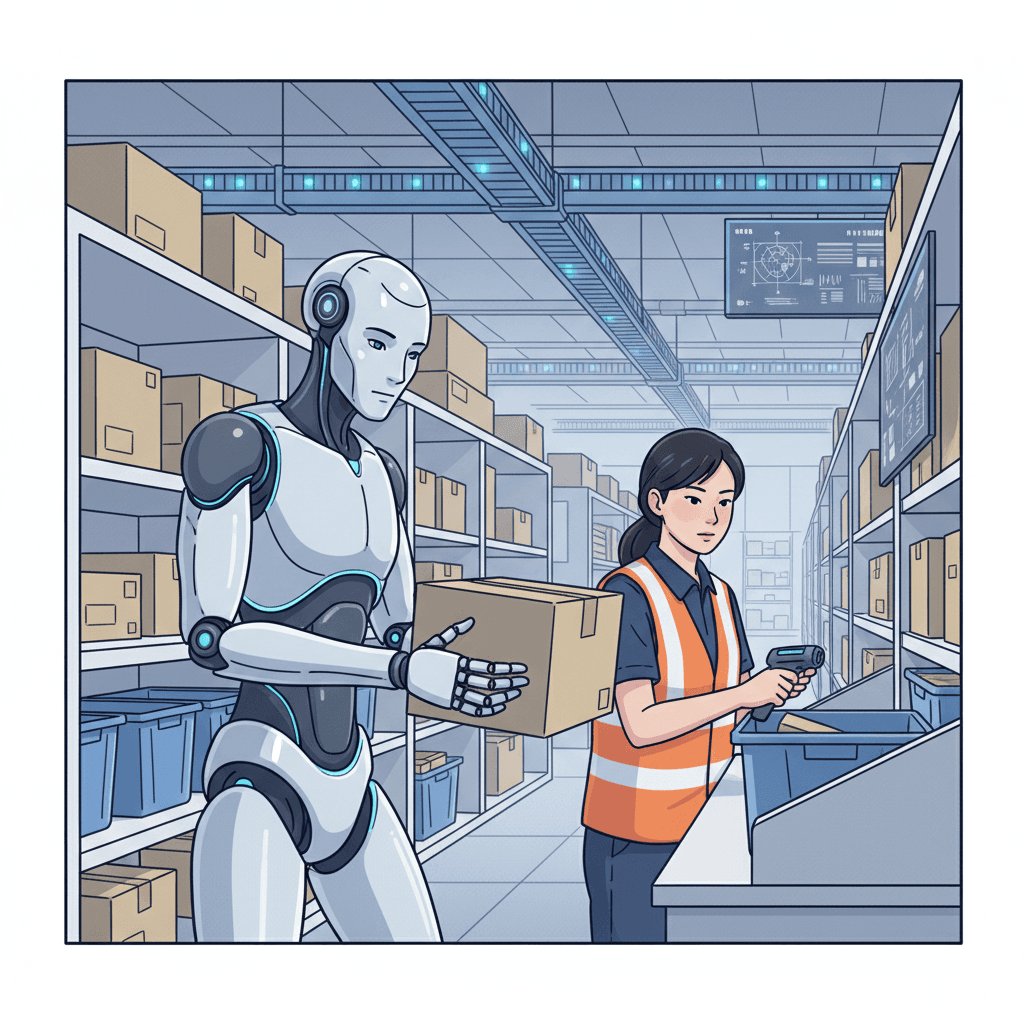
In a landmark move bridging advanced robotics with the demands of modern e-commerce, Latin American technology giant Mercado Libre has entered into a commercial agreement to deploy humanoid robots from Agility Robotics in its U.S. fulfillment operations.[1][2] The partnership will see Agility’s bipedal robot, named Digit, integrated into Mercado Libre's facility in San Antonio, Texas, to handle repetitive and physically taxing tasks.[1][2] This initiative represents a significant step beyond traditional warehouse automation, introducing a new class of flexible, human-centric robots into a live logistics environment. The collaboration is aimed squarely at addressing the persistent labor gaps in the logistics sector, improving workplace ergonomics for human employees, and boosting overall operational efficiency in an increasingly competitive market.[2]
At the heart of the initiative is the Digit humanoid robot, a machine designed to function in spaces created for people. Standing at a human scale, Digit can walk, lift, and move materials, specifically targeting the bulk handling of totes and packages within the warehouse.[2][3] Its key advantage over conventional automation, such as conveyor systems or caged robotic arms, is its ability to be integrated into existing facility layouts without the need for costly and disruptive infrastructure overhauls.[4][5] Agility Robotics emphasizes that Digit is intended to augment the human workforce, not replace it.[6] By taking on monotonous and strenuous jobs that often lead to employee burnout and injury, the robots are expected to free up their human counterparts to focus on more complex, value-added work requiring critical thinking and problem-solving skills.[2] This collaborative model is central to the vision of both companies, who aim to create a safer and more productive workplace where humans and robots operate in tandem.
For Mercado Libre, a dominant force in Latin American e-commerce and fintech, this foray into humanoid robotics is a strategic response to several industry-wide pressures.[7] The e-commerce boom has dramatically increased the volume of goods flowing through fulfillment centers, intensifying the need for speed and accuracy.[8][9] This demand runs up against a well-documented labor shortage for material handling and logistics positions in the United States, a gap that has grown to over one million unfilled roles.[6] Automating physically demanding tasks is a direct approach to mitigating this labor gap and reducing the high turnover rates common in the industry.[8] Agustin Costa, Senior VP of Shipping at Mercado Libre, stated that the company is constantly exploring emerging technologies to elevate operations and improve the employee experience.[1][2] He emphasized the goal of creating a "safer, more efficient, and adaptable logistics network" by testing how humanoid robotics can complement the capabilities of their teams.[1][2]
The implications of this partnership reverberate far beyond the walls of the San Antonio warehouse, signaling a pivotal moment for the AI and robotics industries. While humanoid robots have been in development for decades, their deployment in a large-scale commercial setting for a company like Mercado Libre serves as a powerful proof-of-concept.[8] Success in this pilot program could significantly accelerate the adoption of humanoid robots across logistics, manufacturing, and other sectors facing similar labor challenges.[10] The initiative will provide invaluable real-world data on the practicalities of integrating these advanced machines into complex, dynamic human environments.[8] It also brings to the forefront the ongoing conversation about the future of work, highlighting a shift toward human-robot collaboration and the necessity for upskilling and reskilling the workforce to manage and work alongside intelligent automation.[8] The industry will be closely watching the performance, reliability, and economic viability of the Digit fleet as it navigates its new role.
In conclusion, the deployment of Agility Robotics' Digit humanoids in Mercado Libre's Texas fulfillment center is more than just an operational upgrade; it is a forward-looking experiment that could redefine the future of logistics. By focusing on a collaborative model that enhances human capabilities while solving critical labor and safety issues, the partnership sets a new benchmark for warehouse automation. The initial phase in Texas is just the beginning, with both companies planning to explore further use cases and potential expansion into Mercado Libre's extensive network in Latin America.[1][2][11] The success of this venture will not only be measured in productivity gains but also in its ability to create a more sustainable and human-friendly work environment, offering a glimpse into a future where people and intelligent machines work together to power the global supply chain.