
Indigenous Vachana Model Masters India's Complex Languages, Bolstering Digital Inclusion.
The Vachana model, trained on one million hours of data, sets the new benchmark for accurate, multilingual Indic speech recognition.
December 19, 2025
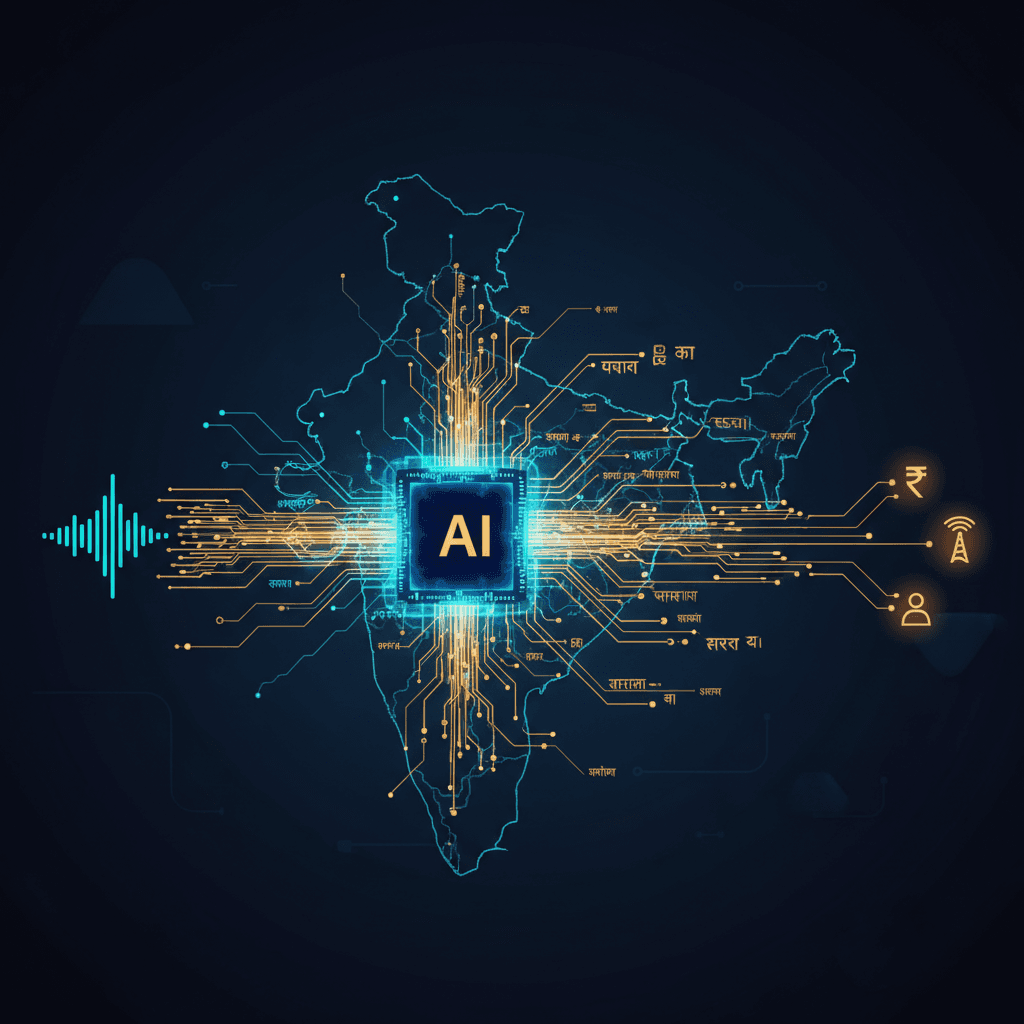
The launch of the Vachana Speech-to-Text model by Gnani.ai represents a pivotal moment in India’s ambitious journey towards developing indigenous and multilingual foundational artificial intelligence, directly aligning with the strategic goals of the government’s IndiaAI Mission. The Bengaluru-based conversational AI company has positioned Vachana not merely as an application-layer tool but as a piece of core digital public infrastructure essential for a linguistically diverse nation. This foundational model, which has been selected for support under the mission, is engineered to resolve a critical challenge in the subcontinent: the complexity of accurately recognizing and processing the immense variety of Indian accents, dialects, and languages. Its introduction marks a major step toward achieving AI sovereignty and accelerating digital inclusion for the millions of citizens who prefer to interact in their native tongue.
The Vachana model’s technical foundation is built on an unprecedented scale of localized data, a critical factor for achieving high accuracy in the complex Indian linguistic landscape. Gnani.ai states that the model has been rigorously trained on proprietary multilingual datasets encompassing over one million hours of real-world voice data, which spans more than 1,056 distinct business and linguistic domains.[1] This extensive and nuanced training regimen enables the system to handle the unique phenomena of Indian speech, such as code-switching—where speakers fluidly move between English and an Indian language within a single conversation—and the many regional variations and noise conditions found in live enterprise environments. Internally and against public dataset evaluations, Vachana has demonstrated a marked performance superiority, achieving a 30 to 40 percent reduction in word error rates for low-resource Indian languages.[1] Furthermore, it shows a 10 to 20 percent improvement in accuracy for the eight most-used languages in India, including Hindi, Tamil, Telugu, Kannada, Bengali, and Marathi, establishing a new domestic benchmark for Indic speech recognition.[1] The company’s work under the IndiaAI Mission is also focused on building a larger, 14 billion parameter Voice AI foundational model, a capacity that will enable multilingual and real-time speech processing with advanced reasoning capabilities, eventually supporting over 40 Indian and global languages.[2][3]
Vachana’s launch is inextricably linked to the broader, strategic vision of the IndiaAI Mission, a government initiative with an outlay of approximately ₹10,371 crore approved for a five-year period.[2][4] This national mission is dedicated to fostering a comprehensive and inclusive AI ecosystem by supporting the development of indigenous foundational models, establishing crucial compute capacity, and creating a datasets platform known as AI Kosh.[2][4][5] Gnani.ai, alongside other selected startups, is tasked with building a foundational model customized for the Indian context, a mandate that aims to reduce the country’s dependence on foreign AI platforms and ensure that the technology is culturally and linguistically relevant.[6] Co-founder and Chief Executive Officer Ganesh Gopalan underscored the strategic imperative, stating that speech recognition in India is a "foundational systems problem," not merely a "localisation problem," and that Vachana is purposefully constructed as core infrastructure trained on how the populace genuinely speaks and designed for operational deployment across diverse channels.[1] The government's backing provides the chosen innovators with access to subsidized GPU compute credits, essential for training large models, solidifying the national commitment to an 'AI for India' strategy.[4][5]
The immediate implications of this high-accuracy, low-latency model are already being seen across critical industry verticals. Vachana is designed for immediate enterprise use and is available via API, serving as a versatile tool for real-time and batch transcription.[1] The model is already deployed across high-volume sectors such as banking, telecom, and customer support operations, collectively processing roughly 10 million calls per day.[1] Its performance in real-world, high-stakes environments is highlighted by a P95 latency of 200 milliseconds, ensuring that automated and agent-assisted workflows remain fast and responsive.[1] The model’s robustness, built to handle challenges like compressed audio and variable network conditions, makes it highly suitable for demanding applications, including compliance monitoring, advanced analytics, and complex voice-driven workflows where accuracy is non-negotiable.[1] For the financial services sector, for instance, this indigenous Voice AI model is a driver for financial inclusion, facilitating billions of rupees in transactions through voice-enabled applications in rural areas.[7] Similarly, e-commerce platforms using multilingual voice search capabilities have observed conversion rates increase by 40 to 60 percent among regional language users compared to text-based interfaces, demonstrating a clear and quantifiable business impact.[7]
The launch of Vachana under the banner of the IndiaAI Mission is a significant indicator of the nation’s technological maturity in the domain of conversational AI. It reflects a shift in focus from merely adopting global technology to engineering sovereign foundational AI infrastructure tailored for the complexities of the domestic market.[1] The success of such a multilingual model holds greater promise beyond India's borders. As articulated by a senior government official, if AI can successfully address India’s unparalleled linguistic and regional diversity, the resulting models can be shared with countries across the Global South, positioning India as a leading and collaborative force in the global AI landscape, helping to build inclusive, multilingual AI systems for resource-constrained environments worldwide.[4] This latest development solidifies Gnani.ai’s role as a key contributor to this national effort and sets a powerful precedent for the next generation of inclusive, voice-driven digital services.