
India Harnesses AI Drones to Slash Emergency Response Times for Dial 112
This partnership fuses AI and drone-as-a-service to create a smarter, faster, and self-reliant emergency response.
December 12, 2025
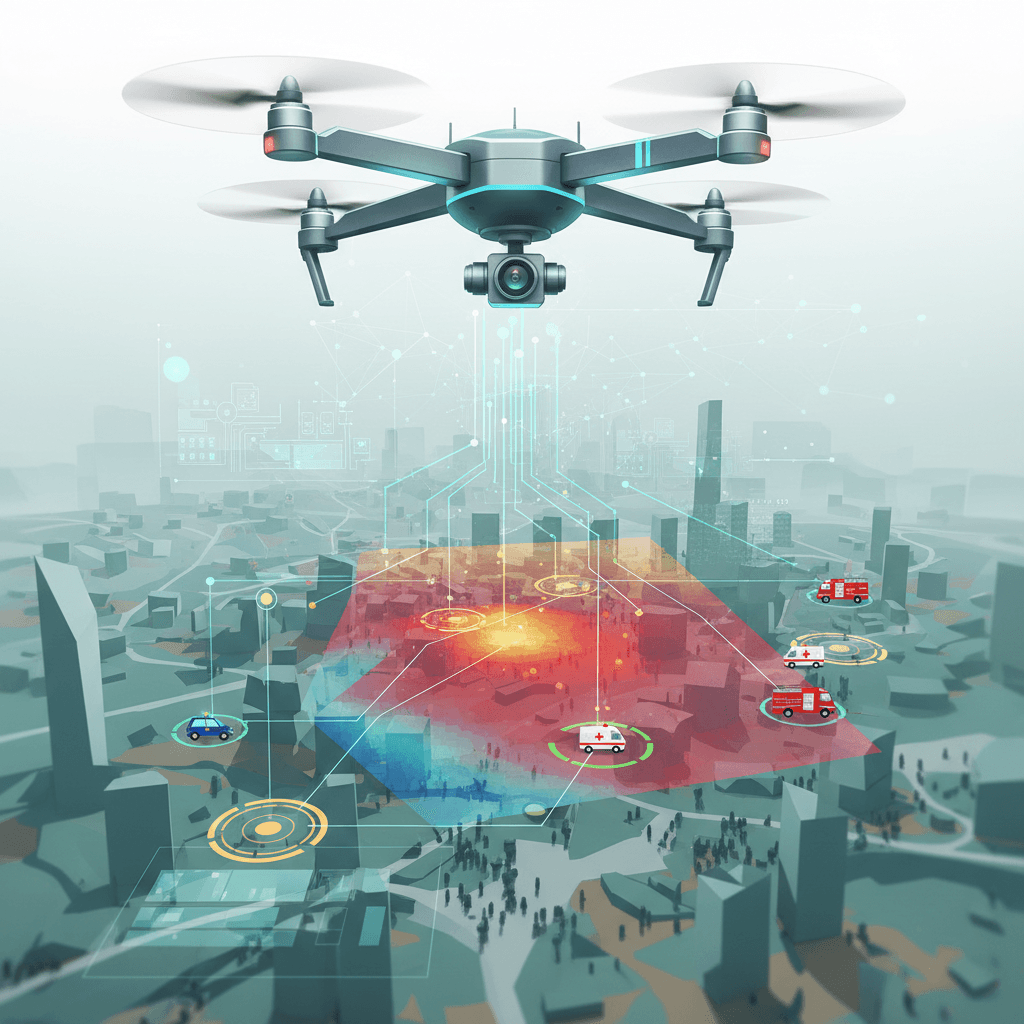
In a significant move to bolster India's emergency response capabilities, the Centre for Development of Advanced Computing (C-DAC) has signed a Memorandum of Understanding (MoU) with ideaForge Technology Limited, a leading manufacturer of unmanned aerial systems (UAS).[1][2] This strategic partnership aims to integrate drone technology into the national Emergency Response Support System (ERSS), potentially revolutionizing how police, fire, and medical teams handle crises.[1][3] The collaboration will see the fusion of ideaForge's drone-as-a-service (DaaS) platform, FLYGHT, with C-DAC's nationwide ERSS–Dial 112 system, which serves as a single point of contact for citizens seeking emergency assistance.[1][2][4] By leveraging aerial intelligence, the initiative seeks to provide first responders with real-time situational awareness, a critical factor in mitigating the impact of disasters and emergencies. This alliance not only addresses the pressing need for faster and more efficient crisis management but also signifies a major step forward in the adoption of advanced, indigenous technology within India's public safety infrastructure, aligning with the nation's Atmanirbhar Bharat (self-reliant India) mission.[2][4]
The core of this collaboration is the technical integration of ideaForge's FLYGHT platform with the ERSS.[1] With an average emergency response time in India currently approaching twenty minutes, the primary goal is to substantially reduce this timeline by deploying drones as rapid first responders.[1][2][4] These unmanned aerial vehicles can be dispatched ahead of ground teams to stream live video feeds of an incident location, helping responders to overcome challenges like traffic congestion, difficult terrain, and other physical obstacles.[4][3] This immediate aerial perspective allows for quicker threat assessments, better allocation of resources, and enhanced safety for both the public and the emergency personnel.[4] The FLYGHT platform operates on a "Drone-as-a-Service" model, allowing government and public safety agencies to access drone capabilities on-demand through a pay-per-use system.[1][5][3] This model obviates the need for significant capital expenditure on hardware, software maintenance, or specialized training, making advanced aerial surveillance technology more accessible and scalable for state and local departments.[1][4]
Beyond the immediate operational enhancements to the Dial 112 system, the MoU establishes a framework for long-term research and development in next-generation technologies.[1][2] A key area of exploration will be the potential integration of C-DAC's indigenously developed VEGA processor into ideaForge's drone platforms.[1][4][3] This collaboration extends to researching VEGA-based System-on-Chip (SoC) architectures for flight control systems and advancing capabilities in autonomous swarm drones powered by artificial intelligence and advanced computing.[4][3] By combining ideaForge's expertise in aerial systems with C-DAC's central role in secure data management and high-performance computing, the partnership aims to create a robust and sovereign drone ecosystem.[2][4] This synergy is crucial for developing UAV systems that are not only operationally effective but also aligned with India’s stringent data sovereignty and security requirements.[2] The joint R&D efforts are expected to accelerate the nation's capabilities in deep-tech and unmanned systems, fostering innovation within the domestic technology sector.[4]
The implications of this partnership for the artificial intelligence industry in India are profound. The integration of AI is central to enhancing the effectiveness of drone-led emergency response. AI algorithms can be used to analyze real-time video feeds from drones to automatically detect objects, identify survivors through thermal imaging, assess structural damage, and generate heat maps of affected areas.[6][7] This automated analysis provides actionable intelligence to command centers, enabling faster and more informed decision-making than human operators could achieve alone.[8][7] AI-driven pattern recognition can help locate individuals trapped under debris or in remote locations, significantly optimizing search and rescue paths and increasing the chances of survival.[7] Furthermore, AI will be critical in managing autonomous drone operations, including swarming technologies where multiple drones coordinate to survey large areas efficiently.[4][8] As these systems are deployed, they will generate vast amounts of data, creating opportunities for machine learning models to be further trained and refined, leading to more accurate predictive modeling for disaster preparedness and response.[8] This collaboration serves as a real-world testbed for developing and deploying sophisticated AI solutions in mission-critical public safety applications.
In conclusion, the memorandum of understanding between C-DAC and ideaForge marks a pivotal moment for emergency management and technological advancement in India. By integrating a ready-to-deploy drone network with the national emergency helpline, the initiative promises to drastically cut down response times and provide invaluable aerial intelligence to first responders.[2][4] The "Drone-as-a-Service" model ensures that this cutting-edge technology is both accessible and scalable for public safety agencies across the country.[1][4] The forward-looking commitment to joint research and development, particularly in areas like indigenous processors and AI-driven autonomous systems, will not only enhance the operational capabilities of the drones but also contribute significantly to India's strategic goals of technological self-reliance.[2][4][3] This partnership is set to redefine how India reacts to crises, creating a more intelligent, data-driven, and ultimately more effective emergency response framework that will save lives and better protect communities nationwide.[4]