
Formula E deploys Google AI to achieve ultimate net-zero efficiency globally.
Generative AI transforms Formula E’s global operations, turning efficiency into a powerful net-zero competitive advantage.
January 26, 2026
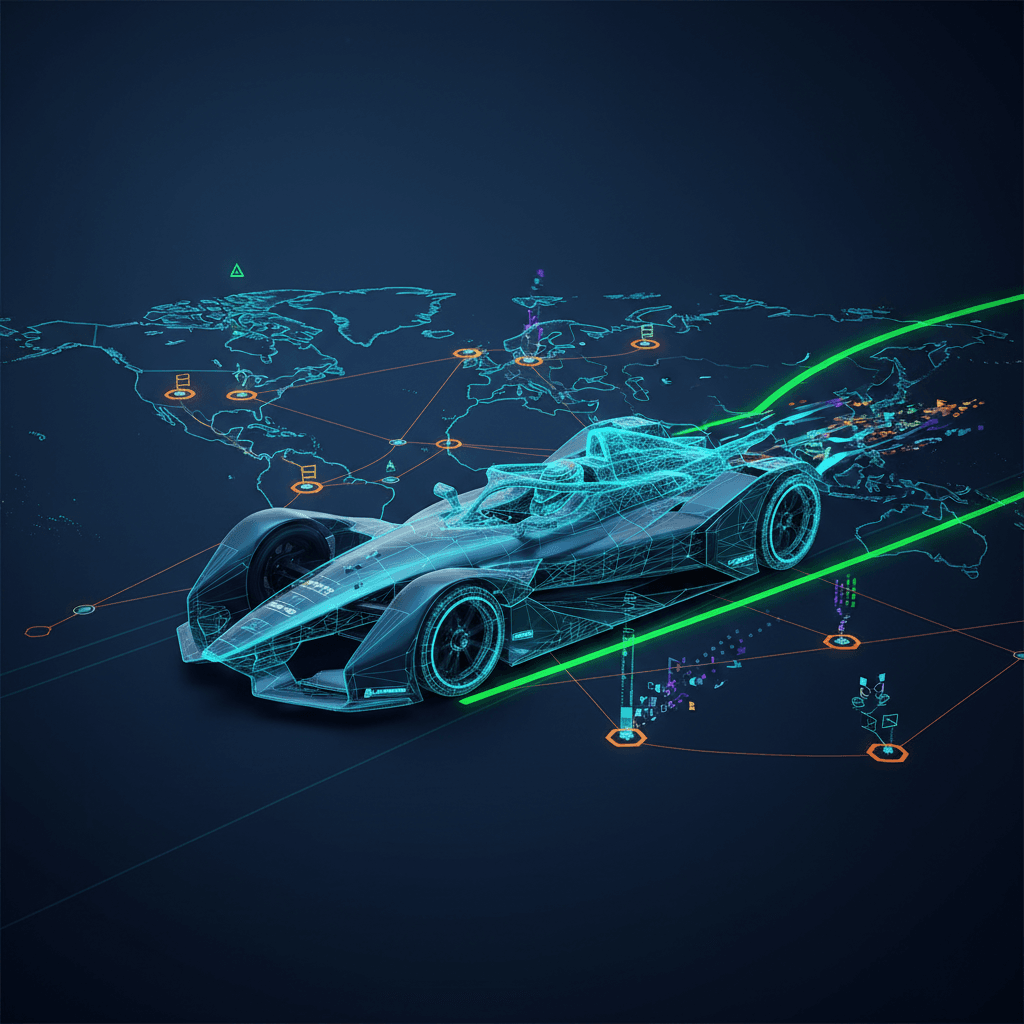
The electrifying speed of Formula E, the world's first all-electric FIA World Championship, is now being mirrored by the rapid deployment of artificial intelligence to manage its global operations and reinforce its commitment to sustainability. As the only sport certified net zero carbon since its inception, the electric racing series has significantly expanded its multi-year partnership with Google Cloud, elevating the technology provider to Principal Artificial Intelligence Partner[1][2]. This expanded collaboration is not merely about gaining a competitive edge on the track but is fundamentally a business transformation project, driving efficiency and delivering a measurable reduction in the Championship’s operational carbon footprint[3]. The integration of advanced Google Cloud AI, particularly the Gemini family of generative models, is being applied across the entire Formula E ecosystem, from optimizing global logistics and back-office workflows to revolutionizing driver performance analysis and fan engagement[4]. This comprehensive deployment serves as a powerful, real-world case study for how generative AI can be a core tool in achieving ambitious net zero targets for complex, global businesses.
The application of Google Cloud AI directly addresses one of the most challenging sustainability hurdles for a global sport: logistics and event operations. The Formula E season travels to iconic cities across four continents, necessitating the global transport of cars, specialized equipment, and broadcasting gear via a combination of sea and air freight[5]. To mitigate the substantial carbon emissions associated with this movement, the Championship is leveraging AI for freight optimization. Machine learning models analyze complex data streams to determine the most efficient and environmentally friendly shipping methods, directly contributing to lower CO2 emissions from their freight activities[5]. Beyond physical transport, the efficiency drive extends to the pre-race process through the creation of "race and event digital twins"[3]. This advanced AI modeling of a race’s back office and event infrastructure allows Formula E to simulate and optimize site builds virtually[3]. This capability minimizes the need for personnel to conduct extensive on-site reconnaissance and reduces the requirement for heavy equipment transport, thereby yielding a measurable reduction in the operational carbon footprint before the first cable is even laid[3]. This systematic use of AI to predict, model, and optimize resource-intensive processes demonstrates a new paradigm for achieving net zero goals in the live events sector.
On the commercial and administrative side, the integration of generative AI is streamlining complex international workflows, proving that the technology’s role in sustainability extends to the digital realm of organizational efficiency. The organization has adopted Google Workspace with Gemini models to enhance agility and collaboration across its globally distributed workforce[3][6]. A key innovation is an AI-powered procurement coaching tool designed to assist the team in navigating the complexities of sourcing materials across the twelve countries and four continents that host the racing calendar[5]. This agent helps the team understand budget forecasts, factoring in variables like super inflation that might affect plant equipment in Asia, and can even analyze quotes coming in languages unfamiliar to the procurement staff, all under varying regulatory environments[5]. This democratization of specialized knowledge accelerates back-office operations and reduces the risk of error, indirectly contributing to efficiency that has a downstream impact on the overall environmental footprint of the organization.
The most visible and high-stakes application of AI is on the track itself, where Google Cloud’s Vertex AI platform and Gemini models are used to enhance real-time performance and strategy[7][8]. The all-electric nature of the sport makes energy management a critical component of every race, and AI is vital in optimizing energy use and assisting teams in developing more efficient race strategies[8]. The "Driver Agent," an AI tool powered by this technology stack, processes a massive, multimodal torrent of telemetry data, including lap times, speed, braking, acceleration, G-force, and energy consumption[9][7]. From this data, the tool generates customized coaching tips for drivers, delivering immediate feedback via text or audio[7]. Furthermore, a "Strategy Agent" built with Gemini models processes live telemetry and timing data to create a human-readable narrative, generating race insights and predictions that appear on the broadcast in near real-time for millions of viewers[10]. This ability to distill immense complexity into actionable or consumable intelligence exemplifies the core strength of generative AI in a highly dynamic environment. The technology was also instrumental in the "Mountain Recharge" project, where Gemini models helped map the optimal route and braking zones for the GENBETA car to regenerate enough energy from a mountain descent to complete a full lap of the Monaco circuit from a near-zero battery state[4][3].
The expanded partnership between Formula E and Google Cloud stands out as one of motorsport's most comprehensive implementations of generative AI technology, holding significant implications for the wider AI industry[8][1]. Firstly, it solidifies the role of Generative AI beyond content creation, positioning it as a powerful, enterprise-ready tool for operational optimization, complex planning, and, critically, corporate sustainability[11]. The use cases, such as virtualizing site reconnaissance and optimizing global freight routes, demonstrate a viable pathway for other industries with complex, multi-location logistics to achieve their own environmental, social, and governance (ESG) targets. Secondly, the deployment of the Driver Agent and Strategy Agent highlights a new trend in AI for sports—democratizing access to elite performance analytics[7][9]. By distilling high-level data analysis into accessible coaching tips, the tool helps bridge the gap between top-tier professionals and developing talent, underscoring AI’s potential to foster greater inclusivity and innovation in competitive fields[7][9]. Formula E's commitment to using AI to not only achieve its net zero mission but also to set a new benchmark for technology integration in sport firmly establishes the championship as a living laboratory for the future of enterprise AI[3].
The fusion of high-performance electric racing and sophisticated artificial intelligence is proving to be a catalyst for innovation that extends far beyond the racetrack. Formula E's strategy of using Google Cloud AI to drive operational efficiency across global logistics, administrative workflows, and on-track performance analysis has transformed the pursuit of its net zero targets from a regulatory obligation into a core competitive advantage and a driver of technological development[4][3]. By treating its entire global operation as a data problem solvable by machine learning and generative AI, the championship is providing a clear, replicable model for other multi-national organizations seeking to reconcile aggressive sustainability goals with the demands of global scale. This collaboration underscores a powerful message for the modern AI industry: the most compelling applications of artificial intelligence may not be merely in theoretical research, but in practical, large-scale deployments that tackle the planet’s most pressing challenges, proving that greater efficiency is intrinsically linked to a lower environmental cost[5][11].