
China Restricts Nvidia Chips to Force Domestic AI Self-Reliance
Beijing mandates a "self-sufficiency tax" on Nvidia's H200 chips to prioritize long-term technological independence.
January 13, 2026
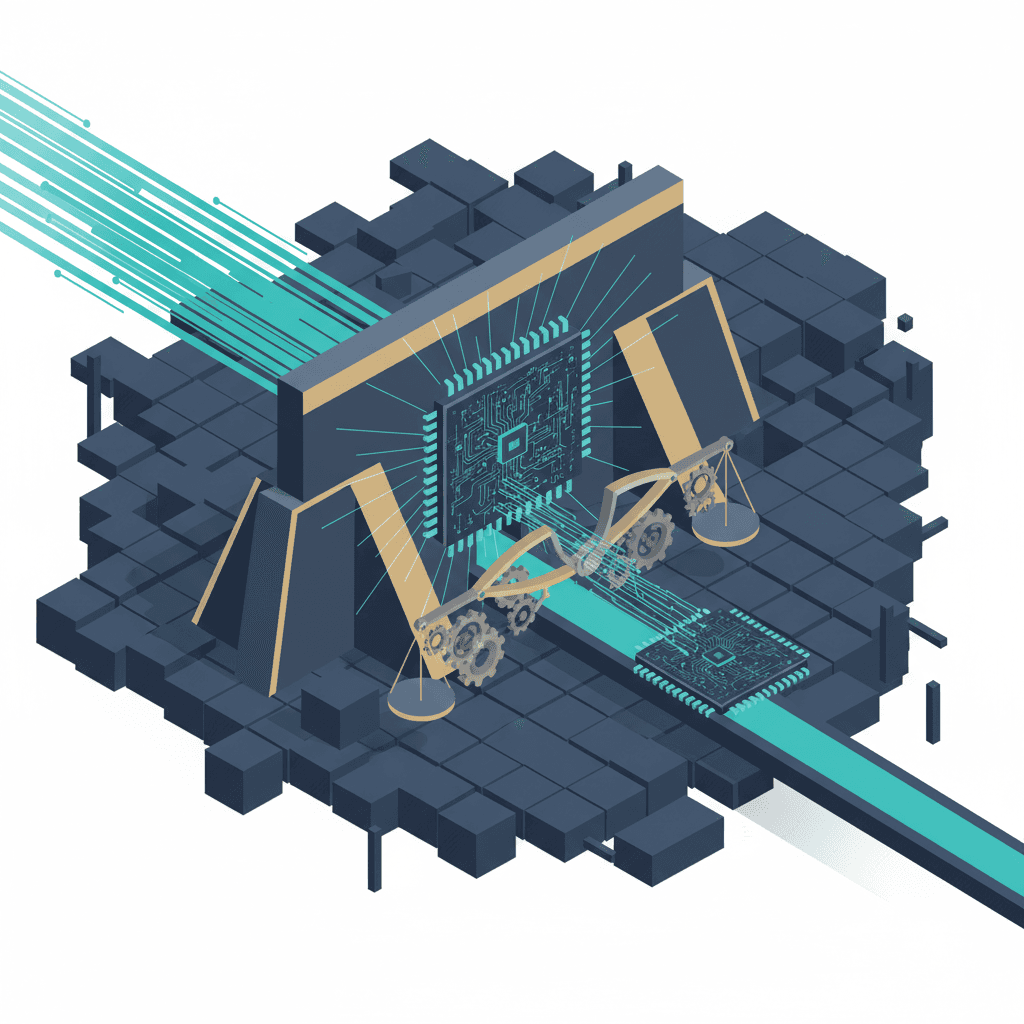
The global race for artificial intelligence supremacy has entered a paradoxical new phase, as China reportedly implements tight domestic purchase restrictions on American-made high-end AI chips just as Washington was preparing to loosen its own export controls. The strategic maneuvering centers on Nvidia’s H200 graphics processing unit, a powerful chip crucial for training large language models. Rather than celebrating a potential easing of US export regulations, Chinese authorities have reportedly instructed major domestic technology companies to temporarily halt or pause new orders for the H200, signaling a clear prioritization of national technological self-reliance over immediate access to superior foreign hardware.[1][2][3][4][5][6]
The reported directive from Beijing is deliberately vague, advising tech companies to only proceed with purchases of the H200 under "special circumstances" that have yet to be clearly defined, such as for approved university research labs.[1] This move is interpreted by industry observers as an effort to prevent domestic companies from rushing to stockpile advanced US chips before a final, comprehensive regulatory framework can be established.[4][7] The most significant potential restriction under consideration is a quota system, which would require companies purchasing the desired foreign AI chips to also commit to buying a corresponding percentage or ratio of domestically produced counterparts.[1][2][3][8][9] This proposed mandate would effectively institute a "self-sufficiency tax" on the imported chips, redirecting capital and market share to local semiconductor firms.
The tightening of domestic control by China comes at a moment of significant flux in US trade policy. The US administration had recently announced an approval for American AI semiconductor manufacturers, including Nvidia, to sell the H200 chip line to approved Chinese customers, a decision that marked a considerable, though conditional, rollback of the advanced chip export restrictions imposed previously.[10][4][11][12][13] This approval was reportedly contingent on an agreement where the US government would collect a 25 percent revenue-sharing fee on sales of the chips to China.[2][13] While the H200 is a significant upgrade from the previously export-compliant chips, it remains an older-generation product compared to Nvidia’s flagship offerings, and is far superior to many current Chinese-manufactured chips.[2][12][13] Washington’s policy shift was an apparent attempt to balance national security concerns with the economic interests of American chipmakers. However, Beijing's counter-restriction demonstrates that its overriding national strategy is not simply to acquire foreign technology, but to reduce its fundamental dependence on it.
The intense market dynamics underscore the necessity of the technology, despite the escalating geopolitical risks. Demand from Chinese cloud and internet giants, including major players like ByteDance and Alibaba, for the H200 is reported to be very high, with private requests for hundreds of thousands of units of the chip.[5][14][9] To mitigate the significant uncertainty and regulatory risk stemming from both Washington and Beijing, Nvidia has reportedly imposed strict, unusual sales terms on its Chinese customers, including requiring full payment upfront for H200 orders and non-flexible, no-refund terms.[8][14][9] This financial restructuring shifts the burden of any future regulatory blockage entirely onto the Chinese buyers.
Beijing’s strategic calculation is clear: the long-term goal of achieving technological self-sufficiency takes precedence over the short-term benefit of faster AI development facilitated by top-tier foreign hardware. Chinese industry experts have voiced caution, describing the potential availability of US chips as "sugar-coated bullets" that could slow down the long-term development of the domestic AI chip sector.[9] Even as companies like Huawei and Cambricon are actively working to expand their presence and significantly increase their production of AI chips, domestically developed processors still lag behind the high-performance capabilities of Nvidia's offerings, especially for training the most advanced, frontier large AI models.[7][14][12] The existing US export controls have already served as an accelerant, pushing Chinese developers toward focusing on more computationally efficient AI models and open-weight development strategies to maximize the performance of available hardware.[15] The new domestic restrictions will force local AI companies to become early, major customers for domestic chipmakers. This mandatory market creation is designed to provide the necessary scale and capital for local champions to close the technological gap.
The confluence of the US's conditional export approval and China's domestic purchase limitations creates a profoundly complex operating environment for the global AI industry. For Nvidia, China, a market with a potential value of tens of billions of dollars annually, remains locked in political limbo. For Chinese tech giants, it means their development roadmaps will now be dictated by a dual constraint: the maximum compute power allowed by the US government, and the minimum domestic chip purchases mandated by their own government. This dual-sided tightening ensures that the future of China's artificial intelligence development will be inherently linked to the success of its homegrown semiconductor industry, even if it means deliberately slowing the pace of its AI progress in the immediate future to secure its technological independence in the long run.
Sources
[8]
[10]
[11]
[12]
[13]
[14]
[15]