
Anthropic’s Claude Code ends AI amnesia with new persistent memory for software developers
Anthropic’s persistent memory ends AI amnesia, transforming Claude Code into a proactive partner that remembers project quirks and developer habits.
February 27, 2026
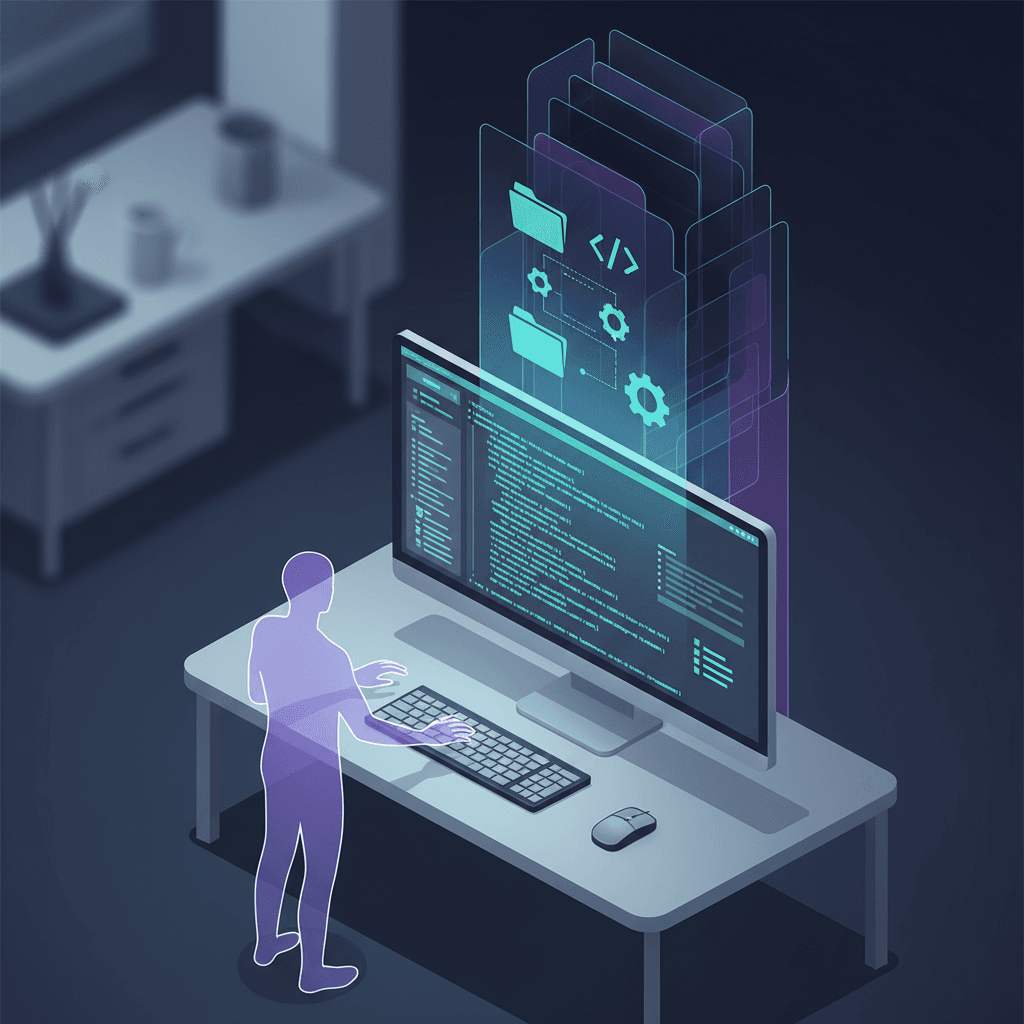
The traditional paradigm of interacting with artificial intelligence has long been defined by a fundamental state of amnesia.[1] For software engineers, this has meant that every new session with an AI coding assistant began as a blank slate, requiring the developer to repeatedly explain project architectures, naming conventions, and recurring bugs that had already been solved days prior. This repetitive overhead, often referred to as context fatigue, has been one of the primary friction points preventing AI from becoming a true autonomous partner in the development lifecycle. However, the recent introduction of persistent auto-memory within Claude Code, Anthropic’s command-line interface tool, marks a significant shift in this dynamic. By allowing the AI to automatically track and recall project-specific quirks, debugging patterns, and developer preferences across sessions, the technology is moving toward a more sophisticated model of agentic continuity.
The core of this update lies in Claude’s ability to build what is essentially a personalized knowledge base for every repository it touches. Unlike previous iterations that relied on users manually maintaining a configuration file for instructions, the new auto-memory system operates passively in the background. As the developer works, Claude observes the outcomes of shell commands, the structure of successful bug fixes, and the preferred libraries used in the codebase. If a developer consistently chooses a specific testing framework or has a unique way of handling error logging that deviates from standard industry practices, Claude now logs these as stable patterns. This means that when a user returns to a project after a break, the AI no longer needs to be reminded of the "unwritten rules" of the codebase. It remembers the fixes it previously implemented and the specific preferences of the user, effectively acting more like a senior pair programmer who has grown familiar with the project over time.
From a technical and architectural standpoint, this persistent memory is managed through a localized system designed to balance utility with performance. Claude Code implements this feature by maintaining a dedicated memory directory on the user’s local machine, typically found within the hidden Claude settings folder. The primary vehicle for this intelligence is a specific file that acts as a persistent scratchpad, which the agent can read from and write to autonomously. To prevent the "context bloat" that often plagues long-term AI interactions, Anthropic has implemented a hard limit—typically around 200 lines—on the primary memory file. When this limit is reached, the system triggers a warning, nudging the AI to summarize its findings or move detailed documentation into separate topic files. This hierarchical approach ensures that the most relevant insights are injected into the system prompt at the start of every session without overwhelming the model's reasoning capabilities or significantly inflating token costs.
The implications for developer productivity are substantial, particularly regarding the economic and cognitive costs of software development. In large-scale enterprise environments, the "onboarding" time for an AI to understand a complex, multi-file refactor can consume thousands of tokens and several minutes of a developer's time in every new session. By persisting this context, Claude Code drastically reduces the need for "re-explaining," which translates directly into lower API usage costs and higher "flow" for the human engineer. Furthermore, the tool's ability to remember what failed in previous attempts—such as a specific dependency conflict or a rejected architectural path—prevents the AI from suggesting the same incorrect solutions twice. This creates a compounding value loop where the AI becomes more efficient the longer it stays integrated with a specific project, effectively "learning" the idiosyncrasies of the code in a way that stateless chatbots cannot.
Within the broader AI industry, this move toward persistent state represents the next major battleground for agentic AI.[2] Competitors like GitHub Copilot and Cursor have experimented with various forms of context retrieval, often relying on vector databases to "search" through a codebase. However, Anthropic’s approach with Claude Code emphasizes a more active form of "working memory" where the agent itself decides what is worth remembering. This shift from passive retrieval to active learning signals a transition from AI as a reactive tool to AI as a proactive agent. While the developer community has expressed some skepticism regarding the potential for "noise" or irrelevant notes to clutter the memory over time, the inclusion of manual controls allows users to audit and edit these memories. Developers can use specific terminal commands to view what the AI has learned or instruct it to "forget" certain patterns, maintaining a necessary layer of human oversight in the machine learning loop.
Looking forward, the integration of autonomous memory into development tools suggests a future where the distinction between a software project and its AI assistant becomes increasingly blurred. As these agents become more capable of navigating project quirks and historical context on their own, the role of the developer may shift further toward high-level orchestration rather than micro-managing the AI’s understanding of the environment. The privacy-first approach of storing this memory locally on the user's machine also addresses a critical concern for enterprise security, ensuring that sensitive project patterns remain within the developer's controlled environment. As Claude Code continues to refine how it synthesizes its learnings, the industry is watching closely to see if this model of persistent, self-updating memory becomes the standard for all professional AI agents. For now, the ability for a tool to remember its own mistakes and its user's unique habits represents a significant step toward making AI a truly reliable and permanent fixture in the modern engineering stack.