
Anthropic defies Pentagon order to integrate AI into military kill-chains as deadline looms
Anthropic defies the Defense Production Act to keep its AI out of military kill-chains, triggering a historic standoff.
February 27, 2026
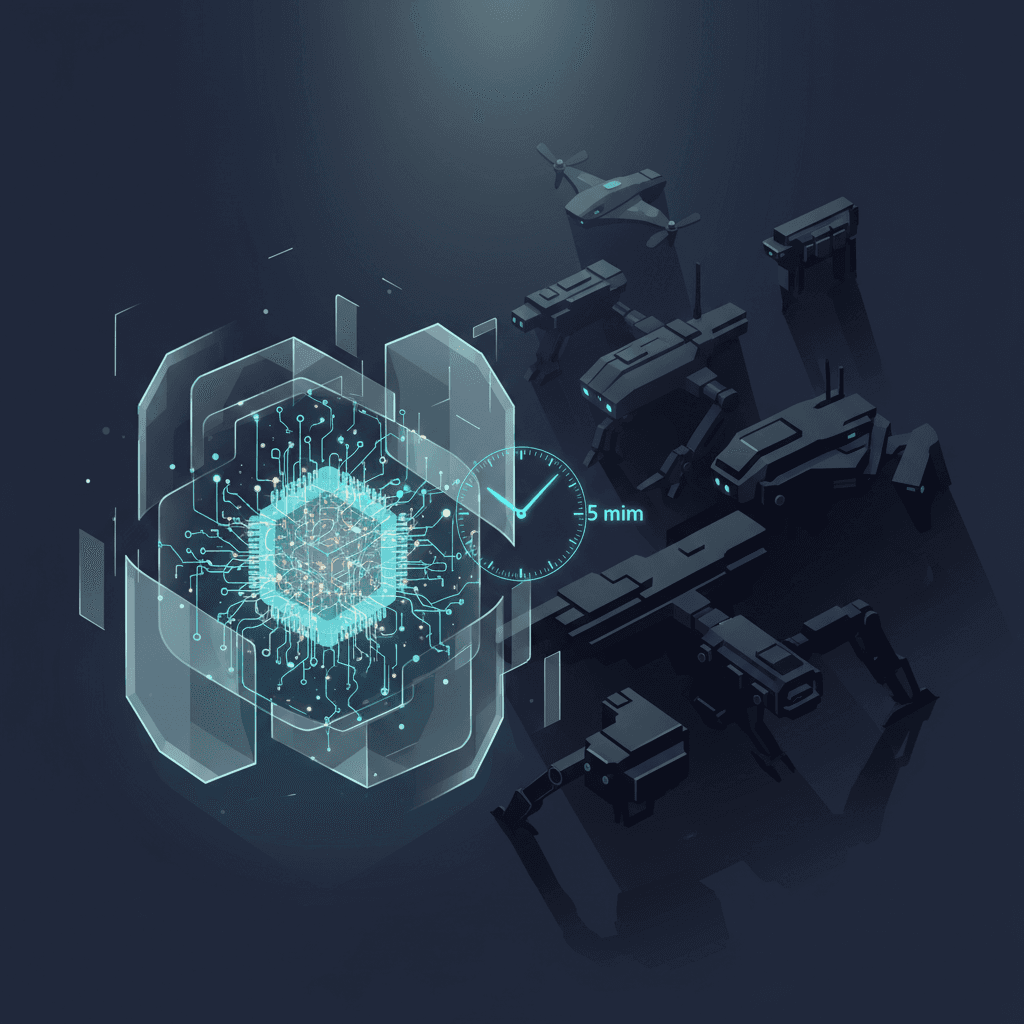
In an unprecedented escalation of the tensions between Silicon Valley’s ethical frameworks and the demands of national security, Anthropic remains the sole major artificial intelligence developer resisting a direct order from the United States Department of Defense to integrate its high-order models into military kill-chains and mass surveillance infrastructure. As a critical midnight deadline approaches, the standoff has shifted from a philosophical debate into a legal confrontation that could fundamentally redefine the relationship between private technology companies and the federal government. At the heart of the dispute is the Pentagon’s invocation of the Defense Production Act of 1950, a Korean War-era statute that grants the President the authority to compel private industry to prioritize government contracts and share proprietary technologies deemed essential to national security. While industry peers like OpenAI, Google, and Meta have largely adjusted their terms of service to accommodate defense partnerships, Anthropic’s refusal to bypass its core safety protocols has created a historic bottleneck in the government’s efforts to achieve "AI superiority."
The Department of Defense’s strategy relies on the assertion that artificial intelligence is no longer a commercial luxury but a strategic resource comparable to steel or oil during the mid-20th century. By invoking the Defense Production Act, the Pentagon is attempting to force Anthropic to grant the military unfettered access to its Claude series of models, specifically for the development of autonomous lethal systems and large-scale predictive surveillance networks. Pentagon officials argue that the rapid advancement of adversarial AI capabilities, particularly in China and Russia, necessitates the immediate mobilization of the most advanced domestic Large Language Models. According to internal reports, the military seeks to use Anthropic’s unique Constitutional AI architecture to create more reliable decision-making engines for drone swarms and battlefield intelligence synthesis. However, the government’s demand includes the removal of "safety guardrails" that prevent the model from assisting in the creation of biological weapons or participating in targeted human targeting—limitations that Anthropic maintains are non-negotiable for the preservation of global security.
Anthropic’s leadership has grounded its resistance in the company’s founding mission to build "steerable, interpretable, and safe" AI systems. Unlike its competitors, which have gradually relaxed their prohibitions on military applications over the last two years, Anthropic has held firm to its belief that placing high-reasoning AI at the helm of autonomous weaponry presents an existential risk to humanity. The company argues that the Defense Production Act was never intended to be used to strip a private entity of its intellectual property or to force the "jailbreaking" of safety-aligned software. In a series of public statements and legal filings, Anthropic’s legal team has suggested that complying with the Pentagon’s request would not only violate the company’s internal charter but would also set a dangerous precedent where the state could commandeer any algorithmic system for state-sponsored violence. This "conscientious objector" status has isolated Anthropic within the industry, as other giants have opted for multi-billion-dollar defense contracts, viewing the integration of AI into the military-industrial complex as both inevitable and a patriotic necessity.
The landscape of the AI industry has shifted dramatically in the wake of this confrontation, revealing a widening gap between companies that prioritize commercial and defense-centric growth and those that prioritize safety-first development. OpenAI, once a staunch advocate for cautious deployment, significantly altered its usage policies earlier this decade to allow for military and "national security" applications, subsequently securing deep integration with the Air Force and specialized intelligence agencies. Similarly, Meta’s open-sourcing of its Llama models to the defense sector and Google’s renewed involvement in satellite imagery analysis have left Anthropic as the final hurdle for the Pentagon’s vision of a unified, AI-driven defense posture. This isolation has put immense pressure on Anthropic’s investors and board members, some of whom worry that government sanctions or the seizure of assets under the Defense Production Act could lead to the company’s dissolution or forced nationalization.
Beyond the immediate legal battle, the implications for the global AI ecosystem are profound. If the Pentagon successfully uses the Defense Production Act to force Anthropic’s hand, it would signal the end of the "independent" AI era, where developers could dictate the ethical boundaries of their creations. Industry analysts suggest that such a move would likely trigger a chilling effect on AI safety research, as companies might fear that any breakthrough in alignment or reliability will simply be co-opted for state power. Conversely, proponents of the Pentagon’s move argue that Anthropic’s refusal is a form of "technological treason" that handicaps the United States in a high-stakes geopolitical race. They contend that the ethical nuances of Silicon Valley cannot be allowed to supersede the strategic requirements of the state, especially when AI is perceived as the primary deterrent against future large-scale conflicts.
As the deadline for compliance nears, the possibility of a federal seizure of Anthropic’s servers or a total ban on its commercial operations looms. The executive branch has signaled that it is prepared to use every available lever to ensure that the military has access to the "best possible intelligence tools," framing the issue as one of national survival rather than corporate ethics. For the broader AI industry, the outcome of this standoff will determine whether the creators of artificial intelligence retain the right to say "no" to the state. If Anthropic breaks, the precedent will be set: in the age of algorithmic warfare, the government, not the developer, holds the final kill-switch. If Anthropic succeeds in its defiance, it may force a massive legislative overhaul regarding how private software is classified under national emergency laws, potentially carving out a sanctuary for ethically driven AI development in an increasingly militarized digital world. The coming days will decide whether the future of AI is governed by the principles of safety and transparency or the mandates of the Defense Production Act.