
Andrej Karpathy declares the end of manual coding as AI agents transform software engineering
Andrej Karpathy details how advanced reasoning models are rendering manual coding obsolete and ushering in the era of vibe coding
February 26, 2026
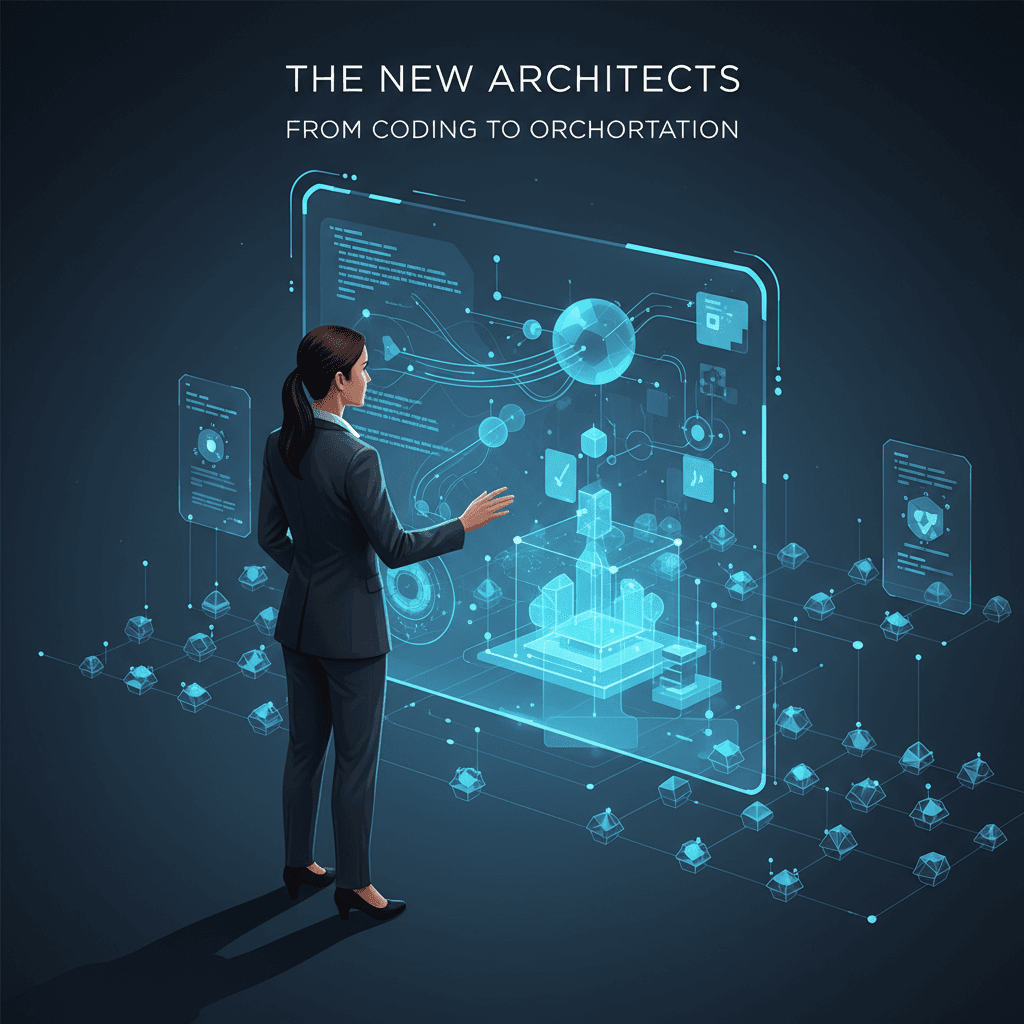
The landscape of software development has undergone a tectonic shift that renders the traditional act of manual coding nearly obsolete, according to recent observations by Andrej Karpathy.[1][2] The former Tesla AI director and OpenAI co-founder, long considered a bellwether for the state of artificial intelligence, has declared that the era of typing out computer code line by line is effectively over.[2] This pronouncement marks a radical pivot for Karpathy, who until recently maintained a much more conservative timeline for the autonomy of AI agents.[2] The transformation he describes is not merely an incremental improvement in developer tools but a fundamental reimagining of how humans interact with machines, moving the profession of programming into a realm that is, in his words, unrecognizable.[2]
This sudden realization follows a period of notable skepticism. As recently as the late autumn months, Karpathy had publicly argued that while AI could assist with small snippets of code, true agentic autonomy—the ability for an AI to handle complex, multi-step tasks independently—remains a challenge that would likely take a decade to solve. He had frequently cited the problem of reliability, noting that moving from a ninety percent success rate to the near-perfect reliability required for production-grade software would be an arduous, exponential climb.[3] However, a series of technological breakthroughs occurring at the end of the year shattered those assumptions. The convergence of higher model quality, increased reasoning capabilities, and better feedback loops has allowed AI agents to cross a critical threshold of reliability almost overnight.
The primary driver behind this shift is the emergence of advanced reasoning models and reinforcement learning techniques that prioritize verifiable rewards.[4] These systems no longer just predict the next likely character in a string of code; they actively reason through problems, test their own solutions, and iterate until a task is completed.[2] Karpathy points to the release of sophisticated coding environments and updated large language models as the catalysts that turned unreliable prototypes into indispensable partners. In this new paradigm, the bottleneck is no longer the speed at which a human can type or their mastery of complex syntax, but rather the clarity of their intent and their ability to oversee an automated workflow.[2]
The practical results of this transition are staggering in their efficiency. Karpathy recently shared a compelling example of this new reality, describing how an AI agent independently constructed a sophisticated video analysis dashboard in a single afternoon. Under the old methodology, such a project would have required a seasoned developer to spend an entire weekend or longer setting up environments, writing boilerplate code, debugging visual components, and integrating various data streams. Instead, the task was completed in roughly thirty minutes of the agent working autonomously. The human role was reduced to providing high-level direction in plain English, reviewing the agent's progress, and offering occasional hints when the system encountered a logical crossroads. This compression of time—from days to minutes—signals a departure from the historical constraints of software engineering.
This shift has birthed a phenomenon Karpathy has colloquially termed vibe coding.[5] In this environment, programming is less about the rigorous application of mathematical logic and more about the management of the AI's output.[2] Developers find themselves operating more like directors or editors than writers. They set the vision, define the goals, and judge the quality of the results, while the heavy lifting of implementation is handled by the model. Karpathy admits that this change carries a certain psychological weight for professionals who have spent decades honing their craft. He noted that the transition can be somewhat bruising to the ego, as tasks that once required a high degree of technical expertise and intellectual effort are now handled instantly and effortlessly by an algorithm.[1] The realization that pride in one's IQ and knowledge of obscure syntax may no longer be a competitive advantage is a disorienting experience for many in the field.[1]
The implications for the industry at large are profound and suggest a total restructuring of the workforce. For years, the path to becoming a senior developer involved a lengthy apprenticeship as a junior coder, learning the intricacies of languages like Python, C++, or Swift through manual labor. Now, with AI agents capable of generating a thousand-line code diff in seconds, the role of the entry-level programmer is being swallowed by automation. This creates a potential vacuum in the talent pipeline, as the skills required to be a supervisor or architect are traditionally built on the foundation of manual implementation. If the foundation is automated, the industry must find new ways to train the next generation of engineers who will start their careers not by writing code, but by managing swarms of intelligent agents.
Furthermore, the accessibility of programming has been democratized to an unprecedented degree. When natural language becomes the primary interface for software creation, the gatekeeping associated with technical education begins to dissolve. Individuals with no prior knowledge of specific programming languages are now capable of shipping working applications simply by describing their needs to an AI.[5] Karpathy’s own recent experience building an iOS application with zero prior knowledge of the Swift language serves as a testament to this new reality.[5] The barrier to entry has moved from knowing how to talk to a computer to knowing what to ask the computer to do. This shift places a renewed premium on product design, user experience, and domain expertise over raw technical fluency.
Despite this rapid progress, the industry is not without its remaining hurdles.[6] While the agents have become remarkably effective, they are not yet flawless.[7][2] They can still exhibit a certain lack of common sense, sometimes opting for overly defensive or redundant code structures, and they require a human in the loop to provide aesthetic judgment and high-level strategy.[2] Karpathy emphasizes that the current state of the art is like having a team of very fast but occasionally careless interns. The supervisor must remain vigilant, providing the taste and oversight that the models still lack. We are currently in an intermediate phase of what he calls the autonomy slider, where the level of human intervention is gradually decreasing but remains essential for ensuring that the final product meets a professional standard.
Looking forward, the industry must grapple with the fact that software is no longer a static collection of instructions but a living conversation between human intent and machine execution.[5] The tools being used today, such as specialized AI-native editors and terminal-based agents, are just the beginning. As models continue to improve their ability to handle longer contexts and more complex reasoning, the gap between an idea and a finished product will continue to shrink. The definition of a developer is being rewritten in real-time. For Andrej Karpathy and many of his peers, the conclusion is clear: the craft of programming has been fundamentally disrupted, and those who do not adapt to the era of agentic orchestration risk being left behind in a world that has moved past the keyboard. The transformation is complete, and the future of engineering belongs to those who can master the art of the high-level prompt rather than the low-level line.