
AI collapses creative production cycles, transforming agencies into tech supply chains.
Agencies are restructuring into high-speed, AI-native supply chains, projecting a 30% increase in overall marketing productivity.
December 19, 2025
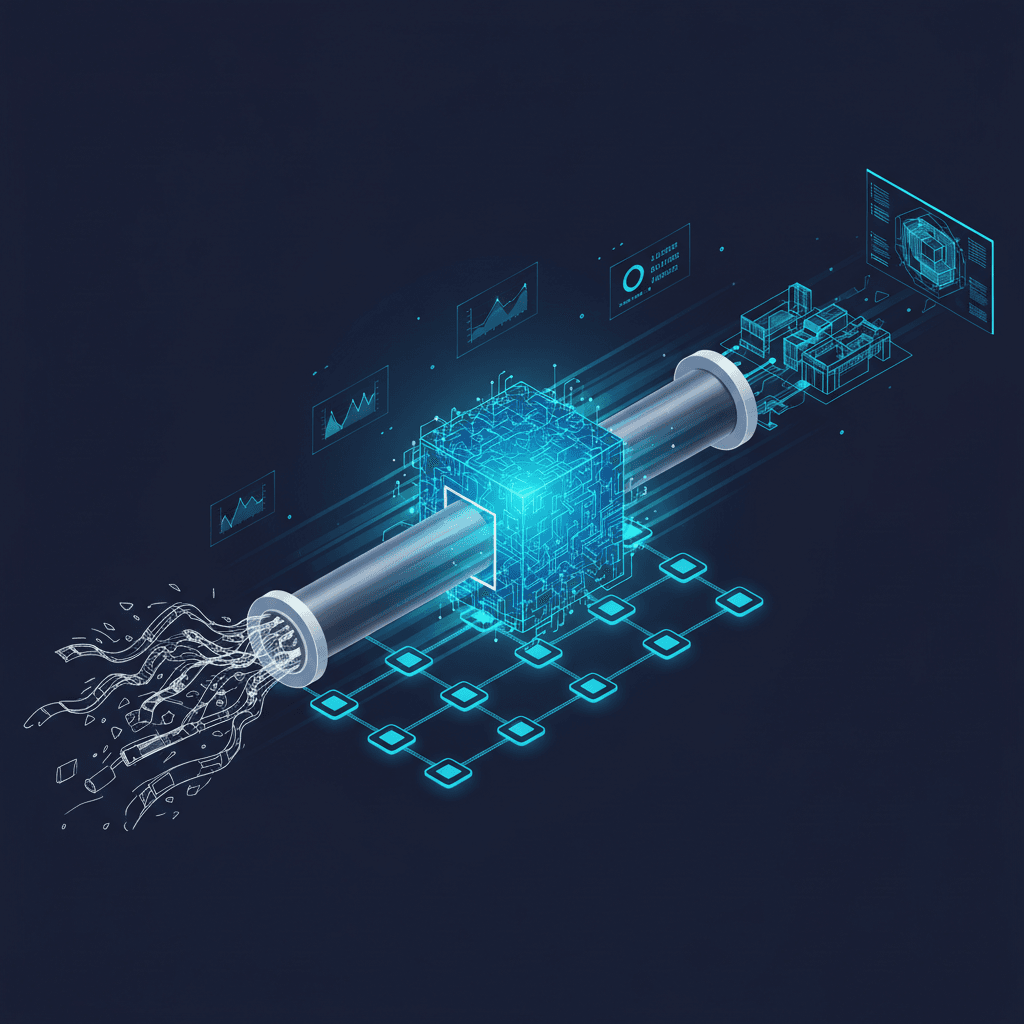
The marketing industry is undergoing a fundamental transformation, driven by the practical, large-scale deployment of Artificial Intelligence that is no longer confined to experimental labs but is now a core component of daily operations. AI is fully embedded in everything from initial client briefs to production pipelines, content approvals, and media optimization strategies, shifting the agency model from a service-based operation to a technology-enabled supply chain. This integration of AI into workflows is creating unprecedented efficiencies, directly enabling agencies to increase their capacity and service a larger volume of clients and projects simultaneously.
The most tangible change is the dramatic acceleration of the creative production cycle, particularly in visual media. Historically labor-intensive processes, such as 3D animation and visual effects, which once required cycles measured in weeks or months, are seeing their timeframes collapse. A key illustration of this operational shift is the partnership between major holding companies and generative AI firms. For instance, the use of fine-tuned models, such as those developed by WPP in collaboration with Stability AI, allows agencies to train generative AI on a brand's specific visual identity, color palette, and style guide[1]. This process moves beyond generic output, creating brand-accurate content that reproduces subtle details like lighting and shadows, as demonstrated in a case study for retailer Argos[1]. The resulting outputs are closer to "finished" material immediately, significantly reducing the rounds of correction, re-rendering, and client approvals that traditionally consumed enormous amounts of time and budget[1]. The speed and scale enabled by this approach mean agencies can be more reactive, instantly leveraging cultural moments with new content, a capability that was previously impractical under traditional production timelines[1].
The integration of AI has begun to deliver quantifiable gains, fundamentally redefining the potential output of a marketing team. Research estimates that the application of generative AI has the potential to affect 47% of all marketing activities[2]. This technological augmentation is projected to save companies approximately 24% in marketing labor time, translating into a roughly 30% increase in overall productivity for marketing functions[2]. The areas most immediately affected by this automation are those heavily reliant on data analysis, such as digital marketing, consumer insights, and experience optimization[2]. For instance, AI automates the data analysis required for real-time campaign optimization and helps visualize customer insights much faster than manual processes could achieve[2]. The industry is demonstrating a strong commitment to this technology, with one report finding that 91% of U.S. advertising agencies are either actively using or exploring the use of generative AI[3]. Moreover, the adoption curve is steeper for the service providers, as a separate industry report indicated that twice as many agencies and publishers have already adopted AI at scale compared to the brands they serve[3].
To realize these efficiency gains, agencies must move beyond simply adopting tools and instead undergo significant internal restructuring to support an AI-native operating model. The shift means that marketing delivery must be fundamentally re-engineered to operate like a measurable, standardized, and flexible software-enabled supply chain[1]. This transformation demands new expertise and has given rise to new operational roles that focus on the intersection of technology and creativity, including titles such as "model trainer," "workflow designer," and "AI governance lead"[1]. The organizational design itself is evolving away from traditional functional silos. Leading organizations are restructuring into agile, cross-functional teams, often referred to as "pods" or "squads," which are organized around external objectives, such as a specific customer journey or business goal, rather than internal departments[4]. A team focused on customer acquisition, for example, might now blend a marketing manager, a data scientist, a content creator, and an automation specialist[4]. This new structure is essential for moving past the experimentation phase and fully integrating AI into end-to-end processes, where human talent is primarily focused on strategic vision, creative direction, and ethical oversight, while AI manages the high-volume, repetitive, and data-intensive tasks[5][6].
The marketing world’s rapid integration has profound implications for the AI industry as a whole, signaling a massive acceleration in the demand for enterprise-grade solutions. The global AI in marketing market, valued at $47.32 billion, is projected to surge to $107.5 billion within a few years, underscoring the deep financial commitment to this technology[4]. This boom is driving demand away from generic, off-the-shelf AI models toward highly customized, secure, and integrated platforms. For AI developers, the key is providing customizable models that can be fine-tuned on proprietary client data to ensure brand accuracy and seamless front-ends that make adoption frictionless for both agency teams and clients[1]. The demand for AI that provides deep, actionable insights and superior performance measurement will continue to grow as agencies pivot to a value proposition centered on data-driven, hyper-personalized campaigns delivered at scale[7][8]. By serving as a primary deployment zone for AI, the marketing industry is essentially testing and refining the blueprint for how AI will be operationally embedded across other white-collar sectors. The successful creation of high-speed, scalable marketing supply chains powered by customized AI models demonstrates that the future of many professional services is a hybrid model where human creativity is amplified by sophisticated, purpose-built machine intelligence[2].