
Xiaomi unveils MiMo AI family to power autonomous agents across its global hardware ecosystem
The MiMo suite delivers advanced reasoning and multimodal intelligence across Xiaomi’s expansive Human x Car x Home framework.
March 22, 2026
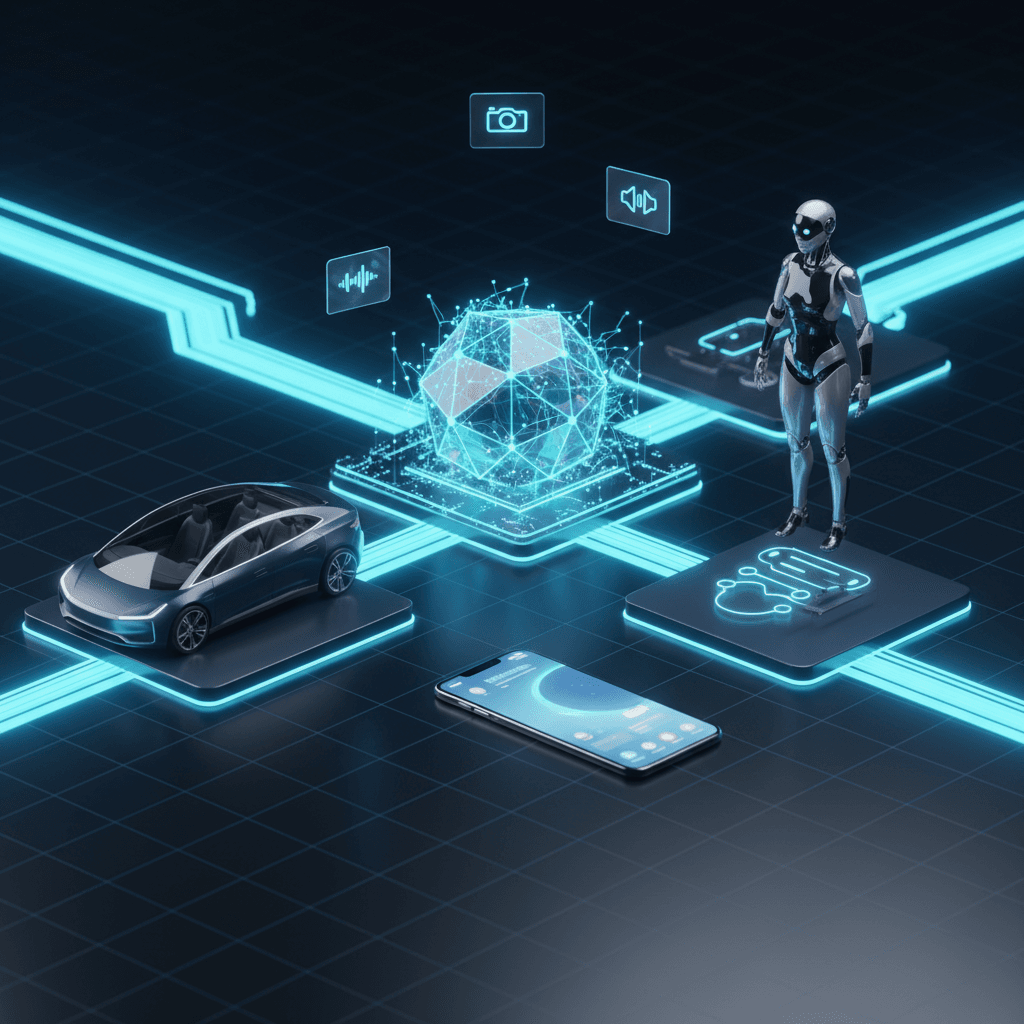
Xiaomi has officially marked its transition from a global hardware powerhouse to a frontrunner in the generative artificial intelligence race with the unveiling of its MiMo model family.[1] This strategic shift centers on three distinct foundation models—MiMo-V2-Pro, MiMo-V2-Omni, and MiMo-V2-TTS—designed to serve as a unified cognitive platform for the company’s expansive ecosystem.[2][3] By moving beyond traditional conversational AI, Xiaomi is positioning these models to power "agents" that can autonomously navigate software, control robots, and interact with humans through emotionally resonant voice interfaces. The announcement represents a pivotal moment for the Beijing-based company, which aims to integrate these capabilities across its "Human x Car x Home" framework, spanning everything from flagship smartphones to its increasingly popular electric vehicles and humanoid robots.
At the core of this new suite is the MiMo-V2-Pro, a massive large language model that serves as the primary reasoning engine for agentic tasks.[1][2][4][3] Built on a sparse Mixture-of-Experts architecture, the model houses over 1.1 trillion total parameters, though it maintains efficiency by activating only 42 billion parameters during any single request. This design allows the model to deliver high-level reasoning comparable to frontier models like Anthropic’s Claude 4.5 and OpenAI’s latest releases while significantly reducing computational overhead. One of the model's standout technical features is its one-million-token context window, supported by a hybrid attention mechanism that optimizes memory usage.[5][1][6] This allows the AI to "remember" and process vast amounts of information, such as entire codebases or long task histories, which is essential for complex, multi-step agent workflows.[5] Before its official debut, the model gained significant attention in the developer community under the codename Hunter Alpha on the OpenRouter platform, where it topped performance charts and was frequently mistaken for a new release from top-tier research labs.[6]
The second pillar of the launch, MiMo-V2-Omni, represents Xiaomi’s push into native multimodality. Unlike previous systems that "bolted on" visual and audio components to a text-based brain, the Omni model integrates vision, video, and audio encoders into a shared backbone from the start.[7] This architecture allows the model to see, hear, and read simultaneously, mirroring human perception.[7] In practical applications, this enables the AI to perform "browser use" tasks, such as navigating complex websites to book travel or comparing prices across multiple retail platforms by visually understanding the user interface.[5] Xiaomi reports that MiMo-V2-Omni has outperformed competitors like Google’s Gemini 3 Pro in specific audio understanding benchmarks and has shown superior visual reasoning in chart analysis and hazard detection in automotive dashcam footage. By training the model to anticipate future frames and actions rather than just describing the present, Xiaomi has created a system that is inherently designed for action within the physical and digital worlds.
To bridge the gap between machine intelligence and human interaction, Xiaomi also introduced MiMo-V2-TTS, a sophisticated speech synthesis model.[8] Trained on over 100 million hours of diverse audio data, this model moves away from the mechanical, often monotonous tones of traditional text-to-speech systems.[9][8] It utilizes a multi-codebook joint modeling architecture that breaks speech down into parallel layers, allowing for precise control over pitch, rhythm, and emotion.[8] A unique feature of this system is its ability to interpret natural language descriptions for voice generation. Instead of selecting an emotion from a list, users can describe a specific state, such as "slightly hoarse, as if just waking up," or "anxious but trying to sound professional." This capability is expected to redefine the user experience within Xiaomi’s electric vehicles and smart home assistants, making interactions feel more intuitive and lifelike. The model also supports various regional dialects and singing capabilities, further expanding its potential for content creation and personalized assistance.
The implications of this launch extend far beyond software. Xiaomi is explicitly targeting "Embodied AI," where these models serve as the brains for physical machines. The MiMo suite is being integrated into the company’s robotics division, including its CyberDog and humanoid CyberOne projects, as well as the SU7 electric vehicle. By combining the reasoning of the Pro model with the multimodal perception of the Omni model, Xiaomi is working toward robots that can follow natural language instructions to perform household chores or assist in industrial environments. For example, the "miclaw" agent—internally nicknamed Lobster—is currently being developed for desktop environments to automate complex professional workflows, such as synthesizing meeting transcripts into formatted reports and managing file systems across platforms.[10] This vertical integration of AI into a massive hardware portfolio gives Xiaomi a unique advantage, as it can collect real-world interaction data to refine its models in ways that software-only companies cannot.[3]
From an industry perspective, Xiaomi’s strategy emphasizes accessibility and cost-efficiency. By pricing its API at approximately one dollar per million input tokens, the company is undercutting Western rivals by a significant margin. This move is led by Fuli Luo, a veteran researcher who recently joined Xiaomi from the DeepSeek project, bringing a culture of high-performance, cost-effective model development.[11] The company has also committed to an $8.7 billion investment in AI research over the next three years, signaling that this launch is only the beginning of a long-term roadmap focused on long-horizon planning and coordinated multi-agent systems. As the AI industry shifts its focus from simple chat interfaces to autonomous "claws" that can execute tasks, Xiaomi’s comprehensive approach places it among the few companies capable of providing a full-stack solution that connects the digital screen to the physical world.[1]
The launch of the MiMo family signifies a new era for Xiaomi, one where intelligence is seamlessly embedded into every facet of a user's life. By providing the tools for perception, reasoning, and emotional expression in a single ecosystem, Xiaomi is not just competing for a spot on a leaderboard; it is building the foundational infrastructure for a future where AI agents are ubiquitous. Whether it is a car that understands its surroundings through an omni-modal lens or a desktop assistant that manages a professional’s digital life, the MiMo models represent a bold step toward general-purpose intelligence that is grounded in the complexities of reality.[1][3][7] As these models begin to roll out to the public and developers, the global AI landscape will likely see increased pressure to match the speed, scale, and integrated nature of Xiaomi's vision.
Sources
[2]
[4]
[5]
[7]
[8]
[10]
[11]