
Microsoft and Nvidia partner to develop AI PCs running local autonomous agents
Microsoft and Nvidia are developing custom silicon to power autonomous, local AI agents that replace passive cloud-based chatbots.
May 30, 2026
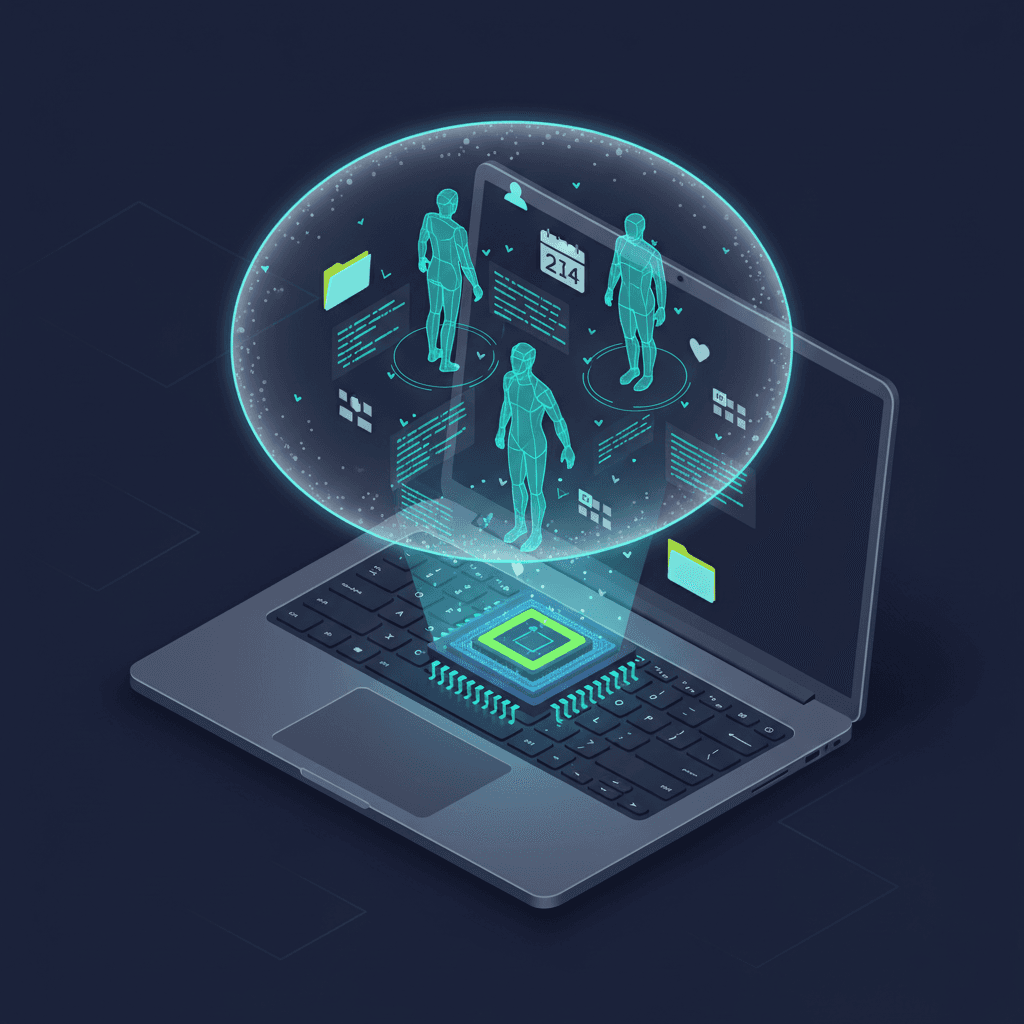
The personal computing industry is on the verge of a major architectural and conceptual shift, as Microsoft and Nvidia have reportedly teamed up to develop a new generation of artificial intelligence-powered personal computers designed to run fully autonomous agents locally instead of relying on the cloud-based Copilot assistant[1]. This collaborative effort represents a significant pivot for Microsoft, which is seeking a strategic reset after its initial wave of Copilot+ PCs failed to capture mainstream market momentum or deliver the revolutionary user experience originally promised[1][2]. By integrating Nvidia's highly anticipated custom silicon with advanced open-source agentic software, the tech giants aim to transition the consumer experience away from passive chatbots that merely respond to text prompts, moving instead toward proactive digital coworkers capable of executing complex, multi-step workflows directly on user devices[1][3]. The coordination between the two companies was recently teased on social media platforms with hints about a new era of personal computing accompanied by geographic coordinates pointing to upcoming industry showcases, signaling that a major hardware and software transition is imminent[4][5].
At the center of this joint venture is Nvidia's aggressive push into the consumer PC processor market, directly challenging the long-standing dominance of traditional chipmakers[4][5]. Nvidia is preparing to unveil its first consumer-focused central processing unit, reportedly built on a cutting-edge three-nanometer foundry node by Taiwan Semiconductor Manufacturing Company[5]. Codenamed the N1X, this system-on-a-chip represents Nvidia's ambition to leverage its unmatched graphics processing and neural processing unit technologies directly within mainstream personal computers[5]. The first wave of Windows devices powered by Nvidia's new silicon is expected to feature premium laptops from major hardware partners like Dell, alongside Microsoft's own Surface lineup[1]. This move is a strategic departure from Microsoft's previous exclusive reliance on Qualcomm's Snapdragon processors for its initial Copilot+ initiative[2]. While those early Arm-based PCs promised unprecedented battery life, they ultimately struggled to gain market traction due to software translation issues and a lack of compelling, native local artificial intelligence experiences[2]. By partnering with Nvidia, Microsoft gains access to massive local computing power capable of handling the heavy mathematical workloads required for sustained, continuous AI agent operations without thermal throttling or excessive power drain[6][7].
On the software side, Microsoft is reportedly building its next-generation local experience around the open-source OpenClaw framework[1][2]. Created by developer Peter Steinberger and now backed by prominent players across the AI ecosystem, OpenClaw has quickly risen to prominence as a powerful execution engine[2][8]. Unlike conventional conversational models that merely generate text, OpenClaw acts as an operating system for personal AI, enabling autonomous agents to interact with a computer's file system, manage emails, coordinate calendars, and execute complex workflows across various desktop applications[8][3]. To foster developer adoption, Microsoft has integrated OpenClaw deeply into its upcoming software strategy, dedicating multiple technical sessions at its developer conferences to building agentic workflows on Windows and inviting key architects of the framework to showcase its capabilities[2]. However, deploying open-source autonomous agents on local consumer machines has historically presented severe security challenges, including unprotected API keys and vulnerable local processes[3]. To address these vulnerabilities, Nvidia has introduced NemoClaw, an enterprise-ready security and governance stack that runs on top of OpenClaw[8][3]. NemoClaw incorporates a specialized runtime environment called OpenShell that sandboxes AI agents at the process level, ensuring they operate within strict privacy boundaries and cannot compromise the underlying operating system[8][3].
The transition from basic chatbot assistance to agentic AI represents a fundamental evolution in how humans interact with technology, addressing the limitations that hindered previous consumer AI products[9][10]. While the first wave of consumer artificial intelligence focused on cloud-hosted large language models that required users to manually input prompts and copy results, the new collaborative platform from Microsoft and Nvidia emphasizes local execution[11]. Running workloads locally on a PC's hardware rather than transmitting data to remote cloud servers solves several of the industry's most pressing bottlenecks, including latency, high operational costs, and data privacy[11][7]. For organizations and individual users alike, sending sensitive documents and proprietary code to external servers has been a major barrier to widespread adoption[11]. Local agents powered by Nvidia's hardware can operate continuously in the background, monitoring local directories and executing tasks without incurring the substantial subscription fees and API costs associated with constant cloud queries[6][7]. This shift highlights a growing consensus within the tech industry that the future of personal productivity lies in autonomous software agents that can act as actual digital colleagues, rather than simple conversation partners[12][10].
By uniting Nvidia's hardware prowess with Microsoft's ubiquitous Windows operating system, this partnership is poised to disrupt the broader silicon and personal computing markets[5]. For years, Apple has maintained a clear lead in on-device processing power and hardware-software integration with its proprietary M-series silicon, while the Windows ecosystem remained fragmented. The introduction of Nvidia's custom processor and a secure, agent-driven Windows environment provides Microsoft with the competitive leverage needed to challenge Apple's premium laptop dominance and redefine what consumers expect from a personal computer[5]. Furthermore, it accelerates the decline of the traditional x86 processor duopoly held by Intel and AMD, pushing the industry faster toward highly efficient Arm architectures optimized specifically for the age of artificial intelligence[2]. As these advanced personal computers enter the market, they will likely set a new benchmark for personal computing, turning the vision of truly autonomous, local digital assistance into an everyday reality and permanently shifting the landscape of global technology[8][3].
Sources
[2]
[4]
[6]
[7]
[8]
[9]
[10]
[11]
[12]