
Tech giants champion a viral AI dog vaccine while medical experts demand scientific proof
Silicon Valley’s viral canine cancer miracle faces scientific scrutiny as experts warn against mistaking tech hype for medical breakthroughs
March 29, 2026
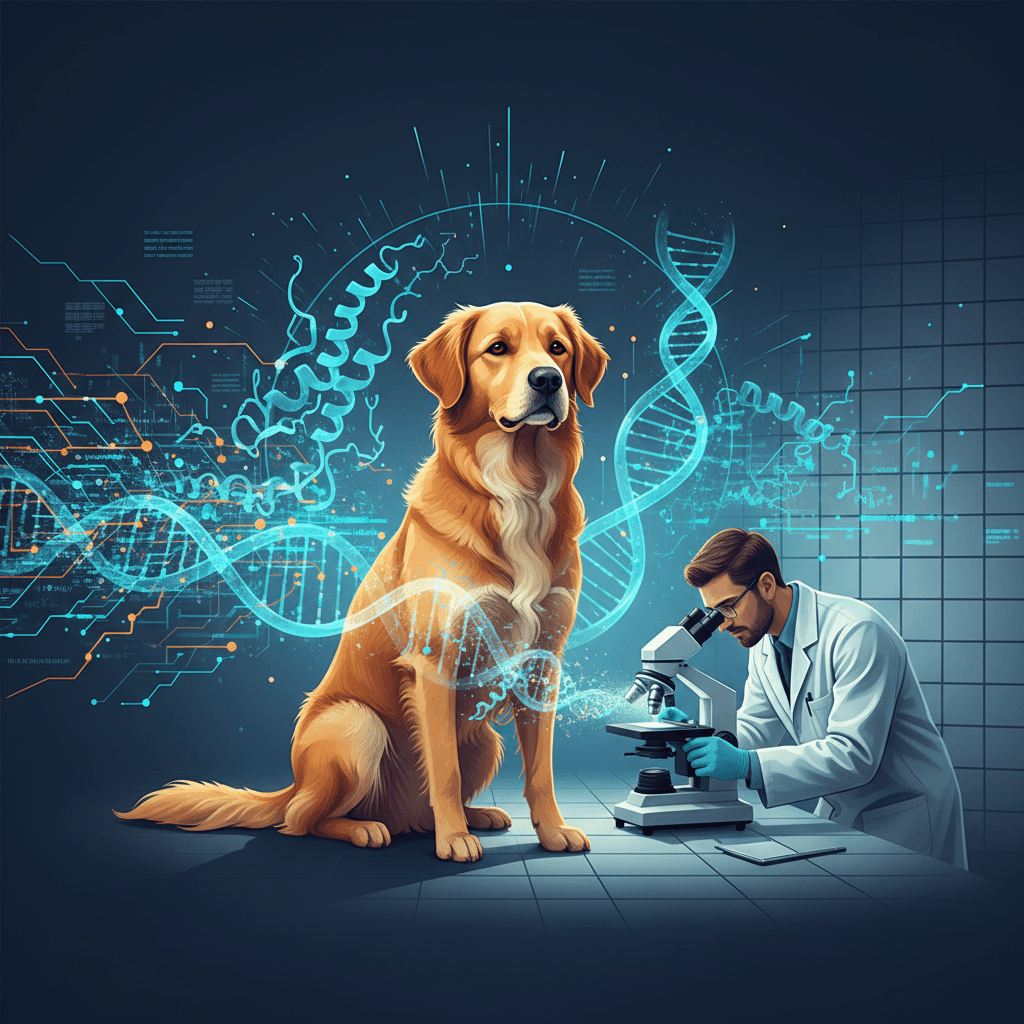
In a media landscape increasingly dominated by the rapid-fire success stories of artificial intelligence, few narratives have captured the public imagination as viscerally as that of Rosie, an Australian rescue dog whose battle with terminal cancer became a viral testament to the power of algorithmic medicine. The story, which details how a machine learning consultant used a suite of high-level AI tools to design a custom vaccine for his pet, has been widely circulated by the highest echelons of the tech industry. Leaders including OpenAI CEO Sam Altman, President Greg Brockman, and Science Vice President Kevin Weil, alongside Google DeepMind’s Demis Hassabis, have amplified the case as a milestone for the future of biology. However, a closer examination of the medical facts suggests that the celebration may be premature. While the narrative serves as a potent marketing tool for the utility of Large Language Models and protein-folding simulators, the scientific community remains deeply skeptical, pointing to a lack of rigorous evidence that the AI-designed treatment actually produced a clinical benefit.
The saga began when Paul Conyngham, an Australian AI specialist, received a grim diagnosis for his dog, Rosie: an aggressive and incurable mast cell tumor.[1][2][3] Faced with a terminal prognosis and the failure of traditional chemotherapy, Conyngham embarked on an unconventional path that he termed a bio-hacking mission.[2] He paid for the genomic sequencing of both the dog’s healthy tissue and the cancerous tumor, generating a massive dataset of genetic mutations. Using OpenAI’s ChatGPT to interpret the data and organize a treatment strategy, he then utilized Google’s AlphaFold to predict the three-dimensional structures of the mutated proteins, known as neoantigens. The final vaccine blueprint, which was allegedly refined using xAI’s Grok, was then synthesized into a personalized mRNA vaccine by researchers at the University of New South Wales RNA Institute. The process, which would typically take years of institutional research, was compressed into a matter of months, creating a compelling image of AI-enabled agility in a field often slowed by bureaucracy and biological complexity.
The viral momentum of the story was fueled by a coordinated show of support from Silicon Valley’s elite. Greg Brockman described the effort as extraordinary, while Sam Altman and Kevin Weil shared the story to highlight how AI is transitioning from a digital assistant to a physical life-saver. For companies like OpenAI and Google DeepMind, Rosie’s case is a perfect "proof of concept" for the real-world application of their technologies. It provides a human—and canine—face to the abstract potential of AGI, or Artificial General Intelligence. By positioning these tools as the keys to curing terminal diseases, these executives are able to argue for the continued massive investment and energy consumption required to train their models. The narrative suggests that we are entering an era where the barriers between data science and clinical medicine have dissolved, allowing anyone with sufficient technical literacy to innovate in the pharmaceutical space.
However, the scientific reality is far more nuanced and, for many experts, troubling. The primary criticism from oncologists and immunologists centers on the lack of a controlled environment. Rosie was not just given the experimental AI vaccine; she was also administered a checkpoint inhibitor, a standard and potent form of immunotherapy known to effectively shrink tumors on its own. Because both treatments were given simultaneously, there is no scientific method to determine if the tumor shrinkage was caused by the AI-designed vaccine or the conventional drug. Furthermore, mast cell tumors in dogs are notoriously unpredictable, occasionally exhibiting spontaneous regression or fluctuating in size due to various environmental factors. Without a clinical trial involving a control group, the case remains an "n-of-one" anecdote—a single data point that, while emotionally resonant, holds almost no weight in the world of evidence-based medicine.
This gap between social media hype and scientific verification highlights a growing tension within the AI industry. As tech giants face increasing pressure to justify the immense hype surrounding their products, there is a temptation to seize on anecdotal successes and present them as scientific breakthroughs. By championing a case that has not undergone peer review or demonstrated clear causality, AI executives risk blurring the lines between technical progress and medical misinformation. Critics argue that by ignoring the presence of the checkpoint inhibitor and the fact that Rosie’s cancer remained incurable despite the treatment, the tech industry is engaging in a form of survivor bias. This approach can be dangerous, as it may lead other desperate pet owners—or even human patients—to believe that current AI tools can reliably replace the rigorous, and often slow, safety protocols of modern medicine.
The implications for the broader AI and biotech industries are significant. The narrative of the "AI-designed vaccine" bypassed many of the traditional ethical and regulatory hurdles that govern drug discovery. While the University of New South Wales provided a legitimate laboratory setting for the synthesis, the design phase was largely unvetted by biological experts. This move-fast-and-break-things ethos, which served the software industry well, is viewed with alarm by those in the life sciences who understand the catastrophic potential for unintended consequences in gene-based therapies. If the public and investors are led to believe that AI can skip the "hard part" of biology—which involves understanding complex immune responses that no current model can fully simulate—it could lead to a bubble of over-inflated expectations and eventually, a loss of trust in the technology when it fails to replicate these anecdotal results in a clinical setting.
In the end, the story of Rosie may be less about a medical miracle and more about the power of narrative in the age of generative AI. While the technology undoubtedly accelerated the processing of genomic data and offered a structured way to approach a complex problem, the claim that it produced a "cure" or even a proven treatment remains unsupported by the available data. As the AI industry continues to push into the physical world, the responsibility of its leaders to provide accurate and nuanced information becomes paramount. Celebrating a success before it has been scientifically validated may win the news cycle, but it does little to advance the actual science of saving lives. The future of AI in medicine is likely to be transformative, but it will require the same level of scrutiny, transparency, and patience that has defined medical progress for centuries. For now, the "AI dog vaccine" stands as a cautionary tale of how easily the desire for a breakthrough can overshadow the necessity of proof.[3]