
School-to-AI Park Strategy: Tamil Nadu Engineers India's Next Deep Tech Workforce
To defeat IT automation, Tamil Nadu embeds deep-tech AI and coding into classrooms, transforming students into global problem-solvers.
January 20, 2026
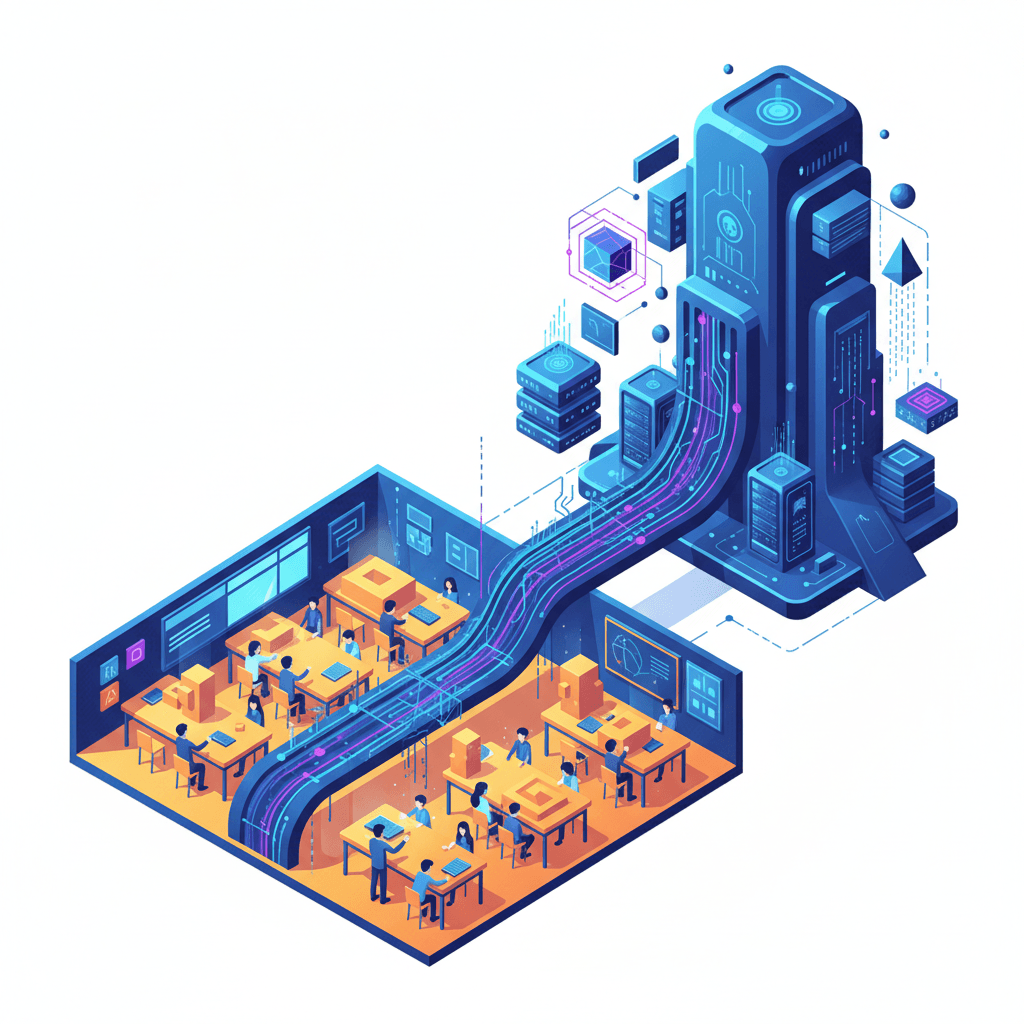
The strategy of Tamil Nadu’s government to overhaul its technology education and industry ecosystem marks a profound ideological break from the traditional Indian model of passive upskilling. This shift is best encapsulated by the perspective of Information Technology Minister Palanivel Thiaga Rajan, who has publicly declared that a career in software development is no longer a default path for the state’s massive pool of engineering graduates. The state is no longer content to wait for students to gain exposure by visiting national or international tech conferences; instead, it is actively embedding a deep-tech, future-proof curriculum directly into its school and university systems, focusing on creating problem-solvers rather than mere code-writers.
This philosophical pivot is rooted in the government’s recognition that the rise of Artificial Intelligence and advanced automation is rapidly making shallow, rote-based tech jobs obsolete. Minister Rajan has argued that the kind of basic software development jobs that can be secured simply with a degree in engineering, science, or mathematics will likely be the first to be fully automated. This awareness drives the state’s proactive approach to combat an impending layoff and reduced hiring scenario in the foundational IT services sector. Instead of viewing AI as a job destroyer, the government sees it as an enabler for the “democratisation of careers.” The future workforce, in this view, will see an explosive demand for new roles that require higher-order cognitive skills: AI ethicists, model validators, and domain experts who can process and certify the outputs of automated systems for critical societal use.
To meet this looming industrial transformation, Tamil Nadu has launched a comprehensive, top-to-bottom revamp of its educational infrastructure, making its intervention systemic rather than merely cosmetic. At the foundational level, the state introduced the Tamil Nadu Schools Programme for AI, Robotics and Knowledge of Online Tools, or TN SPARK, a pilot programme that integrates AI, coding, robotics, and digital tools into the curriculum for students in classes six through nine.[1][2] This initiative is specifically designed to bridge the digital divide by equipping government school students with hands-on exposure to visual-based programming languages like Scratch and Blockly before moving on to industry-standard tools like Python.[3][2] This classroom revolution, supported by dedicated bilingual textbooks and trained teachers, shifts the focus away from the rote memorization that historically characterized Indian technical education toward essential future skills: logic, reasoning, and basic scientific awareness.[4] The strategy inherently moves the mountain to Muhammad, bringing world-class tech exposure to tens of thousands of students directly in their schools, a stark contrast to the limited and geographically concentrated impact of a typical two-day industry conference.
Concurrently, the state has built a powerful scaffolding for deep-tech innovation at the high-end of its ecosystem to ensure there are advanced jobs for the newly skilled workforce. A landmark initiative is the establishment of the Tamil Nadu Artificial Intelligence Mission (TNAIM), created with an initial budget allocation of $₹13.93$ crore to provide the blueprint for AI deployment across education, employment, healthcare, and governance.[5] The mission's focus is not just on adoption, but on research and developing AI-driven solutions for public administration, aiming to make governance smarter and more data-centric. Further cementing its ambition to become a global AI creator rather than just a consumer, the government signed a memorandum of understanding with Sarvam AI to establish India’s first full-stack Sovereign AI Park.[6] This project represents an initial investment of $₹10,000$ crore and is expected to generate 1,000 high-skilled, deep-tech jobs, creating an integrated ecosystem that combines AI compute infrastructure, secure data frameworks, and model research labs.[6] This kind of massive infrastructure investment signals a commitment to anchoring frontier research and deep talent pools within the state.
The state’s approach is underpinned by a robust emphasis on its human capital, a resource Minister Rajan frequently cites as the cornerstone of Tamil Nadu’s economic strength. The state boasts a Gross Enrolment Ratio (GER) in tertiary education that exceeds 50 percent, a figure the central government aims to reach much later, thereby giving Tamil Nadu a significant head start.[7] This pre-existing educational foundation is being leveraged through platforms like the Tamil Nadu Technology Hub (iTNT Hub), which fosters industry-academia collaboration through programmes like "Jigsaw" and focuses on building a Deep Tech Innovation Network.[8] Furthermore, even the traditional conference format is being repurposed to fit the state’s decentralized strategy. The flagship technology conference, UMAGINE TN, is now supplemented by the "Imagine DX" lecture series, which brings speakers, global ideas, and alumni back to over 60 partner educational institutions across 23 districts, reaching over 18,000 students directly at their respective colleges and universities.[9]
By systematically integrating AI and coding into middle school, establishing AI-focused career counseling, launching the TNAIM for policy direction, and committing massive capital to build the Sovereign AI Park, Tamil Nadu is engineering an entirely new tech talent pipeline.[10][5][6] The state is consciously moving beyond its historical reputation as merely the "back office" of the world, a role characterized by low-cost, high-volume IT service delivery.[4] Instead, its policies are geared towards realizing a new vision: to transform into a global hub for Deep Tech and innovation, utilizing its double-digit real GDP growth rate and its enormous, educated workforce to absorb and scale the next wave of high-value technology investment, fundamentally reshaping the future of the AI industry and its corresponding jobs.