
Perplexity unveils hybrid AI system that dynamically routes tasks between PCs and the cloud
A new hybrid system dynamically splits workloads between devices and the cloud to cut costs and protect user privacy.
June 3, 2026
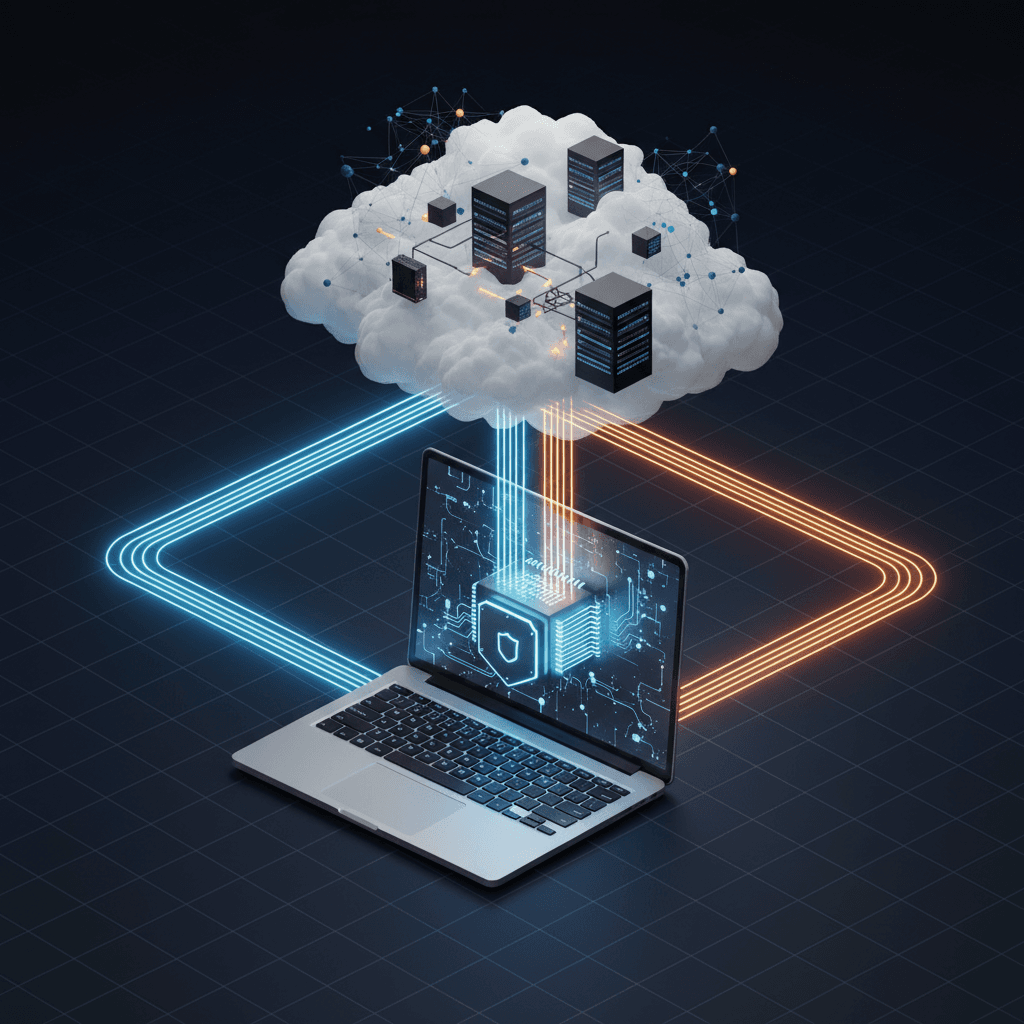
Perplexity, the rapidly growing artificial intelligence search startup currently valued at twenty billion dollars, has announced a groundbreaking hybrid local-server inference system designed to dynamically distribute AI workloads between a user's personal device and cloud-based data centers[1][2]. Unveiled at the Computex technology conference in Taipei during an Intel keynote address, this orchestrator acts as a real-time air-traffic controller for AI tasks[1][3][4]. The technology represents a major shift in how consumer AI applications utilize computing power, moving away from a model reliant entirely on centralized cloud servers to one that leverages the increasingly capable hardware inside modern personal computers[5][4]. By evaluating tasks as they occur, the software automatically routes simple or highly sensitive sub-tasks to the local machine, while sending complex reasoning problems to large-scale frontier models in the cloud[1][3]. This development arrives at a critical juncture for the industry, as companies struggle to manage soaring cloud infrastructure costs while simultaneously addressing user anxieties regarding data privacy and security[3][6].
The heart of this new architecture lies in a feature Perplexity calls hybrid agentic inference, which is slated to be integrated into its Personal Computer platform[7][5]. The Personal Computer platform, which functions as an always-on assistant capable of managing files, executing actions, and browsing the web, will utilize the new system to break complex objectives into smaller, distinct components[5][8]. For example, if a user requests an AI to analyze a highly confidential financial spreadsheet and draft a summary, the local orchestrator immediately identifies the sensitive financial data and processes those elements on the user's actual device[5][6]. Meanwhile, the parts of the workflow that require heavy contextual reasoning or web-based retrieval are packaged and routed to powerful models running in the cloud[5][6]. The key distinction of Perplexity's approach is that this division of labor occurs completely autonomously and dynamically, task by task, without requiring the user to manually choose between local and cloud processing before starting a project[1][7].
This architectural shift is made possible by a new generation of consumer silicon designed specifically to handle localized machine learning tasks[7][6]. During the announcement, Perplexity demonstrated the orchestrator running on devices equipped with Intel Core Ultra Series 3 processors, which are built to execute on-device artificial intelligence tasks efficiently through integrated neural processing units[1][9]. However, Perplexity has emphasized that its system is designed to be entirely chip-agnostic and will run on other advanced local hardware, including Nvidia's RTX Spark platform[5][2]. As consumer electronics manufacturers increasingly equip laptops and desktop computers with dedicated AI hardware, the boundary between the personal device and the remote data center begins to dissolve[5][4]. Rather than treating a user's computer as a mere display screen for cloud-generated answers, the orchestrator turns the physical device into an active, functional node of the compute network, dramatically expanding the utility of local silicon[4].
The business logic driving Perplexity toward this hybrid infrastructure is closely tied to the rising costs of running large language models in centralized data centers[3][4]. Operating massive AI models in the cloud requires enormous amounts of electricity and expensive specialized servers, creating a cost crisis that threatens the profit margins of generative AI developers[3][4]. Industry estimates indicate that some major AI firms are spending hundreds of millions of dollars every month simply to maintain their cloud operations[3]. This financial burden intensifies as AI applications transition from simple single-turn chatbots into complex, multi-step agents that must repeatedly research, check permissions, edit files, and coordinate tools over extended periods[4]. By delegating routine tasks, basic data formatting, and minor classification steps to the user's local processor, Perplexity can drastically reduce its reliance on expensive cloud-based servers[3]. This efficiency is crucial for a company that has recently seen its revenue grow from one hundred million dollars to five hundred million dollars while keeping its headcount growth highly constrained[3][2].
Beyond cost efficiency, the hybrid local-cloud framework addresses the escalating challenges of data privacy and international data sovereignty[4][8]. Many corporate and individual users remain hesitant to adopt powerful cloud-based AI tools because doing so often requires uploading proprietary files, medical records, or sensitive financial information to external servers[1][6]. By keeping private data strictly confined to the local machine, Perplexity's hybrid model provides a secure alternative that simplifies regulatory compliance and reassures enterprise clients[4][10]. This approach aligns with a broader philosophical shift in the tech sector, where the orchestration layer—the system that coordinates and directs various AI tools and models—is becoming highly valuable[7][11]. While individual models are rapidly commoditizing, the software that can intelligently determine which model to use, where to run it, and how to maintain user privacy represents a durable competitive advantage[7][11].
In conclusion, Perplexity's hybrid AI system marks a significant milestone in the evolution of consumer computing, establishing a new paradigm that balances the competing demands of intelligence, accuracy, privacy, and cost[1][7]. By resolving what researchers refer to as the orchestration problem, the technology ensures that computational power is deployed with maximum efficiency, maximizing what industry leaders call token value per watt per user[7][6]. As the system rolls out to wider consumer and enterprise audiences, it will likely serve as a blueprint for the future of personal computing, transforming everyday devices into decentralized data centers capable of performing sophisticated artificial intelligence tasks securely and cost-effectively[5][4].