
E.ON deploys AI and digital twins to manage Europe’s volatile renewable energy grid
How European energy giant E.ON leverages SAP S/4HANA and scalable AI to navigate the volatile transition to renewable power.
June 3, 2026
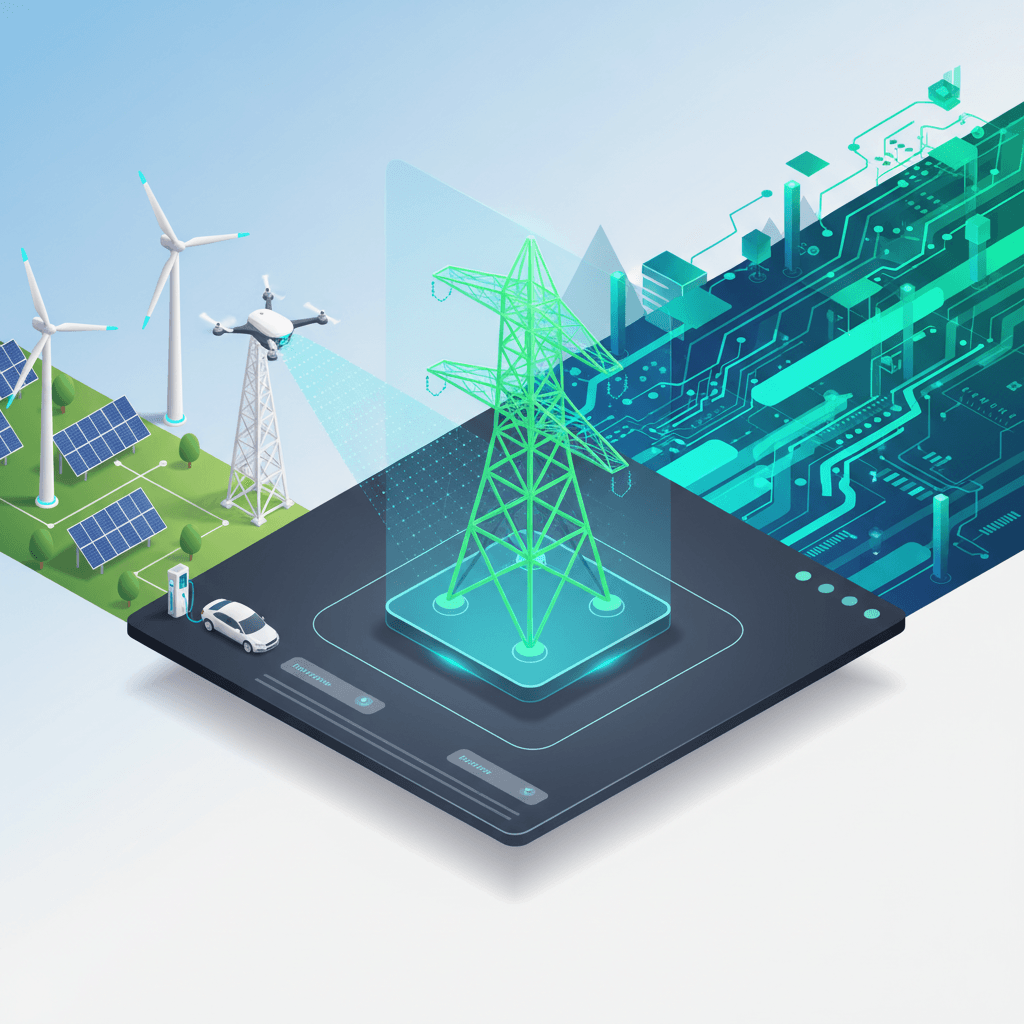
As the global transition to renewable energy accelerates, traditional utility companies face a fundamental challenge in managing increasingly volatile, decentralized electricity grids[1][2]. E.ON, one of Europe’s largest energy operators with a massive network serving over 47 million customers across multiple nations[3][2], is navigating this complexity by positioning advanced software at the heart of its business model[4]. The integration of decentralized renewable energy sources, the mass adoption of electric vehicles, and the rise of heat pumps have rendered the old, predictable model of one-way power flow completely obsolete[5][6]. To manage this unprecedented volatility, E.ON has embarked on an ambitious digital transformation, establishing SAP S/4HANA as the core backbone of its modernized grid infrastructure[7]. This systemic overhaul not only ensures operational resilience but acts as the critical launchpad for deploying scalable artificial intelligence across its entire network[7][8].
Maintaining operations across a footprint of this size requires continuous capital expenditure on IT hardware and software maintenance[9]. While E.ON leadership initially questioned the business case supporting such large-scale technology spending, the engineering and IT teams proved that persistent financial investment is the non-negotiable price of system stability, affordability, and resilience within a digitized energy network[10][9]. E.ON’s corporate strategy prioritizes growth, sustainability, and digitalization as primary objectives, recognizing that falling behind in technical capabilities carries severe, long-term financial liabilities[9][11]. Central to this strategy is a comprehensive cloud ERP migration implemented alongside the SAP S/4HANA transition[9]. Legacy ERP systems in the utility sector historically suffer from extreme customization, creating brittle environments where minor integrations can trigger cascading system failures[5][9]. By rejecting fragmented custom builds and eliminating decades of technical debt, E.ON’s developers have integrated established software packages directly into a cohesive, standardized architecture, guaranteeing data scalability across the entire enterprise[9].
This focus on foundational infrastructure has delivered highly visible and immediate production outcomes, most notably a 77 percent reduction in IT downtime over a five-year period[9][4]. Achieving these high-uptime metrics was made possible by standardizing data tables and purging redundant middleware from the company's technology stack[9]. Crucially, SAP S/4HANA utilizes an in-memory database architecture, which significantly accelerates query processing times compared to legacy relational databases[9]. E.ON leverages this processing speed to handle telemetry data streaming directly from millions of grid assets in real time[12]. Rather than relying on sluggish overnight batch-processing routines that once bottlenecked grid load analysis, the company can now process massive data streams immediately[5][12]. This real-time data processing capability serves as the absolute prerequisite for deploying any machine learning models against active operational data, allowing E.ON to transition from reactive maintenance to automated, predictive decision-making[12].
With a robust data foundation established, E.ON has rapidly scaled its artificial intelligence initiatives, moving beyond localized pilot programs into full enterprise deployment[8]. In its grid operations, the utility giant has revolutionized infrastructure maintenance through the use of virtual drone inspections[8][13]. E.ON deploys approximately 550 drones across its network operators, traveling more than 35,000 kilometers and capturing nearly six million high-resolution images annually[14]. These images are fed directly into AI-powered tools on cloud platforms, which automatically analyze grid assets for signs of wear, vegetation encroachment, or structural damage[13][2]. This automated process now identifies roughly 47 percent of potential defects, significantly enhancing occupational safety by reducing the need for technicians to manually climb high-voltage pylons[15][13]. Furthermore, E.ON has developed a sophisticated digital twin of its German distribution grid using technology from envelio[16]. This digital model evaluates data from 55 million network components and over 180,000 measuring devices[16]. By simulating the grid in real-time, the digital twin automates the processing of grid connection requests for wind turbines, solar installations, and EV chargers within seconds, seamlessly managing a volume of requests that surpassed 410,000 in Germany alone in a single year[16].
This aggressive transition to an AI-driven grid has required a dramatic rethink of how the company manages its human capital and technological capabilities. Technology leaders face intense pressure to match the rapid pace of external software development, a reality that E.ON CIO Sebastian Weber notes can create internal organizational tension[12]. Weber points out that consumer AI applications like ChatGPT have set high expectations for enterprise software, prompting internal demands for similar automation in the workplace[12]. To close the gap between external technological possibilities and internal execution capabilities, E.ON took the strategic step of internalizing its data and cybersecurity operations[17]. The company aggressively expanded its internal engineering teams, hiring more than 1,000 technical specialists, including over 500 data experts and 300 cybersecurity professionals[17]. Bringing these core data engineering capabilities in-house allows the utility to build proprietary data lakes and audit data governance internally[17]. Simultaneously, retaining in-house cybersecurity talent ensures that E.ON maintains strict, uncompromised access control over the highly sensitive operational technology systems that directly manage the physical energy grid[17].
Managing a digitized energy ecosystem at this scale also requires rigorous governance and a rejection of legacy innovation models[18][19]. Historically, large enterprises have isolated experimental technologies inside separate business units, digital labs, or experimental garages[18][19]. E.ON completely abandoned this disconnected approach, deprecating its isolated innovation hubs in favor of integrating digital tools directly into active, everyday business processes[18][19]. This forcing function ensures that developers build applications directly within the core architecture, guaranteeing live production viability from day one[20]. To manage this vast environment, E.ON established centralized governance structures, implementing standardized contracting frameworks and unified IT management consoles across all business units[21]. These structures enforce strict security and cost discipline, accelerating vendor procurement while capping runaway software licensing fees[18]. E.ON has also forged deep strategic partnerships with technology giants to modernize its core business operations, leveraging Infosys' Topaz generative AI platform to transform workplace services for its 77,000 employees and using HCLTech's AI Force platform to scale automation across its networks[8][22].
The comprehensive modernization program executed by E.ON offers vital lessons for both the utility sector and the broader artificial intelligence industry[8]. It demonstrates that the success of complex AI deployments is inherently tied to the clean standardisation of the underlying data architecture[23][7]. Without a robust, modernized platform like SAP S/4HANA to unify disparate data streams, advanced machine learning models and real-time digital twins remain impossible to scale[23][7]. For the energy industry, the convergence of AI, standardized cloud ERP, and localized grid intelligence represents the only viable path forward to support the fluctuating demands of the clean energy transition[6]. By combining aggressive infrastructure investments, structured governance, and a human-centered approach to technological adoption, E.ON has built a resilient digital backbone[6][4]. In doing so, the European utility giant has established a replicable blueprint for how legacy industrial enterprises can successfully transform their operations to power a sustainable, AI-driven future[8].
Sources
[2]
[3]
[4]
[5]
[6]
[8]
[10]
[11]
[13]
[14]
[15]
[16]
[19]
[22]
[23]