
OpenAI transitions to consumer hardware powerhouse with proactive smart speakers designed by Jony Ive
OpenAI joins Jony Ive to build proactive hardware, aiming to replace the smartphone with an ambient AI ecosystem.
February 20, 2026
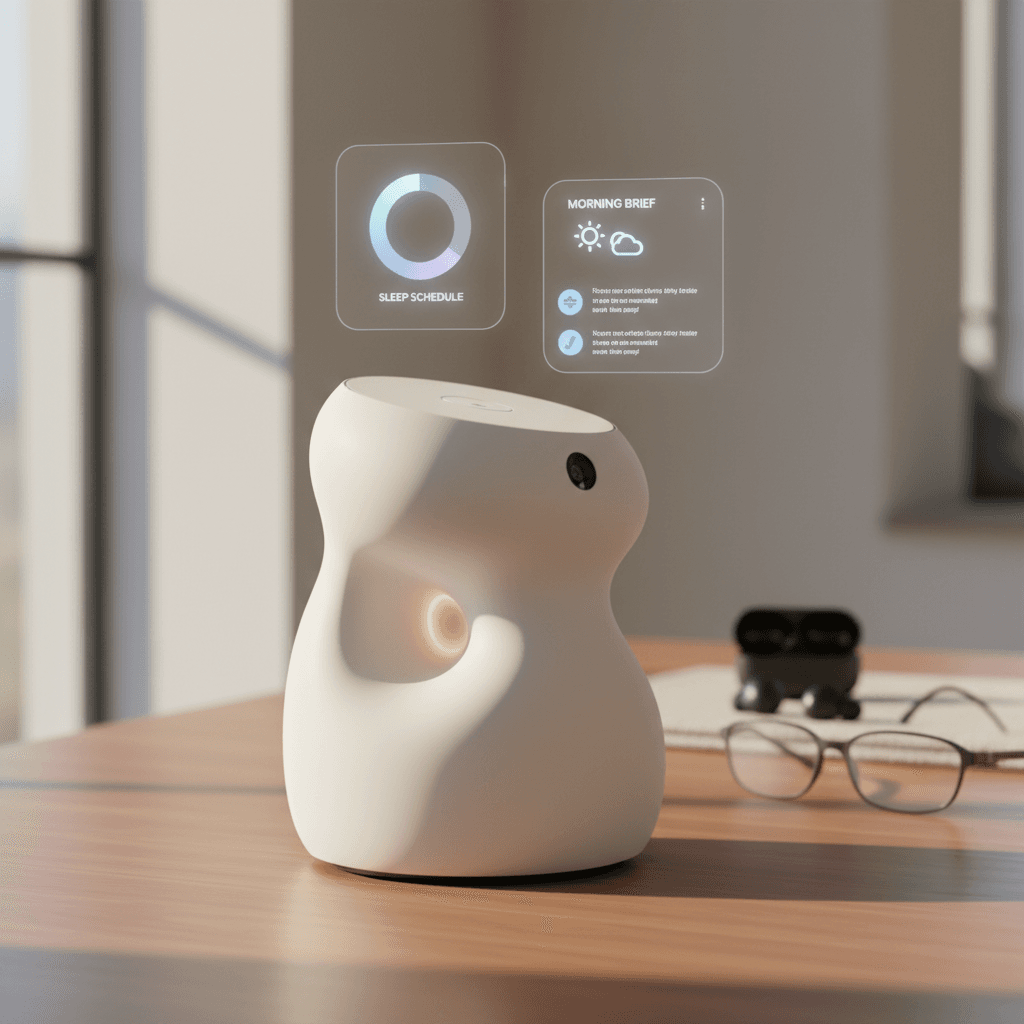
OpenAI is reportedly preparing to transition from a software giant to a consumer hardware powerhouse, signaling a fundamental shift in how humans interact with artificial intelligence.[1][2][3] At the center of this ambitious strategy is a new smart speaker, priced between 200 and 300 dollars, designed to act as a proactive digital companion rather than a reactive utility. Unlike traditional smart speakers that wait for a wake word to perform simple tasks like setting timers or playing music, OpenAI’s upcoming device is built to observe, learn, and anticipate user needs.[4][5][6] One of the most talked-about features of this device is its ability to suggest when a user should go to bed, based on an analysis of their daily habits, scheduled morning appointments, and observed fatigue levels. This transition marks the end of the era of passive voice assistants and the beginning of the age of agentic hardware, where the AI takes an active role in managing the user’s life.
The hardware initiative, which has grown to include a dedicated team of over 200 employees, is not limited to a single device but represents a comprehensive ecosystem designed to challenge the dominance of established players like Apple and Amazon. The smart speaker is expected to feature a high-resolution camera and advanced facial recognition technology, allowing it to distinguish between different family members and provide personalized responses. By integrating visual context with the company’s latest multimodal models, the speaker can understand the physical environment it inhabits. For example, it might notice a user looking through a cookbook and offer to read out instructions, or recognize a cluttered living room and suggest a time for a cleaning reminder. The 200 to 300 dollar price point positions the device as a premium alternative to the entry-level offerings from competitors, reflecting a focus on high-end design and superior processing power.
Much of the design philosophy for this new hardware lineup comes from a high-profile partnership with Jony Ive, the former legendary design chief at Apple, and his firm LoveFrom.[2] The collaboration aims to create a "biteable" and intuitive aesthetic that moves away from the cold, industrial feel of modern gadgets. Beyond the smart speaker, the pipeline includes an AI-powered audio device codenamed Sweetpea, which is widely viewed as a direct competitor to Apple’s AirPods.[1][2] These earbuds are rumored to offer always-on translation and real-time coaching, functioning as a "third device" that complements the smartphone rather than seeking to replace it immediately. Additionally, the company is exploring smart glasses that would compete with Meta’s wearable offerings, as well as a smart lamp and a wearable pin. This hardware roadmap suggests that OpenAI is no longer content being a service provider for other platforms and is instead focused on owning the entire user experience from the silicon to the interface.
The strategic implications of this move are profound for the broader AI and consumer electronics industries.[7] For years, OpenAI has been reliant on the hardware ecosystems of Apple and Google to reach its millions of users. By building its own devices, the company can bypass the restrictive "app store taxes" and data-sharing limitations imposed by platform owners. This shift toward vertical integration is further evidenced by OpenAI’s reported investment in custom silicon and specialized AI chips designed to run their massive models with lower latency and higher efficiency.[8] Sam Altman has increasingly identified Apple as the company’s primary long-term competitor, noting that the battle for the future of AI will be fought on the device level.[9] As AI models become more capable of performing complex, multi-step tasks autonomously, the hardware they live on must be capable of supporting that agency with specialized sensors and continuous environmental awareness.
One of the most significant technological leaps in this new hardware is the integration of proactive features, often referred to internally under the umbrella of the Pulse feature. In the software version, Pulse conducts asynchronous research and analysis while the user sleeps, presenting a curated morning brief.[10] On the smart speaker, this functionality translates into real-world interventions. The "bedtime" suggestion is a prime example of this philosophy. By analyzing a user’s calendar, recent health data, and even their tone of voice during evening interactions, the AI can determine the optimal window for rest to ensure peak performance the following day. This level of involvement in a user’s personal life represents a shift toward a more intimate relationship with technology, where the AI acts as a sophisticated life coach rather than a digital encyclopedia.
However, the introduction of cameras and facial recognition into the most private areas of the home brings significant privacy and ethical challenges. While OpenAI has emphasized that data will remain secure and that many features will be opt-in, the prospect of an "always-on" camera managed by an AI company is likely to meet with public scrutiny. To mitigate these concerns, the company is reportedly focusing on on-device processing for sensitive data, ensuring that facial recognition and environmental mapping stay local to the hardware whenever possible. The success of this hardware gamble will likely depend on whether OpenAI can convince consumers that the convenience of a proactive, anticipatory assistant outweighs the inherent privacy risks of a more surveilled domestic environment.
The competitive landscape is already reacting to these developments.[7] Apple has reportedly accelerated its own work on AI-powered wearables, including camera-equipped AirPods and advanced smart glasses, in an effort to lock users into its ecosystem before OpenAI’s hardware reaches the market.[11] Meta has already seen success with its Ray-Ban smart glasses, proving that there is a significant market for AI-first hardware that lacks a traditional screen. OpenAI’s entry into this space, backed by the design pedigree of Jony Ive and the massive intelligence of their foundation models, sets the stage for a major realignment in tech. The industry is moving toward "ambient computing," where the interface disappears and the AI is woven into the fabric of daily life through speakers, glasses, and earbuds that understand us better than we understand ourselves.
In the long term, OpenAI's hardware push is an attempt to define the post-smartphone era. If a smart speaker can manage a household’s schedule, an earbud can handle all communication, and glasses can provide a visual overlay of the digital world, the need to constantly look down at a glass screen begins to evaporate. The smart speaker is the first anchor in this vision, serving as the stationary hub for a mobile ecosystem of AI agents. If the device can successfully transition from a novelty that tells you the weather to a trusted partner that tells you when to sleep, it will have achieved a level of integration that has eluded the tech industry for decades. As production scales and the first units move toward a projected 2027 shipping date, the world will soon find out if consumers are ready to invite a proactive AI into their homes as a permanent resident.
Sources
[1]
[2]
[5]
[6]
[7]
[8]
[9]
[10]
[11]