
OpenAI Resurrects Robotics Division to Put a Personal Robot in Every Home
The AI giant leverages world simulation to transition from software chatbots to general-purpose robots for industry and the home.
June 1, 2026
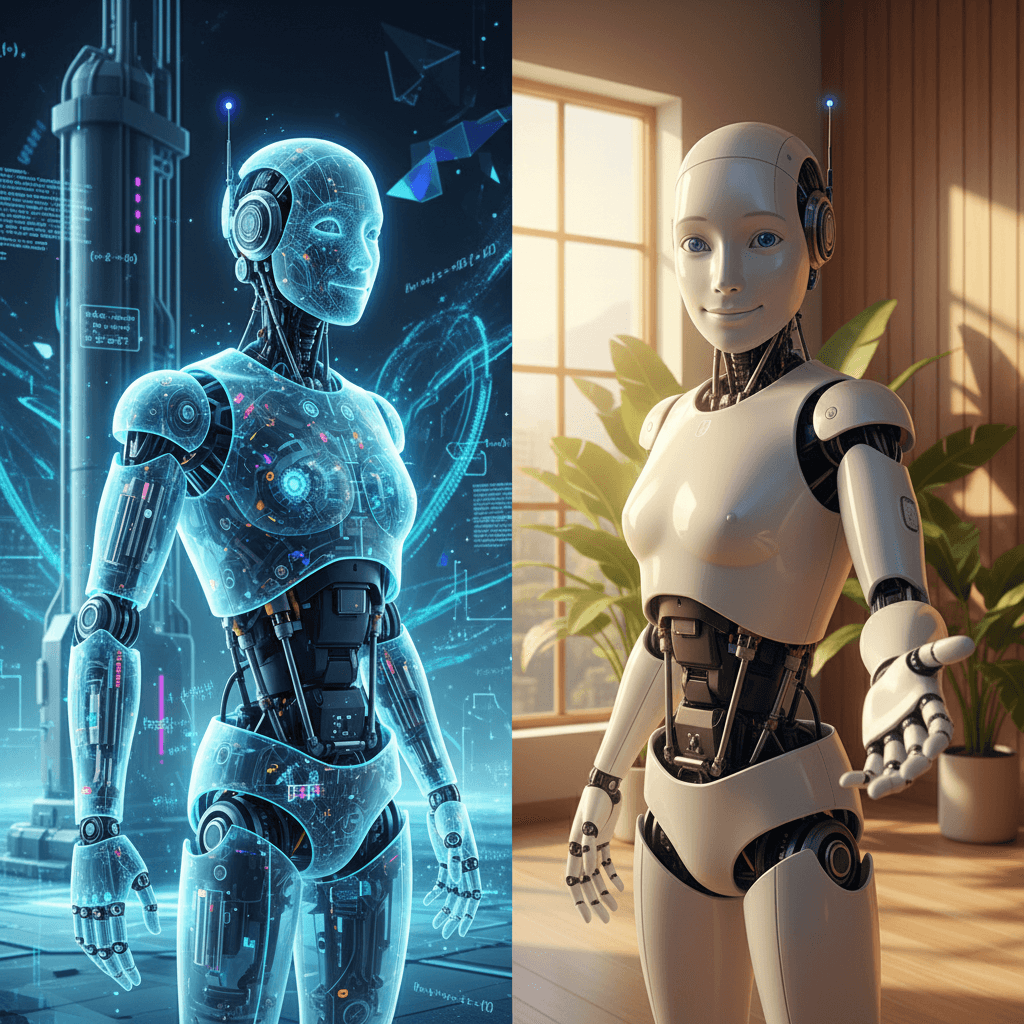
OpenAI is aggressively expanding into physical artificial intelligence by officially relaunching its robotics division, marking a major strategic pivot years after dismantling its original robotics team. The San Francisco-based artificial intelligence company has initiated a massive recruitment drive to build out a full-stack robotics workforce. OpenAI Chief Executive Officer Sam Altman announced the initiative, outlining a multi-stage vision that bridges immediate commercial utility with a far-reaching humanitarian goal. While the company's short-term focus centers on developing industrial-grade robots designed to assist skilled workers in constructing physical infrastructure, its ultimate, long-term ambition is to put an adaptable, general-purpose personal robot in the hands of every consumer worldwide, capable of performing any task they need.
To understand this dramatic return to physical hardware, one must look at how the renewed division evolved internally over the past year. The new robotics unit did not emerge in a vacuum; instead, it grew directly out of OpenAI’s world simulation research program. This research area, led by Vice President of Research Aditya Ramesh—highly regarded for his instrumental work in developing the DALL-E image generators and the Sora video generation models—seeks to teach artificial intelligence to understand, predict, and visually model the physical laws of our universe[1][2]. Under Ramesh's leadership, the team realized that the generative AI capabilities used to simulate highly realistic three-dimensional environments and physics engines in software could be directly translated into physical action[3][2]. By combining world simulation with machine learning, the newly branded OpenAI Robotics division aims to pioneer a paradigm of co-design, where the development of robot hardware and machine learning research occurs in lockstep, solving the fundamental software-to-hardware translation problems that have long plagued the robotics sector[1][4].
This hardware-centric push marks a stark departure from OpenAI’s historical trajectory. In the late 2010s, OpenAI operated a prominent robotics research branch that successfully trained a mechanical hand to manipulate physical objects and solve a Rubik’s cube using reinforcement learning[5]. However, the company eventually shuttered the division, concluding that the lack of high-quality, real-world physical data made it impossible to train general-purpose machines at scale, leading OpenAI to pivot almost exclusively to the large language models that birthed ChatGPT[5][6]. Today, the landscape is radically different. Advances in vision-language models, more sophisticated synthetic data generation via world simulators, and cheaper physical sensors have eliminated many of those early barriers[6][3]. Despite recent leadership shifts—such as the high-profile resignation of hardware executive Caitlin Kalinowski, who stepped down over governance concerns regarding a federal defense contract—OpenAI’s recruitment campaign remains undeterred[7][8]. The company is actively posting high-paying roles for electrical engineers, actuator designers, and data acquisition managers in San Francisco, with base salaries reaching up to $310,000, illustrating its commitment to securing top-tier talent in the physical AI sector[5][6].
The strategic roadmap for OpenAI Robotics is divided into distinct, pragmatic phases designed to establish immediate real-world utility before scaling to mass consumer markets. In the near term, OpenAI intends to deploy its physical AI systems within heavy industry, logistics, and skilled trades[9]. By focusing first on robots that can support human workers in building physical infrastructure, the company targets highly structured but demanding physical tasks, such as construction and manufacturing, where labor shortages are acute and automation can offer immediate productivity boosts[9][4]. However, this industrial focus is merely a stepping stone toward Altman’s ultimate consumer vision: a personal robot in every home[1][4]. As these machines learn from the complex, varied environments of industrial infrastructure, OpenAI intends to refine their general intelligence, safety protocols, and physical dexterity until they are safe and versatile enough to assist ordinary people with daily household tasks, chores, and personal care[10][4].
This bold entry into hardware is already sending shockwaves through the technology sector, fundamentally shifting the competitive dynamics of the embodied AI market[9]. For years, OpenAI has engaged with robotics indirectly, securing minority investment stakes in prominent hardware startups like 1X Technologies, the creator of the home-focused Neo Gamma robot, and Figure AI, which raised a massive $675 million round from tech heavyweights like Microsoft, Nvidia, and Jeff Bezos[6][10]. By building its own proprietary robotics division, OpenAI is transitioning from an investor and API provider to a direct competitor, signaling that future foundation models will likely be deeply integrated into native hardware platforms rather than sold as standalone software[9]. This move places OpenAI on a direct collision course with Tesla, which is heavily promoting its Optimus humanoid robot, as well as established players like Google DeepMind and Boston Dynamics[9][4]. Furthermore, by targeting skilled trades in its initial phase, OpenAI is placing automation pressure on manual labor segments that were previously considered insulated from digital disruption, a development likely to draw intense scrutiny from labor unions and regulatory bodies concerned with worker displacement[9].
Ultimately, OpenAI's resurrected robotics initiative represents the natural progression of its quest toward artificial general intelligence. By moving over the hurdles of digital limitations and pushing past traditional chatbots, the company is attempting to ground its digital intelligence in the physical realities of the real world[1][5]. While the transition from digital code to steel and actuators presents monumental engineering, safety, and supply chain challenges, OpenAI is betting that its world-simulation breakthroughs will provide the key to unlocking generalist machine behavior[3][11]. If successful, the transition from infrastructure assistants to ubiquitous personal companions could redefine the relationship between humans and machines, turning what was once a science-fiction trope of personal robotic helpers into a standard fixture of modern daily life[10][4].