
OpenAI proposes national wealth fund and four-day workweek in radical new policy blueprint
OpenAI’s new blueprint proposes a national wealth fund and shorter workweeks to share the massive prosperity of superintelligence.
April 6, 2026
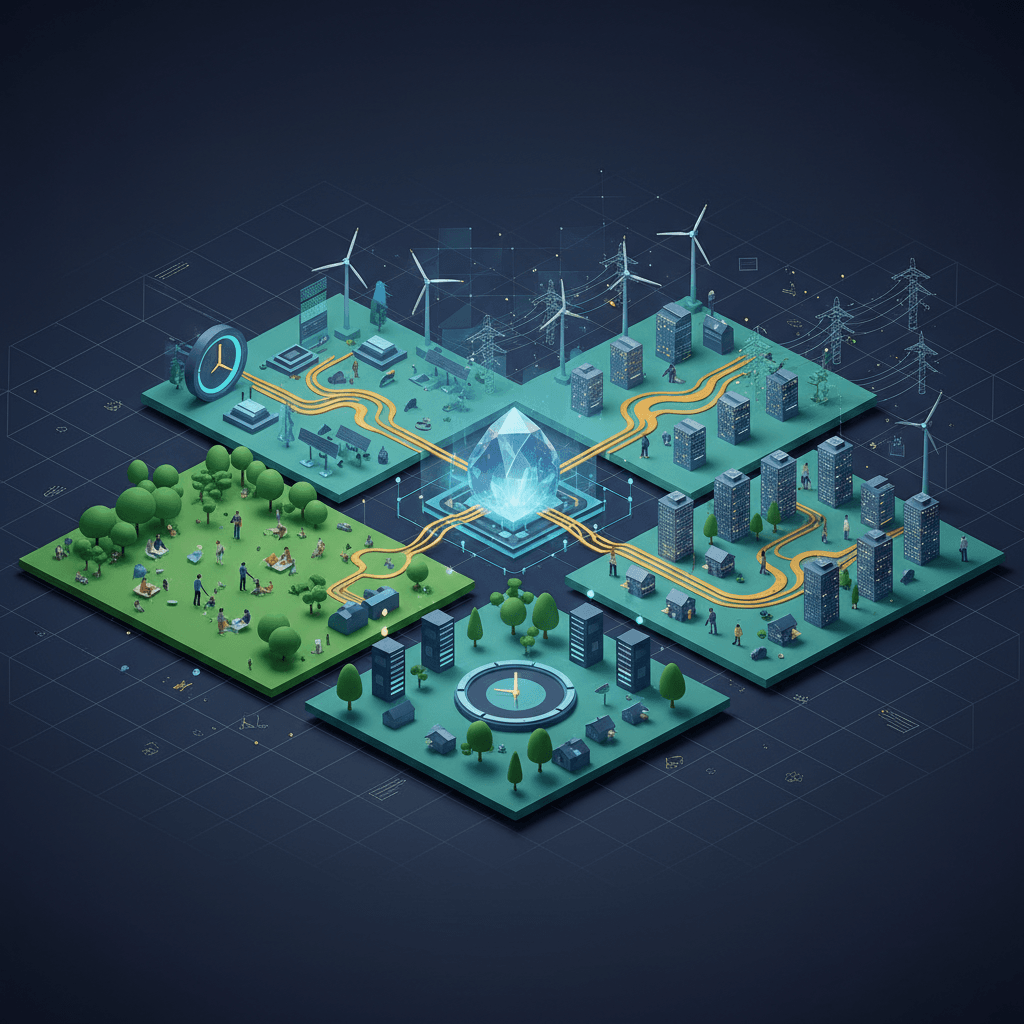
OpenAI has released an expansive policy blueprint titled Industrial Policy for the Intelligence Age, signaling a shift in how the organization views the intersection of technological advancement and global governance.[1][2][3] The thirteen-page document outlines a radical vision for a society on the verge of superintelligence, defined by the company as artificial intelligence systems capable of outperforming the smartest humans even when those humans are assisted by AI. The paper argues that as the transition toward these systems accelerates, existing political and economic frameworks will become insufficient, necessitating a fundamental rewrite of the social contract comparable to the reforms of the Progressive Era or the New Deal. Central to the proposal is the belief that the benefits of the coming intelligence boom must be shared broadly to prevent an extreme concentration of wealth and power within a handful of technology firms.[4][2]
The most provocative recommendation in the paper is the establishment of a national public wealth fund.[5] This sovereign fund would be designed to capture the immense value generated by AI-driven productivity gains and redistribute it directly to citizens.[6][7][1][5] According to the proposal, the fund would be seeded in part by contributions from leading AI companies, including OpenAI itself, and would invest in a diversified portfolio of assets tied to the AI economy. The returns from these investments would then be paid out as dividends to all residents, a model the company compares to the Alaska Permanent Fund.[5] This mechanism aims to ensure that every individual, regardless of their level of financial investment or direct involvement in the tech sector, has a tangible stake in the economic upside of superintelligence.[8] By providing a direct link between corporate success and public welfare, the fund seeks to create a sustainable baseline of financial security as traditional labor markets undergo profound disruption.
Closely linked to this wealth distribution model is a proposed overhaul of the national tax system.[7][6] OpenAI’s paper observes that the current reliance on labor-based payroll taxes to fund social programs like Social Security and Medicaid is increasingly fragile in an era where machines perform a growing share of value-producing work.[9] To address this, the organization advocates for shifting the tax base away from human labor and toward capital gains, corporate income, and AI-driven profits.[5][9][6][1][7] The document also explores the introduction of taxes on automated labor—frequently referred to as robot taxes—as a means of offsetting the revenue lost as human roles are hollowing out. To encourage companies to remain invested in their human workforce during this transition, the paper suggests implementing wage-linked incentives that reward businesses for retaining and retraining employees rather than pursuing total automation.[3]
The vision for a reshaped world also includes a dramatic reimagining of the standard workweek. OpenAI proposes that governments and unions collaborate on pilot programs for a 32-hour, four-day workweek with no reduction in pay. This shift is framed as an efficiency dividend, where the productivity gains unlocked by AI allow for a higher standard of living with fewer hours of human toil. The proposal suggests that once these pilots prove successful, the reclaimed time could be converted into a permanent shorter week or bankable paid time off.[8][3] By decoupling economic survival from a forty-hour labor cycle, the organization envisions a future where individuals have more autonomy over their time, fostering a society focused on creativity, community, and lifelong learning rather than the constant pursuit of routine employment.
Beyond economic redistribution, the policy paper addresses the immediate infrastructure and safety challenges posed by the rapid expansion of AI capabilities.[5][2][8][10] Recognizing that training and running superintelligent models require unprecedented amounts of energy, OpenAI calls for a massive acceleration of electrical grid expansion through new public-private partnership models. The plan suggests using targeted investment credits and flexible subsidies to lower the cost of capital for energy infrastructure, ensuring that the growth of data centers does not lead to rising electricity costs for local communities. The organization also stresses that data centers should pay their own way on energy, ensuring they generate local tax revenue and jobs rather than becoming a drain on public resources.[10]
The transition to superintelligence also brings existential risks that OpenAI argues require a new level of global coordination. The document introduces the concept of containment playbooks, which are structured response plans for scenarios where dangerous or autonomous AI systems might replicate themselves or become uncontrollable.[5] Drawing a parallel to the International Atomic Energy Agency’s role in nuclear oversight, OpenAI advocates for a global body to supervise frontier AI development and ensure that safety standards scale in lockstep with system capabilities.[4] This includes the development of technical safeguards and alignment protocols to prevent the misuse of AI in sensitive areas like cybersecurity or biotechnology. The organization emphasizes that no single laboratory can guarantee a positive outcome on its own, making international cooperation and democratic oversight essential.
To protect individuals during the volatile periods of transition, the paper recommends the creation of adaptive social safety nets.[8] These systems would utilize real-time measurement of economic indicators, such as regional unemployment rates and industry-specific displacement metrics.[8] When these metrics hit predetermined thresholds, the safety net would automatically trigger expanded benefits, including wage insurance, training vouchers, and direct cash assistance.[8] This automated approach is intended to provide a faster and more reliable cushion than traditional legislative processes, which often lag behind the speed of technological change. By building resilience into the social structure, the proposal aims to mitigate the fear and instability that often accompany major industrial shifts.
Industry analysts suggest that OpenAI’s policy push is also a strategic move to shape the regulatory landscape at a time when the company is undergoing significant internal changes. As the organization prepares for a potential public listing and navigates a transition in its corporate structure, positioning itself as a primary advocate for public welfare and safety may serve to preempt more restrictive government intervention. The document openly acknowledges the risk that economic gains could concentrate within a few dominant firms and argues that proactive policy is the only way to ensure that the Intelligence Age does not mirror the inequalities of previous industrial revolutions.
The release of this whitepaper has sparked an intense debate among policymakers, economists, and technology leaders. Critics argue that the proposals for a public wealth fund and a four-day workweek are overly idealistic or may prove difficult to implement without stifling innovation. Others point out that the heavy reliance on capital gains taxes could lead to capital flight in an increasingly globalized economy. However, supporters of the vision contend that the speed at which AI is advancing leaves little room for incrementalism and that the risks of inaction far outweigh the challenges of radical reform. They argue that if the prediction of superintelligence arriving within the next few years is accurate, the window to build these new institutions is closing.
Ultimately, OpenAI’s vision for the world reshaped by superintelligence is one of extreme optimism tempered by a call for unprecedented caution. The organization portrays a future where the cost of essential goods and services falls toward zero, and where human ingenuity is amplified by machines to solve the world's most pressing problems. Yet, the paper remains clear that this outcome is not guaranteed and depends entirely on the choices made by current governments and societies. By laying out a roadmap for a world with less work and more shared wealth, OpenAI has shifted the conversation from the technical possibilities of AI to the political and moral responsibilities of those leading the charge into the Intelligence Age.