
OpenAI Commits Half-Trillion to Build Power Grids, Shielding Communities from AI Costs.
The company's 10-gigawatt “Stargate Community” plan shifts AI giants from power consumers to grid developers.
January 21, 2026
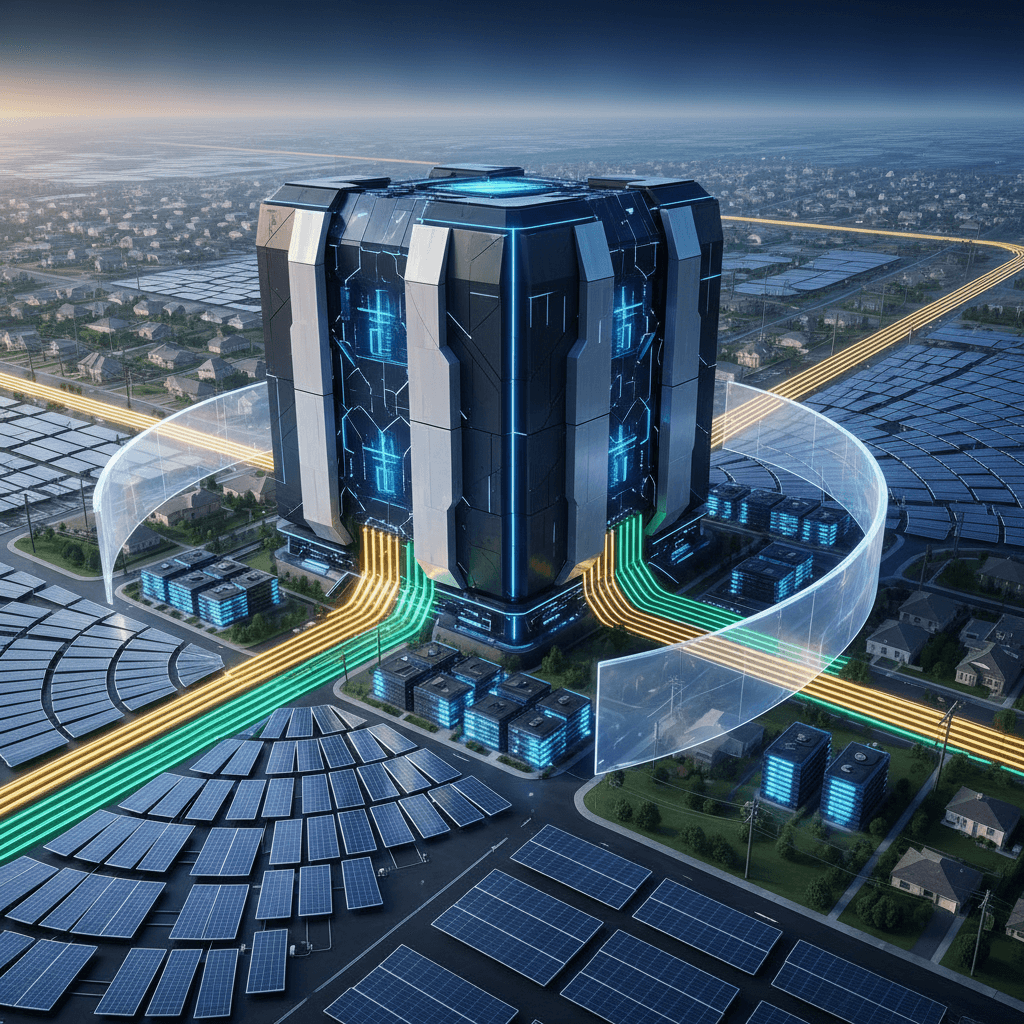
The energy-intensive expansion of artificial intelligence infrastructure is pushing the United States' electrical grid to its limits, sparking political controversy and community backlash over soaring utility bills, a situation the industry's leading firm, OpenAI, is now attempting to head off with an unprecedented financial commitment. Following a similar pledge from its partner Microsoft, OpenAI has unveiled a "Stargate Community" plan that promises to insulate local residents from any increases in electricity costs caused by the construction and operation of its massive AI data centers. The company's strategy represents a fundamental shift in how hyper-scale tech companies are approaching energy access, moving away from being passive consumers and toward becoming active, independent power infrastructure developers.
The scale of OpenAI's ambition, tied to the half-a-trillion-dollar "Stargate" initiative, makes the energy promise a critical component of its future growth. Stargate, which has attracted major investors like Oracle, is a multi-year program to build large AI data centers, with an initial goal of establishing five major campuses across the U.S. with a combined capacity of seven gigawatts, scalable up to ten gigawatts. This planned capacity is immense; for comparison, ten gigawatts is more than the peak power demand of entire countries like Switzerland or Portugal, highlighting the colossal "electron gap" the AI industry must close to sustain its rapid development. The firm’s commitment to preventing price hikes for local communities is a direct response to the intense political and regulatory scrutiny that has grown as AI’s energy appetite has come into conflict with residential and commercial consumer needs.
To make good on its promise, OpenAI has outlined a site-specific funding mechanism under the Stargate Community plan, effectively committing to "pay its way on energy" at every location. The core of this strategy involves financing new dedicated power and storage infrastructure, new energy generation resources, and necessary transmission and grid upgrades that are incremental to the project's needs. This investment is tailored to the specific energy profile and grid conditions of each host community. For instance, in Milam County, Texas, the company's partners are funding new generation and storage to supply the majority of the power for an initial 1.2-gigawatt Stargate campus, a move designed to decouple the data center’s growth from the local utility's rate structure. Elsewhere, in Wisconsin, the company is collaborating with local utilities and partners to develop new solar and battery storage capacity under a dedicated rate that aims to shield existing residential and small-business customers from higher costs[1][2].
The urgency of this proactive step is underscored by the dramatic impact AI data centers are already having on the existing grid. Across the U.S., the explosive growth of AI and cloud computing is driving a historic surge in electricity demand. Consulting firm projections estimate that America's power demand could increase by 25 percent by 2030 compared to 2023, with data center construction being the primary driver of this growth. In some regions, like the PJM grid operator’s territory which serves 13 states and 67 million people, the concentrated power draw, particularly in areas like Northern Virginia’s "Data Center Alley," has led to warnings of potential rolling blackouts during peak demand periods. The exponential, synchronized power demands of training large language models—a process far more energy-intensive than traditional data center operations—put concentrated stress on the electrical infrastructure, threatening to destabilize regional grids and push wholesale electricity prices higher[3][4][5].
OpenAI and its partners are attempting to mitigate this infrastructure strain by internalizing the cost of necessary system expansion. By fully funding and building dedicated power sources—which often include renewable energy like solar and wind, supplemented by large-scale battery storage—the AI company is essentially creating a dedicated energy ecosystem for its own compute needs. Energy experts note that while this internalization of cost is a necessary adaptation to the massive resource requirement of the AI paradigm shift, the practical implementation remains "devilishly complicated" given the intricate nature of utility rate-setting, grid reliability requirements, and local regulatory oversight[6]. Full transparency regarding the financial arrangements and infrastructure deals will be critical to ensuring that the costs truly do not spill over to residential consumers.
Ultimately, this shift represents a new phase of AI infrastructure deployment, moving from simple real estate development to large-scale, vertically integrated energy projects. The financial outlay—a half-trillion-dollar program for Stargate—signals that the energy constraint is now a fundamental bottleneck for AI expansion. By promising to protect local ratepayers, OpenAI is not only engaging in a community-first public relations strategy but is also making a massive capital investment in the physical infrastructure necessary to secure its own future computing capacity. This move sets a new, high-cost standard for the entire AI industry, suggesting that the price of admission for scaling compute power without triggering political and regulatory headwinds is to become a major investor in the nation's energy future.