
OpenAI builds massive computing moat against Anthropic as power constraints reshape the global AI race
OpenAI builds a massive power moat while Anthropic bets on custom silicon and efficiency to win the infrastructure war.
April 10, 2026
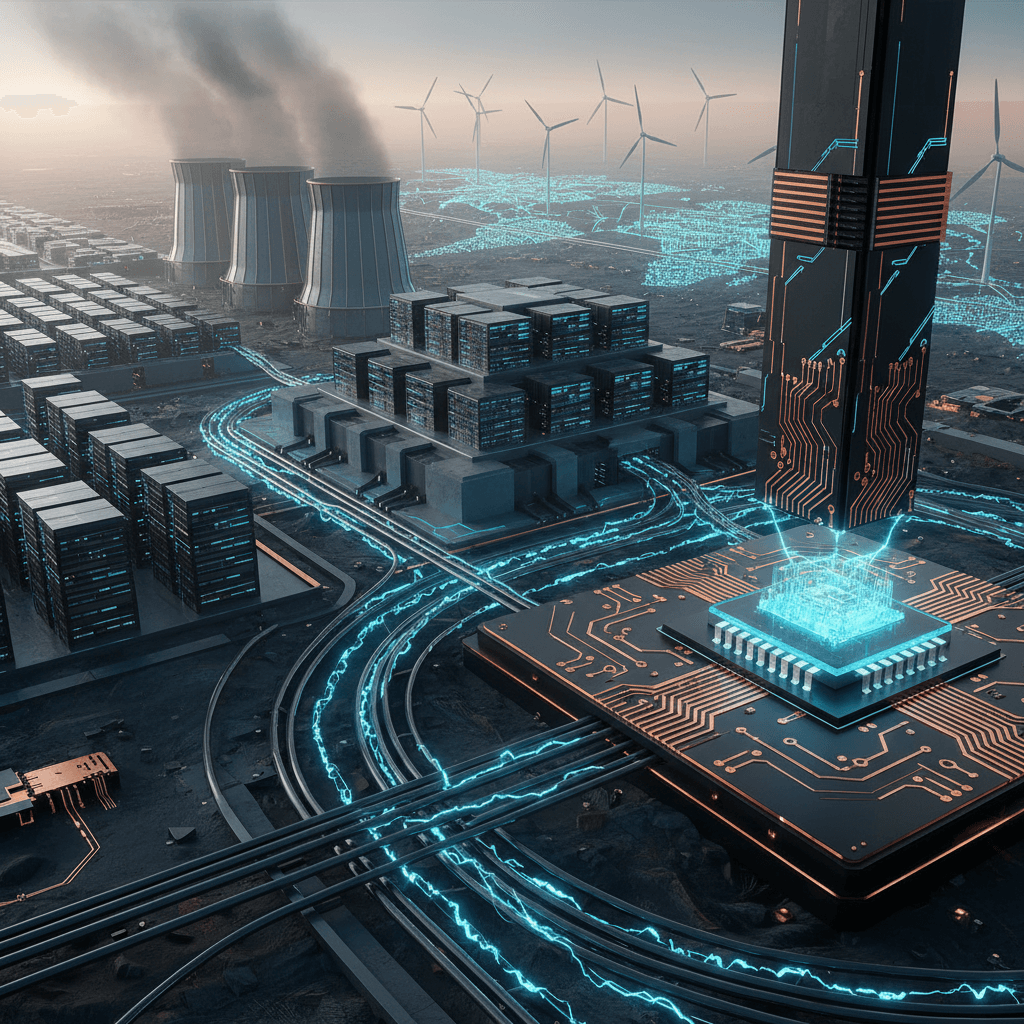
The battle for dominance in generative artificial intelligence has moved beyond the digital realm of code and algorithms into the physical world of power grids, industrial real estate, and specialized silicon. OpenAI is currently making a concerted effort to convince its financial backers that its early and massive investment in physical infrastructure has created a decisive competitive moat that its rivals, most notably Anthropic, will struggle to cross. This strategy reflects a broader shift in the AI industry where the primary bottleneck to progress is no longer just human ingenuity, but the sheer availability of electricity and processing units. In a recent private memo to investors, OpenAI argued that its aggressive buildout of compute capacity has outpaced Anthropic, allowing for faster product iteration and a more resilient response to the global surge in demand for AI services.[1]
According to internal projections and investor briefings, OpenAI currently commands approximately 1.9 gigawatts of available computing capacity, a figure the company claims is nearly triple its capacity from the previous year. To maintain its lead, OpenAI has outlined an ambitious roadmap that aims to push this capacity into the low double digits by next year, with a long-term goal of reaching 30 gigawatts by 2030.[1][2] In contrast, OpenAI’s internal analysis estimates that Anthropic ended the most recent year with roughly 1.4 gigawatts and is projected to reach between 7 and 8 gigawatts by the end of next year.[1][2] OpenAI’s pitch centers on the idea that this widening gap in raw power is a critical product constraint. The company suggests that Anthropic’s more conservative rollout of its most powerful models, such as the restricted release of the high-end Mythos model, is not merely a matter of safety-first philosophy, but a direct consequence of having insufficient hardware to support a broader public launch.[2]
The infrastructure race is not without its significant hurdles, however, as OpenAI has recently been forced to recalibrate its global expansion strategy.[3] In a notable setback for its international ambitions, the company has paused its multi-billion pound data center project in the United Kingdom.[4][5] Originally designed as a cornerstone of the national AI strategy, the project, known as Stargate UK, was intended to house tens of thousands of advanced graphics processing units in North Tyneside.[4] The decision to halt development has been attributed to two primary factors: the exceptionally high cost of industrial energy in the UK and a lack of regulatory clarity regarding copyright laws and AI training data.[4][6] While OpenAI maintains that it has not permanently abandoned the British market, the pause highlights the growing friction between the insatiable energy requirements of AI and the physical and legal constraints of sovereign territories. This retreat from the UK coincides with reports of stalled negotiations over other flagship data center sites, including a massive project in Texas, signaling that even the most well-funded AI companies are beginning to encounter the limits of rapid geographic scaling.
As OpenAI doubles down on its lead in traditional GPU-heavy infrastructure, Anthropic is exploring a different path toward hardware independence. While currently relying on a mix of chips from Google and Amazon, Anthropic has reportedly entered the exploratory phases of designing its own custom AI silicon.[7][8][9] Developing in-house chips is a high-stakes gamble that can cost upwards of $500 million in initial research and development, but it offers a potential escape from the supply-chain bottlenecks and high premiums associated with market leaders like NVIDIA. Anthropic’s counter-strategy also emphasizes deep integration with existing custom hardware ecosystems. The company has secured a long-term deal with Google and Broadcom to access approximately 3.5 gigawatts of next-generation Tensor Processing Unit capacity starting in 2027. Furthermore, Anthropic is the anchor tenant for Amazon’s Project Rainier, a massive Indiana-based cluster powered by nearly 500,000 custom Trainium2 chips.[10] This focus on hardware-software co-design suggests that Anthropic is betting on efficiency and specialization rather than the brute-force scaling of general-purpose GPUs favored by OpenAI.
The financial stakes of this infrastructure war are unprecedented, even by the standards of Silicon Valley. OpenAI recently closed a historic $122 billion funding round, pushing its valuation to roughly $852 billion and providing a massive capital cushion for its projected $600 billion in infrastructure spending through the end of the decade. This capital advantage is a central part of its investor pitch, framing the company as the only entity with the scale to truly dominate the next era of computing. However, Anthropic’s financial performance has introduced a complicating narrative. Reports indicate that Anthropic’s annualized revenue run rate recently surged to $30 billion, fueled by a doubling of its high-value enterprise customer base.[11][12] This rapid ascent suggests that Anthropic may be capturing the lucrative corporate market more effectively than OpenAI, despite having a smaller overall footprint in raw compute capacity. The diverging paths of these two companies raise fundamental questions about whether the future of AI belongs to the firm with the most gigawatts or the one with the most efficient enterprise integration.
As the industry matures, the metric of success is shifting from the size of a model’s parameter count to the reliability and cost-effectiveness of the infrastructure supporting it. OpenAI’s decision to move some of its European operations toward regions with more favorable energy profiles, such as Norway, indicates that the geography of AI is being redrawn by the search for cheap, renewable power. Meanwhile, the plunge in global memory markets and the increasing focus on custom silicon suggest that the era of "brute-force" scaling may eventually give way to a more refined period of architectural innovation. The current standoff between OpenAI and Anthropic is more than a corporate rivalry; it is a test of two different philosophies regarding the physical foundations of artificial intelligence.[2] While OpenAI believes that an overwhelming lead in infrastructure will eventually suffocate its competition, Anthropic is wagering that strategic partnerships and specialized hardware will allow it to thrive even in the shadow of its rival’s massive data centers. The outcome of this contest will determine not just which company leads the market, but the very nature of the global infrastructure that will power the next century of digital life.