
Nvidia CEO Jensen Huang dismisses software industry collapse while unveiling agent-focused Vera Rubin architecture
Jensen Huang dismisses SaaSpocalypse fears, viewing AI agents as software’s next power users while Nvidia pivots toward token factories.
March 24, 2026
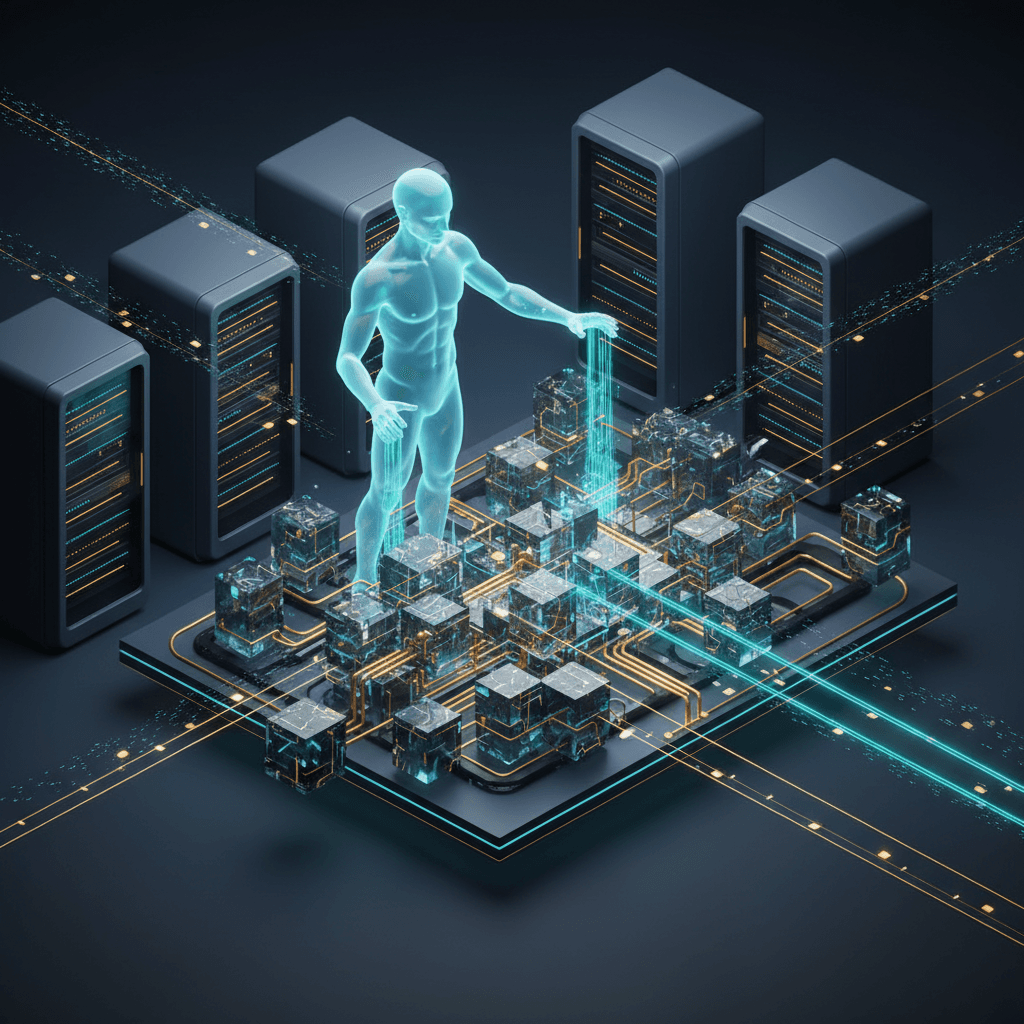
The rapid ascent of agentic artificial intelligence has sparked a fierce debate across Silicon Valley, leading some investors to predict a looming collapse of the traditional software industry. This narrative, often referred to as the SaaSpocalypse, suggests that as AI becomes capable of generating code and executing complex tasks autonomously, the need for established software-as-a-service platforms will evaporate. However, Nvidia CEO Jensen Huang has dismissed this notion in no uncertain terms, labeling the idea that AI will destroy the software industry as ridiculous and fundamentally illogical.[1][2][3][4]
Speaking at a series of recent industry events, including a high-profile appearance at Salesforce’s Dreamforce conference and technical deep dives on the Lex Fridman podcast, Huang argued that the market has profoundly miscalculated the relationship between artificial intelligence and existing software infrastructure. Rather than acting as a replacement for software, Huang views AI agents as the next generation of software users. He contends that software is essentially a repository of specialized logic and structured data—tools that an intelligent agent requires to function in the real world. Without these tools, an AI agent would be a brain without hands, capable of thought but unable to exert influence or execute specialized business processes.
To illustrate this point, Huang has frequently utilized a pragmatic analogy involving physical robotics. He suggests that even the most advanced humanoid robot envisioned for the next decade would not attempt to heat food by beaming microwave radiation from its fingers. Instead, the robot would walk to a microwave, read the manual online to instantly become an expert on that specific model, and then operate the appliance as intended.[5] In this vision, the microwave is the software tool—a dedicated piece of functional logic—and the robot is the agent. Huang argues that the same principle applies to digital environments: an AI agent will not reinvent a spreadsheet, a browser, or an enterprise resource planning system; it will simply use them more efficiently than a human ever could.
This conviction has led Nvidia to fundamentally re-engineer its hardware strategy to move beyond simple large language model inference toward a new era of agentic computing.[5] While the previous Grace Blackwell architecture was optimized for the massive throughput required to train and run generative models, the newly unveiled Vera Rubin platform represents a total redesign of the data center rack. The Vera Rubin POD is composed of five specialized rack types, each tailored to the specific needs of autonomous agents. This includes dedicated Vera CPU racks designed for agent sandboxing—secure environments where AI can test code and simulate actions before execution—and BlueField-4 storage racks optimized for massive Key-Value cache management to maintain context during long-duration reasoning tasks.
Huang describes these new data centers as token factories, where intelligence is manufactured at an industrial scale. In his view, the unit of economic value is shifting from the software license to the token. He predicts a future where premium tokens, representing high-level reasoning and complex problem-solving, could command prices as high as one thousand dollars per million tokens. As AI agents begin to interact with other agents and utilize software tools via APIs, the volume of these digital interactions is expected to dwarf human-generated traffic. This transition necessitates a hardware stack that can support continuous, multi-step workflows rather than just the isolated question-and-answer exchanges common in early generative AI.
The implications for the broader software ecosystem are significant, particularly for enterprise giants like Salesforce, SAP, ServiceNow, and specialized engineering firms like Cadence and Synopsys. Huang has singled out these companies as being uniquely positioned to thrive in an agentic world. His argument is that these platforms possess deep, domain-specific logic that has been refined over decades. A generic AI model cannot easily replicate the complex compliance rules of a global payroll system or the intricate physics involved in semiconductor design. Instead, these software providers are expected to build their own specialized agents that sit on top of their platforms, acting as expert intermediaries that allow users to achieve results through natural language rather than manual data entry.
During his discussions with Salesforce CEO Marc Benioff, Huang emphasized that the transition to an agentic enterprise will feel less like traditional software development and more like onboarding new employees.[6] In this paradigm, a business does not just write a new program; it "hires" a digital agent, provides it with access to the company’s software tools, and defines its goals and guardrails.[7] This shift moves the level of human abstraction higher, away from the minutiae of syntax and toward the orchestration of complex systems. The demand for software engineers will not decrease, according to Huang, but their roles will evolve.[8] They will no longer spend the majority of their time writing boilerplate code; instead, they will design the sophisticated environments and toolsets that allow digital workforces to operate reliably.
The market’s recent volatility in software stocks reflects a fear that AI will enable small teams to build "good enough" versions of enterprise tools overnight, rendering billion-dollar moats obsolete. Huang rejects this, noting that the "moat" of a company like ServiceNow is not just the code, but the massive amount of integrated data and the trust of a global customer base. He suggests that while the interface of software is changing—moving from a graphical user interface navigated by a mouse to an agentic interface navigated by reasoning models—the underlying logic remains the essential foundation.
Furthermore, the rise of agentic AI introduces a new layer of technical requirements that current software architectures must adapt to.[9] Agents require "test-time scaling," a process where the model spends more time and compute power thinking through a problem before delivering an answer. This requires the software tools they use to be highly responsive and accessible through robust, low-latency APIs. Nvidia’s commitment to building the infrastructure for these "reasoning loops" underscores the company's belief that we are moving toward a world of "unsupervised learning" at a scale that will make the last decade of progress look modest.
Ultimately, Huang’s defense of the software industry is grounded in a vision of symbiosis. He sees a future where every company is a hybrid of biological and digital employees, all working within a vast web of interconnected software tools. The "ridiculous" notion of AI destroying software fails to account for the fact that AI is, itself, a consumer of software. As the number of "consumers" in the digital world expands from eight billion humans to potentially hundreds of billions of autonomous agents, the demand for the structured logic, data integrity, and functional utility provided by the software industry is likely to reach unprecedented levels. Nvidia’s pivot to the Vera Rubin architecture is a multibillion-dollar bet that the software era is not ending, but is instead entering its most expansive and productive chapter.