
Nvidia and Mira Murati launch $50 billion gigawatt-scale partnership for deep reasoning AI
Nvidia’s $50 billion partnership with Mira Murati’s startup shifts the industry focus from massive scaling to deep machine reasoning.
March 10, 2026
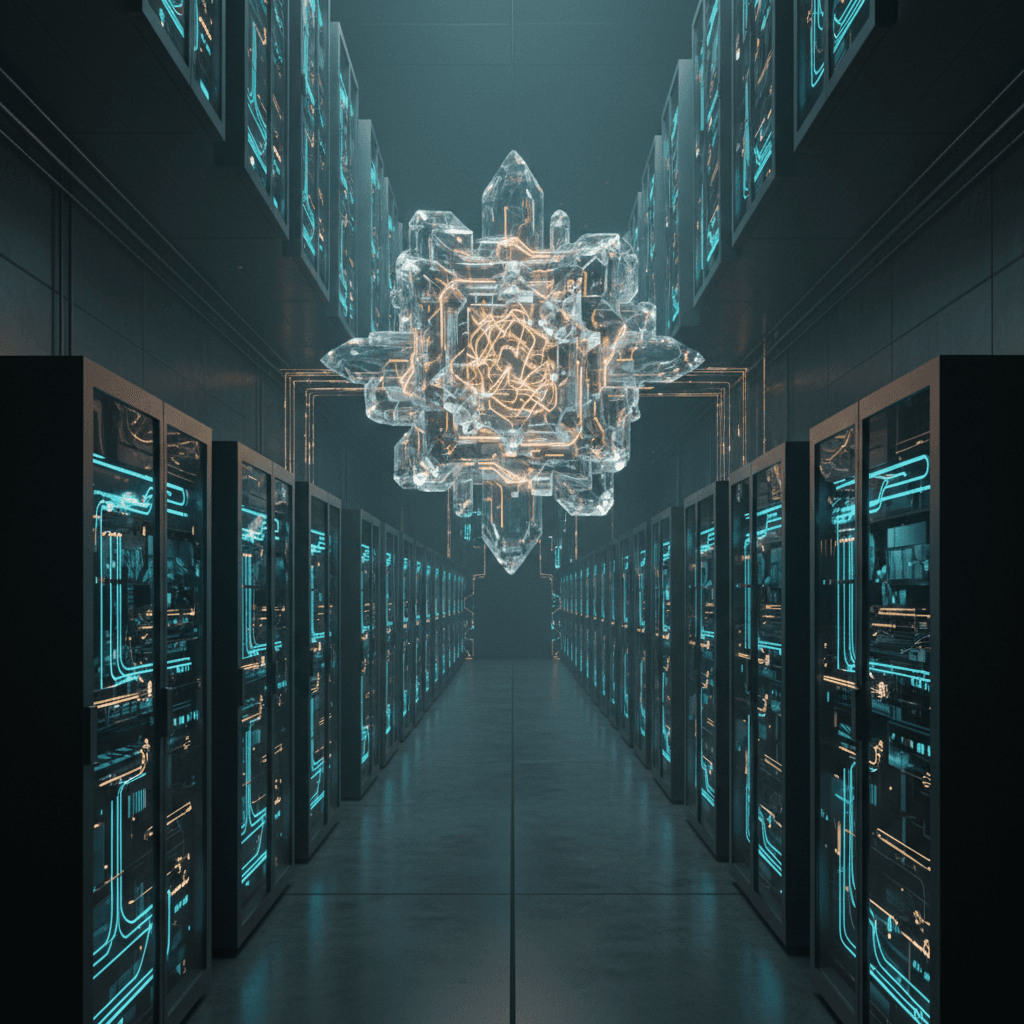
The announcement of a long-term strategic partnership between Nvidia and Thinking Machines Lab marks a definitive shift in the trajectory of the artificial intelligence industry. By uniting the world’s most dominant hardware provider with a research firm led by one of the most influential figures in modern AI, the collaboration signals an end to the era of generalized scaling and the beginning of a focus on deep machine reasoning. Mira Murati, the former Chief Technology Officer of OpenAI, has positioned her new venture as the vanguard of a new class of "thinking" models, and Nvidia’s massive backing suggests that the infrastructure required for this next leap in intelligence will be as unprecedented as the models themselves. This alliance is not merely a commercial transaction but a fundamental technical integration that aims to co-design the future of agentic AI.[1]
At the center of this partnership is a staggering commitment to computational scale.[2][3] Thinking Machines Lab has secured a multi-year deal to procure at least one gigawatt of power capacity fueled by Nvidia’s next-generation Vera Rubin architecture.[2][3][4] In the current economic landscape of high-performance computing, one gigawatt of data center capacity represents an investment that industry analysts estimate at approximately $50 billion over several years.[3] This deal ensures that Thinking Machines Lab will be among the first organizations to deploy the Vera Rubin systems at a massive scale when they become available. For Nvidia, the partnership serves as a high-stakes bet on Murati’s vision, effectively crowning her startup as a primary challenger to the established "Big Three" of OpenAI, Anthropic, and Google DeepMind.
Thinking Machines Lab has distinguished itself through a research philosophy that prioritizes reasoning and human-AI collaboration over the sheer breadth of data. While the industry has spent years chasing the "Scaling Laws" of large language models, Murati’s team is focused on what researchers call System 2 thinking—deliberate, multi-step logical deduction that mimics human problem-solving. Their flagship focus is on building models that do not just predict the next token in a sequence but explore different internal hypotheses, check their own logic, and refine their answers before presenting them to a user. This approach is intended to solve the persistent issues of hallucination and unreliability that have plagued previous generations of generative AI. By integrating these reasoning capabilities into their primary product, an API known as Tinker, the lab aims to provide developers with the tools to fine-tune and customize frontier models without needing a specialized PhD-level infrastructure team.
The hardware requirements for these "reasoning-heavy" workloads are significantly different from those of standard training. Nvidia’s Vera Rubin platform was designed specifically to address this shift toward inference-time compute and agentic reasoning. Unlike previous architectures that focused primarily on raw throughput for training, the Vera Rubin systems incorporate specialized "Olympus" CPU cores and sixth-generation NVLink interconnects that provide what Nvidia describes as more bandwidth than the entire public internet.[5] With each GPU delivering 50 petaflops of inference performance and featuring advanced HBM4 memory, the platform allows models to maintain massive "thinking traces" in high-speed memory. This allows a model to remain in a state of active reasoning for longer periods, which is essential for solving complex engineering, scientific, and mathematical problems that require sustained logical focus.
Beyond the technical specifications, the partnership underscores a growing trend of "circular investment" within the AI ecosystem.[4] Nvidia has not only committed to supplying the hardware but has also made a significant direct investment in Thinking Machines Lab, participating in a funding round that has reportedly pushed the startup’s valuation into the tens of billions.[4] This strategy allows Nvidia to act as both a financier and a primary supplier, ensuring that the capital flowing into the most promising AI startups eventually returns to Nvidia’s own balance sheet through hardware sales. For Thinking Machines Lab, this relationship provides a level of "compute sovereignty" that is rare for a startup, shielding them from the volatile GPU rental market and providing a stable foundation for long-term research that may take years to reach full commercial maturity.
The partnership also addresses a critical challenge in the AI sector: the increasing difficulty of model reproducibility and safety. Murati has emphasized that the lab's goal is to build models that are understandable and steerable. The collaboration with Nvidia involves a deep "codesign" process where software and hardware are optimized simultaneously to ensure that models remain stable even as they scale to exascale levels of complexity. This focus on engineering rigor is seen as a direct response to the "black box" nature of current frontier models. By building on a dedicated gigawatt-scale footprint, Thinking Machines Lab can implement comprehensive regression testing and environment-locking protocols that would be impossible on fragmented, third-party cloud infrastructure.
The competitive implications for the rest of the industry are profound. As OpenAI transitions further toward becoming a product-focused consumer company and Anthropic leans into enterprise safety, Thinking Machines Lab is carving out a niche as the preeminent lab for high-end reasoning and scientific discovery. The backing of Nvidia gives Murati’s team the ability to ignore the short-term pressures of the consumer chatbot market and focus on the deeper architectural breakthroughs necessary for Artificial General Intelligence. This move also forces other hardware manufacturers and cloud providers to reconsider their own vertical integrations, as the "chip-plus-model" partnership model becomes the standard for achieving frontier-level performance.
In the broader context of the global economy, the scale of this deal highlights the transition of AI from a software niche into a heavy industrial sector. A gigawatt of power is enough to support approximately 750,000 homes, yet it is now the baseline requirement for a single research lab’s vision. This immense resource consumption necessitates a closer relationship between AI developers and energy infrastructure, a challenge that Nvidia and Thinking Machines Lab plan to tackle through the use of high-efficiency Spectrum-X Ethernet Photonics and liquid-cooling systems integrated directly into the Rubin racks. This focus on efficiency is not just an environmental consideration but a practical necessity; at this scale, even a minor improvement in power-to-token efficiency can save billions of dollars in operational costs over the lifecycle of a model.
Ultimately, the partnership between Nvidia and Thinking Machines Lab represents a vote of confidence in a more methodical, reasoned approach to intelligence. By providing the world’s most advanced reasoning lab with the world’s most advanced reasoning hardware, the two companies are attempting to build a platform that moves beyond the limitations of current generative AI. The success of this collaboration will likely be measured not by the speed of its chat responses, but by its ability to unlock new frontiers in science, medicine, and engineering through machine intelligence that truly thinks before it speaks. As the first Vera Rubin systems begin their deployment, the industry will be watching to see if this massive concentration of capital and talent can finally bridge the gap between pattern recognition and genuine cognitive capability.