
German court rules human lyrics retain copyright even when paired with AI-generated music
A landmark German ruling protects human lyrics in AI-generated songs, affirming that machine-made music cannot invalidate original authorship.
March 10, 2026
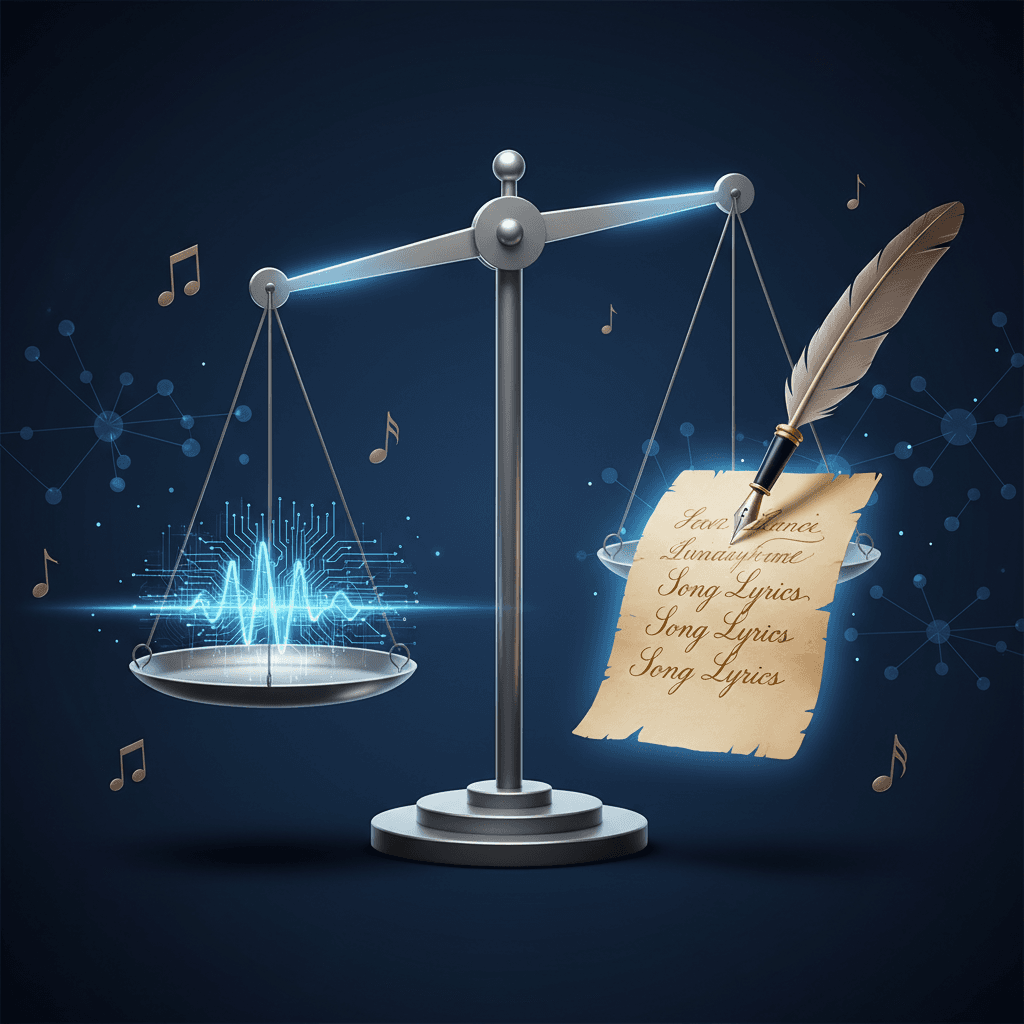
The intersection of artificial intelligence and intellectual property law has reached a critical turning point as a German regional court reinforces the boundaries of copyright protection in the age of generative music.[1][2] In a ruling that has sent ripples through the international tech and creative communities, the court determined that human-authored components of a work, specifically song lyrics, maintain their copyright status regardless of whether the accompanying music was composed by artificial intelligence.[1] This decision fundamentally challenges the notion that the mere involvement of AI tools can serve as a blanket justification for stripping a work of its legal protections, establishing a significant precedent for how hybrid human-AI creations are treated under the law.[1]
The case centered on a dispute involving music generated through SunoAI, a prominent platform capable of producing high-quality audio tracks from simple text prompts.[3][4][5] The core of the legal argument rested on whether a work that utilizes AI-generated audio could still be claimed as intellectual property if the foundational text was written by a person.[4] The court’s affirmative answer underscores a vital distinction in modern copyright theory: the technical method of production does not necessarily negate the creative input of the human author. By protecting the human-written lyrics, the court has signaled that the law will continue to safeguard the "human core" of creative projects, even as the surrounding production environment becomes increasingly automated.
A pivotal aspect of the ruling involves the evidentiary requirements for those seeking to void a copyright claim. The court stated that simply asserting a work was made with AI is insufficient to invalidate its protection. Instead, the burden of proof shifts to the party attempting to bypass copyright. If a defendant or a platform wishes to argue that a specific piece of content belongs in the public domain or is ineligible for copyright due to its machine-driven origin, they must provide concrete evidence that the entire work lacked human creative control. This marks a departure from earlier, more generalized assumptions that AI involvement naturally dilutes authorship. The court’s stance effectively creates a protective shield for "hybrid" works, ensuring that creators who use AI as a tool for one part of their process do not inadvertently sacrifice their rights to the parts they created themselves.
This legal shift is particularly significant for the music and publishing industries, where the distinction between a musical composition and its lyrics has long been a pillar of licensing and royalty structures. Under German law, specifically the threshold of originality known as Schöpfungshöhe, a work must represent a personal intellectual creation to qualify for protection. The regional court clarified that while an AI-generated melody might lack this human spark, the lyrics—if written by a person—do not lose their status as a "personal intellectual creation" just because they are paired with a machine-made harmony. This ensures that lyricists and songwriters can continue to utilize AI tools for production and arrangement without fearing that their core literary contributions will be harvested or used without compensation.
The implications for AI platform operators like Suno, Udio, and others are profound. For years, the generative AI industry has operated under a cloud of legal uncertainty, with some proponents arguing that the output of these systems should be treated as fundamentally different from traditional media. However, this ruling forces a move toward greater transparency and rigorous documentation. AI companies may now find themselves needing to develop more robust systems to track the origins of the data they process and the inputs provided by their users. If a user provides a platform with a fully realized poem or set of lyrics to be set to music, the platform cannot claim the resulting song is a purely "AI-generated" entity exempt from traditional licensing requirements.
Furthermore, the decision aligns with the broader objectives of the European Union’s regulatory framework, including the recently established AI Act and existing directives on copyright in the Digital Single Market. These regulations emphasize the rights of creators to control how their works are used in the training and output of AI models.[6][4] The German court’s ruling provides a practical application of these principles, reinforcing the idea that the "opt-out" rights of creators must be respected.[6] It also prevents a potential loophole where bad actors could use AI tools to "re-package" existing human content and then claim it is a new, uncopyrightable AI creation.
Beyond the immediate legal technicalities, the ruling addresses a growing concern among the creative workforce regarding the devaluation of human labor. As generative tools become more sophisticated, the line between human and machine contribution often blurs. By insisting that "It's AI" is not an adequate legal defense for copyright infringement, the court has provided a vital check against the total automation of creative property. This perspective treats AI as a sophisticated instrument—much like a synthesizer or a digital audio workstation—rather than an autonomous author that replaces the human.
From a commercial perspective, this decision is likely to accelerate the development of comprehensive licensing models between AI companies and rights collectives such as GEMA. If AI platforms cannot rely on the "non-copyrightable" status of their output to avoid payments, they must instead find sustainable ways to remunerate the human authors whose work forms the basis of their results.[3] This could lead to a more stabilized market where innovation is balanced with fair compensation, reducing the long-term risk of mass litigation that has plagued the sector.
Looking ahead, the global impact of this precedent cannot be overstated. While different jurisdictions have varying standards for what constitutes authorship—most notably the United States, where the Copyright Office has been hesitant to register works with significant AI components—the German focus on protecting the human elements within hybrid works offers a middle-path solution. It acknowledges the reality of modern workflows where humans and machines collaborate, without abandoning the fundamental principles of intellectual property that incentivize human creativity.
In conclusion, the German regional court has established that the presence of artificial intelligence in the creative process does not serve as a universal solvent for copyright. By protecting human-written lyrics in the context of AI-generated music, the court has affirmed that authorship is defined by the creative intent and output of the person, not the technology used to deliver it. As the AI industry continues to evolve, this ruling will serve as a cornerstone for legal disputes, compelling platforms and users alike to respect the enduring value of human expression. The message from the bench is clear: while the tools of creation may change, the rights of the creator remain steadfast, and the mere claim of technological intervention will no longer be enough to bypass the law.