
New MetaClaw framework transforms static AI into self-evolving agents that learn during meetings
MetaClaw transforms static AI into self-evolving partners that learn from mistakes during a user’s scheduled meetings and downtime
March 29, 2026
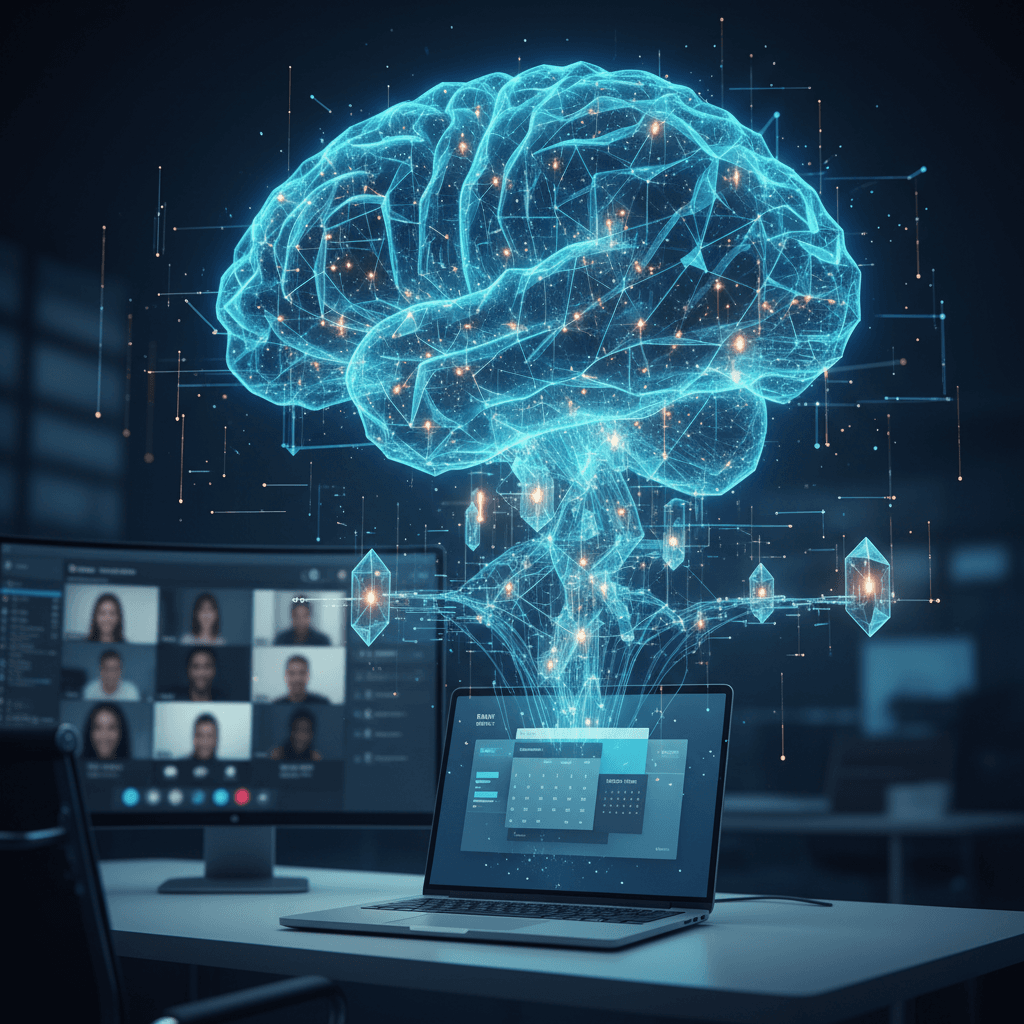
The challenge of the frozen genius has long plagued the field of artificial intelligence. While modern large language models are capable of performing complex reasoning and executing intricate tasks, they remain historically static once deployed.[1] An agent trained today typically possesses the same knowledge and behavioral patterns tomorrow, regardless of how many times it fails a specific user request or how much its operational environment shifts.[2] This lack of adaptability creates a widening gap between a model’s fixed capabilities and the evolving needs of its human collaborators.[2][1] To bridge this divide, a collaborative team of researchers from four prominent American institutions—the University of North Carolina at Chapel Hill, Carnegie Mellon University, UC Santa Cruz, and UC Berkeley—has introduced MetaClaw.[3] This new framework transforms AI agents from static software into self-evolving digital partners that learn from their mistakes in real-time, crucially utilizing the user's own downtime, such as scheduled meetings on Google Calendar, to perform intensive background training.[4][3]
At the heart of MetaClaw is a dual-process learning architecture designed to mimic the immediate and long-term adaptation seen in human cognition. The first of these processes is a fast-adaptation loop that requires no model retraining and zero service downtime.[1] When an agent fails to complete a task, a dedicated "evolver" model—a separate, lightweight language model—analyzes the failure trajectory and distills a compact, structured behavioral rule. This rule is then immediately injected into the agent’s system prompt. For instance, if an agent repeatedly fails to navigate a specific corporate database, the evolver identifies the error, writes a new instruction for the correct path, and updates the agent's working memory instantly. This ensures that the very next time a user issues a similar command, the agent does not repeat its previous error. This skill-driven adaptation allows the system to remain agile and responsive without the high compute costs associated with continuous weight updates.
While prompt-based instructions provide immediate fixes, the researchers recognized that truly robust evolution requires updating the model’s core policy. This leads to MetaClaw’s second, "slow" learning process: opportunistic policy optimization. Unlike traditional fine-tuning, which often requires taking a system offline or managing massive GPU clusters, MetaClaw employs an Opportunistic Meta-Learning Scheduler. This scheduler is the system’s most novel logistical feature, as it monitors a suite of signals to identify when the user is not actively interacting with the agent. By checking the user’s Google Calendar for meetings, tracking keyboard and mouse inactivity, and observing configured sleep schedules, the framework finds ideal "idle windows" to initiate deeper learning.[2] During these periods of user absence, the system performs Low-Rank Adaptation (LoRA) fine-tuning and reinforcement learning using a process reward model.[1] This allows the agent to fundamentally rewire its weights to internalize the lessons learned from recent interactions, effectively "studying" while its owner is otherwise occupied.[2]
The technical architecture enabling this seamless evolution is built upon a transparent proxy system.[4][5] MetaClaw sits between the user and the large language model, intercepting conversations to extract learning signals without requiring changes to the underlying model's API.[5] This proxy-based approach allows it to support a wide array of existing personal agents and platforms, ranging from OpenClaw and CoPaw to professional-grade tools like Claude Code or Gemini CLI. By decoupling the service response from the reward modeling and training tasks, the researchers have created a system that feels instantaneous to the user while maintaining a sophisticated backend for continuous optimization.[5] This architecture ensures that even as the agent undergoes complex reinforcement learning updates in the cloud, the user’s local experience remains fluid and uninterrupted.
The empirical results of the MetaClaw research, detailed in the paper titled MetaClaw: Just Talk -- An Agent That Meta-Learns and Evolves in the Wild, demonstrate a dramatic shift in AI performance. In rigorous testing on MetaClaw-Bench—a benchmark consisting of over 900 questions across 44 simulated workdays—the framework showed it could elevate relatively "weak" models to compete with the industry's most powerful offerings. In one standout experiment, the researchers applied the full MetaClaw pipeline to Kimi-K2.5, a model that initially trailed behind GPT-5.2 in task completion and accuracy.[1][6] Through continuous on-the-job learning, Kimi-K2.5 saw its accuracy jump from approximately 21 percent to nearly 41 percent, effectively closing the performance gap with the more advanced GPT-5.2 baseline.[6] Furthermore, the framework facilitated an 8.25-fold increase in end-to-end task completion rates, proving that an agent that learns from its environment can eventually outmatch a much larger model that remains static.
Beyond general task completion, the framework proved its mettle in highly specialized environments.[2] When integrated into AutoResearchClaw—an autonomous 23-stage pipeline designed to turn research ideas into full scientific papers—MetaClaw’s skill injection mechanism alone improved composite robustness by over 18 percent.[7] By analyzing pipeline failures and turning them into reusable procedural skills, the agent learned to navigate complex multi-step workflows with significantly fewer retries and refinement cycles. This suggests that the implications for MetaClaw extend far beyond simple administrative assistants; it offers a roadmap for high-stakes autonomous systems in fields like scientific research, legal analysis, and software engineering, where the cost of repeating a mistake is high and the environment is constantly changing.
The introduction of MetaClaw represents a significant pivot for the AI industry, shifting the focus from "training once and deploying" to "deploying and continuously evolving." For the user, the privacy implications are notable, as the system relies on local proxies and opportunistic scheduling to manage data, reducing the need for massive, centralized datasets for retraining. For the broader industry, it challenges the dominance of the largest model providers by demonstrating that smaller, more specialized agents can achieve state-of-the-art results if they are given the tools to learn from their specific users and workflows. As AI agents move from being tools we use to being partners we grow with, the ability to observe a user's calendar and find the quiet moments to get smarter may become the new standard for digital productivity. By turning the "frozen genius" into a living student of human behavior, MetaClaw paves the way for a future where every interaction with an AI makes the next one more intelligent, personalized, and reliable.
Sources
[2]
[4]
[5]
[6]
[7]