
Nebius Group invests ten billion dollars in a hyperscale AI data center in Finland
Following its split from Yandex, Nebius Group’s ten-billion-dollar Finnish project creates a massive hub for sovereign AI infrastructure.
March 31, 2026
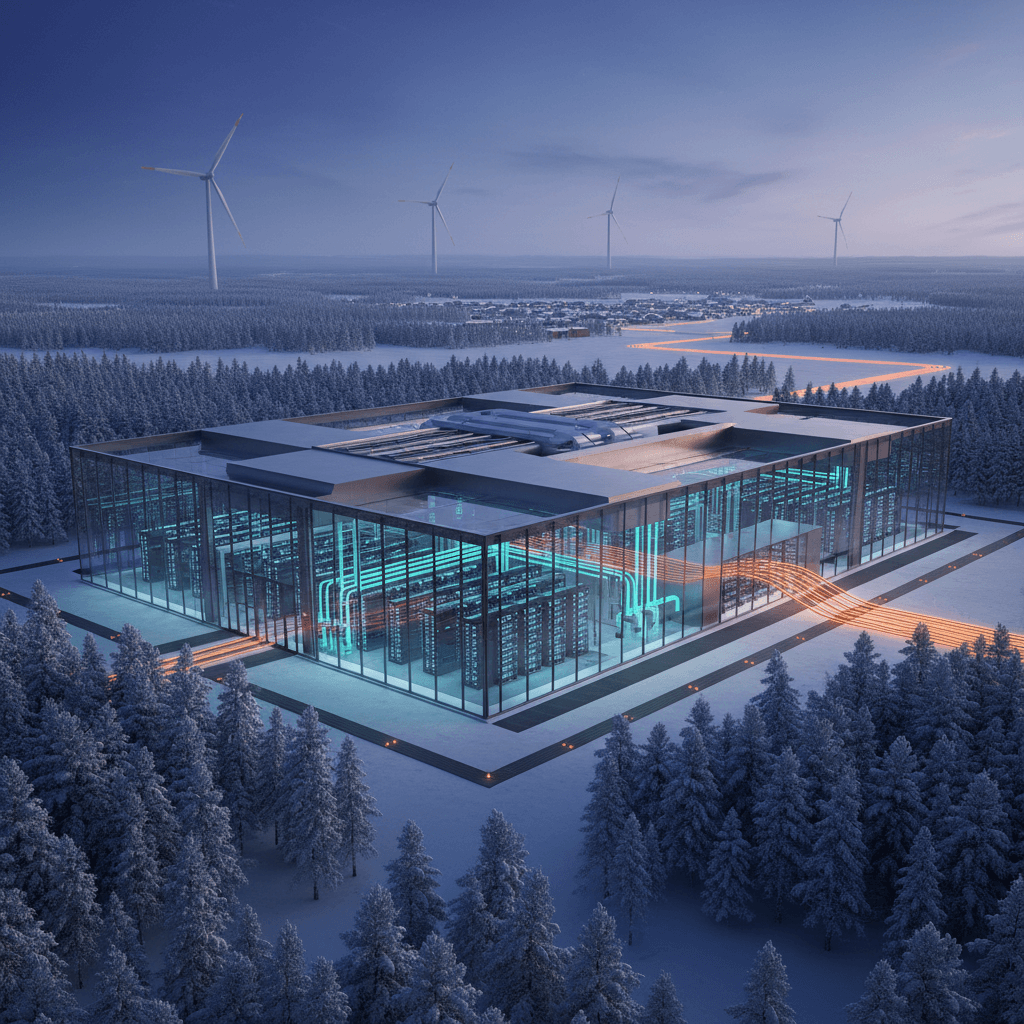
Nebius Group is charting a transformative course for the European technology landscape with the announcement of a massive ten-billion-dollar investment into a new artificial intelligence data center located in Lappeenranta, Finland.[1][2] This hyperscale project represents one of the largest single foreign investments in Finnish history and signals a significant shift in the global race for specialized AI infrastructure. By establishing a high-capacity facility near the eastern edge of the European Union, the company is positioning itself as a central pillar of the continent's sovereign computing power, aiming to provide the massive processing capabilities required to train the next generation of large language models and generative applications. The facility, which is being developed in collaboration with local infrastructure specialist Polarnode, is designed to serve as a high-density AI factory, a new breed of data center specifically optimized for the intense power and cooling demands of modern graphics processing units.
At the heart of the project is a staggering 310-megawatt power capacity, which will make the Lappeenranta site one of the largest dedicated AI compute installations in the world.[3][4][5][2][1] Unlike traditional data centers that primarily handle general-purpose cloud storage and web services, this facility is being built from the ground up to support massive clusters of advanced hardware, including the latest generations of accelerated compute platforms from NVIDIA. The infrastructure is expected to house thousands of high-end GPUs, utilizing cutting-edge architectures such as the Blackwell and Rubin series to facilitate the complex mathematical operations essential for deep learning. To manage the immense heat generated by such a dense concentration of hardware, the company is implementing sophisticated closed-loop liquid cooling systems. This approach significantly reduces water consumption compared to traditional air-cooling methods and allows for a more sustainable operational footprint.[3] Furthermore, the design includes provisions for a heat recovery system that will capture excess thermal energy and redirect it into the local district heating network, potentially providing carbon-neutral warmth to thousands of nearby residents.
The emergence of Nebius as a major player in this sector follows one of the most complex corporate restructurings in recent tech history.[6] The company was formed following a total structural divorce from its former parent, Yandex, which was once frequently described as the Google of Russia.[6] After years of negotiations and a comprehensive divestment process, the international assets were separated into a purely Western-facing entity headquartered in Amsterdam and listed on the Nasdaq exchange. This rebirth allowed the group to retain a highly specialized workforce of engineers and architects who relocated from their former regional hubs to Europe and Israel.[6] By shedding its previous regional baggage and focusing exclusively on AI infrastructure, the company has successfully rebranded itself as a neutral, independent provider of high-performance compute. This independence is a cornerstone of its business model, as it seeks to offer European enterprises and startups an alternative to the dominant American cloud giants, emphasizing data residency and compliance with strict regional regulatory frameworks.
The choice of Lappeenranta as the site for this multi-billion-dollar campus is a strategic move that leverages Finland’s unique regional advantages. The city offers a rare combination of available industrial land, robust access to the national power grid, and a climate that naturally aids in thermal management. Finland has become an increasingly attractive destination for hyperscale investments due to its stable supply of low-carbon energy, primarily derived from nuclear, wind, and hydroelectric sources. This reliance on green power is essential for AI infrastructure, which is notoriously energy-intensive. However, the location also carries significant geopolitical weight. Situated in southeast Finland, Lappeenranta is in close proximity to the Russian border, a region that has seen heightened security focus following Finland’s entry into NATO. Local authorities and national security agencies have carefully vetted the project to ensure it aligns with national interests, viewing the investment as a vital boost to the regional economy that will create hundreds of skilled construction jobs and permanent technical positions. By placing such a critical asset in this area, the project reinforces the regional commitment to high-tech industrial growth and digital sovereignty.
The scale of the investment reflects the skyrocketing global demand for AI processing power, a market where capacity has become a scarce commodity. Nebius is racing to secure a total of three gigawatts of contracted power across its global portfolio in the coming years, and the Finnish expansion is a primary driver of this goal.[3] The company’s growth is underpinned by massive supply contracts with some of the world’s largest software conglomerates, including multi-billion-dollar agreements to provide compute capacity for major developers of social media and productivity tools. These deals underscore a fundamental change in the technology industry, where the ability to access and manage vast GPU clusters has become just as important as the software itself. By operating as a vertically integrated provider—designing its own servers, managing its own data centers, and developing its own cloud software layer—the group intends to offer a more optimized and cost-effective solution than traditional general-purpose clouds. This "neocloud" approach is tailored for the high-intensity workloads of AI researchers and developers who require maximum performance with minimal latency.
As the first phases of the Lappeenranta facility begin to come online in the near future, the project is expected to serve as a catalyst for a broader technology ecosystem in the Nordic region. The company has expressed plans to partner with local academic institutions to foster a pipeline of talent, ensuring that the specialized skills required to maintain and operate such advanced infrastructure are available locally.[3] This focus on education and long-term innovation suggests that the ten-billion-dollar commitment is not merely about physical hardware, but about establishing a lasting center of excellence for artificial intelligence in Northern Europe. In a global market currently dominated by a handful of massive players, the rise of a specialized European infrastructure provider could provide a critical counterbalance, offering the diversity of supply and the localized control that many governments and enterprises now prioritize.
In summary, the planned hyperscale data center in Finland represents a bold bet on the future of artificial intelligence and the continued need for specialized hardware at an unprecedented scale. By combining advanced technical architecture with a commitment to sustainable energy and regional economic development, the project aims to redefine the standards for AI infrastructure. The transition from a regional search legacy to a global compute powerhouse highlights the rapid evolution of the tech industry, where the physical building blocks of intelligence—power, land, and silicon—have become the most valuable assets of the modern era. As the project progresses, it will likely serve as a benchmark for how large-scale technology investments can be integrated into regional strategies for security, sovereignty, and economic growth in a rapidly changing world.