
Mistral AI enters physical artificial intelligence sector by acquiring industrial engineering startup Emmi AI
Mistral AI enters the field of physical artificial intelligence by acquiring Emmi AI to revolutionize heavy industrial engineering.
May 19, 2026
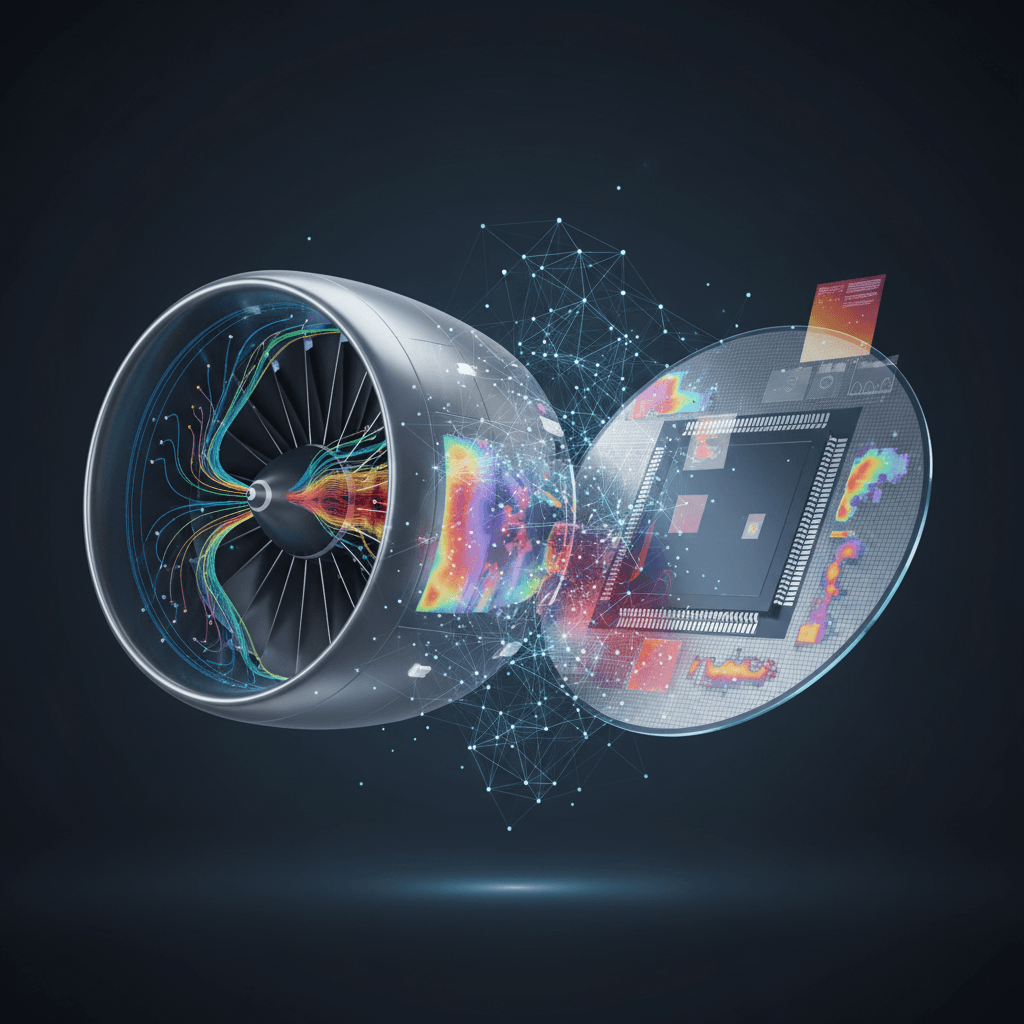
Mistral AI has officially entered the field of physical artificial intelligence with the acquisition of the Viennese startup Emmi AI, marking a significant strategic pivot for the French firm. Known primarily as the leading European developer of large language models, Mistral AI is now extending its reach into the industrial sector by integrating technology that bridges the gap between digital intelligence and physical reality. The acquisition of the Vienna-based startup, which recently completed a record-breaking seed funding round for the Austrian tech ecosystem, signals a shift toward specialized, high-stakes applications in manufacturing, aerospace, and semiconductors. By bringing Emmi AI’s engineering-centric models into its portfolio, Mistral AI is positioning itself to offer a full-stack industrial AI solution that can simulate complex physical environments with unprecedented speed and accuracy.
The core of the acquisition lies in Emmi AI’s pioneering work with Large Engineering Models. Unlike standard language models that predict the next word in a sentence, these engineering models are designed to understand and predict the behavior of physical systems according to the laws of fluid dynamics, thermodynamics, and structural mechanics. Traditionally, industrial simulations—such as modeling the airflow over a new aircraft wing or the heat dissipation in a high-performance microchip—require massive computational resources and can take days or even weeks to complete.[1][2] Emmi AI’s technology utilizes neural networks and transformer architectures to perform these same simulations in milliseconds. This transition from traditional numerical solvers to AI-native physics modeling allows engineers to test and iterate on designs in real-time, effectively eliminating one of the primary bottlenecks in modern research and development.
For Mistral AI, this transaction represents a decisive move from being a general-purpose AI provider to becoming a specialized partner for the heavy industries that form the backbone of the European economy. The company has already established significant partnerships with industrial giants like ASML and Stellantis, but the integration of Emmi AI’s expertise allows for much deeper technical engagement. Mistral’s vision involves creating a unified AI stack where a single platform can handle diverse tasks: one model may monitor a production line for visual defects, another might control the precise movements of a robotic arm, and a third—powered by Emmi’s technology—can simulate the physical stresses on the materials being handled.[3] This integrated approach is designed to outperform off-the-shelf, general-purpose models by leveraging proprietary industrial data to provide highly accurate, vertical-specific insights.
The deal also carries substantial geopolitical and economic weight as European leaders increasingly emphasize the need for technological sovereignty. In a landscape dominated by American firms like OpenAI, Google, and Meta, Mistral AI has positioned itself as the "sovereign" choice for European governments and enterprises. The acquisition of an Austrian startup by a French champion reinforces a pan-European narrative of collaboration and independence. By securing home-grown technology for physics-based AI, Europe can reduce its reliance on foreign simulation software and cloud-based AI services that may not meet the continent’s stringent data privacy and security standards. This move is particularly relevant for sectors like aerospace and defense, where the confidentiality of engineering designs and the security of supply chains are matters of national importance.
Furthermore, the acquisition highlights a growing trend in the AI industry: the rise of "Physical AI" or "Embodied AI." While the first wave of the generative AI boom was focused on text and image generation, the next frontier involves AI that can interact with and manipulate the physical world. This requires models that have a "common sense" understanding of how objects move and interact. Emmi AI’s researchers, many of whom joined from prestigious global institutions and spin-offs focused on data-driven simulations, bring a depth of talent that is rare in the European market. Their work on what they term "physics-aware AI" ensures that the models do not just recognize patterns in data but actually respect the constraints of reality, such as gravity, friction, and heat transfer. This is a critical requirement for any AI system tasked with controlling physical machinery or optimizing complex industrial processes.
The operational expansion following the deal will see Linz, Austria, become a central hub for Mistral AI’s industrial research.[4][5] The Emmi AI team, which includes dozens of high-level researchers and engineers, will join Mistral’s science and applied AI divisions.[4] This move allows Mistral to tap into the specialized talent pool of the Upper Austrian tech corridor, known for its expertise in mechatronics and industrial automation. By establishing a physical presence in Austria alongside its existing offices in Paris, London, and San Francisco, Mistral is effectively building a distributed research network that mimics the industrial heartlands of Europe. This proximity to major manufacturing hubs in Germany and Central Europe is expected to accelerate the deployment of the combined technology in real-world factory environments.
Market analysts view this acquisition as a sign of Mistral AI’s maturing business model. Having reached a valuation in the billions and secured significant revenue from enterprise clients, the company is now using its capital to build a defensive moat around specialized industrial applications.[6] While American foundation model labs continue to pursue artificial general intelligence for consumer use, Mistral is focusing on the specific, lucrative needs of the engineering and manufacturing sectors. The strategic bet is that European manufacturers will be more willing to invest in AI if it is built by a local partner that understands their technical requirements and operates within the same regulatory framework. The ability to offer real-time, AI-driven physical simulations could become a primary differentiator for Mistral as it competes for long-term contracts in the global market.
Ultimately, the acquisition of Emmi AI by Mistral AI suggests a new phase of consolidation and specialization within the European AI ecosystem.[5] As the initial excitement over chat-based assistants evolves into a demand for functional, high-value industrial tools, the importance of physical AI will only grow. The combination of Mistral’s massive computational infrastructure and Emmi’s specialized engineering models creates a powerful synergy that could redefine how industrial products are designed, tested, and manufactured. By moving from the realm of digital tokens to the realm of physical atoms, Mistral AI is attempting to lead a new industrial revolution powered by artificial intelligence, ensuring that Europe remains at the forefront of global technological innovation.