
Beijing stalls authorized Nvidia H200 shipments as trade war shifts to Chinese protectionism
Beijing’s security concerns and industrial protectionism stall Nvidia’s H200 AI chip deal despite a landmark U.S. framework
May 19, 2026
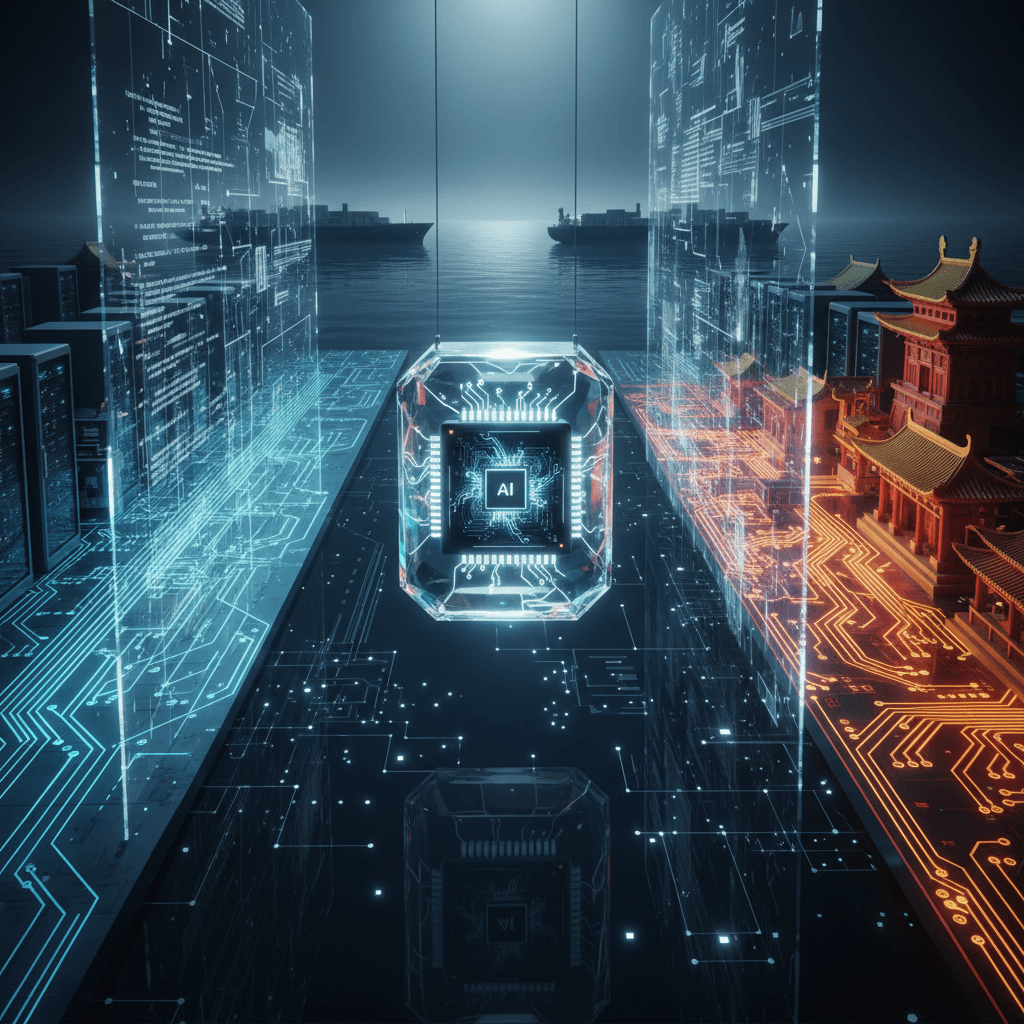
The high-stakes diplomatic mission to Beijing recently concluded with a paradoxical outcome that has left the global semiconductor industry in a state of suspended animation.[1][2][3] While the bilateral summit between President Trump and President Xi was punctuated by warm rhetoric and a shared interest in stabilizing trade, the most anticipated component of the trip—a breakthrough for Nvidia’s stalled H200 artificial intelligence chips—failed to materialize in physical shipments. Despite the high-profile inclusion of Nvidia CEO Jensen Huang, who joined the presidential delegation during a last-minute refueling stop in Alaska, the administration’s efforts to restart the flow of high-end silicon to China have run into an unexpected wall.[2][3] This wall, however, is no longer built of American export bans, but rather a complex web of Chinese industrial protectionism and deep-seated suspicion over the structure of the deal itself.
The current impasse is particularly striking because, on paper, the United States has already cleared the path for trade. Late last year, the administration authorized a landmark framework that theoretically allows Nvidia to ship its H200 AI accelerators to a select group of ten Chinese technology giants, including industry leaders like Alibaba, Tencent, and ByteDance.[1] Under this regulatory regime, each of the approved firms is permitted to purchase up to 75,000 units, a volume that could represent nearly $20 billion in revenue for the American chipmaker.[4] The deal was designed as a "revenue-sharing" arrangement, a hallmark of the administration’s transactional approach to tech policy, requiring Nvidia to remit a 25 percent fee on every Chinese sale directly to the U.S. Treasury.[1] This structure was intended to harmonize national security concerns with the commercial necessity of maintaining American dominance in the global AI ecosystem. However, since the framework was formalized earlier this year, not a single H200 unit has arrived on Chinese soil.
The diplomatic theater surrounding the Beijing summit underscored the urgency of the situation. By bringing Huang along on the final leg of the trip, the administration signaled that the semiconductor trade was a primary bargaining chip in the broader negotiation. Yet, as the delegation departed, the lack of a signed delivery schedule or a public commitment from the Chinese government suggested a fundamental disconnect. U.S. Trade Representative Jamieson Greer clarified in the wake of the meetings that while the American licensing framework remains fully operational, the decision to proceed now rests entirely with Beijing.[3] Greer’s observations reflect a shift in the conflict: the "presumption of denial" that characterized previous years has been replaced by a "sovereign decision" on the part of the Chinese government. For Nvidia, this means that while they have successfully navigated the labyrinth of Washington’s export controls, they are now facing an informal, yet highly effective, blockade from their customers’ own government.[2]
Internal reports and industry analysis suggest that Beijing’s hesitation is rooted in two primary concerns: technical sovereignty and the fear of American interference. The requirement that every H200 chip must pass through U.S. territory for third-party inspection before re-export has fueled concerns in the Chinese Ministry of Industry and Information Technology about potential hardware tampering or "kill-switch" vulnerabilities. Furthermore, the 25 percent surcharge mandated by the U.S. government is viewed by Chinese officials not as a mere commercial fee, but as a direct tax on Chinese AI development intended to fund the American state. In response, Beijing has quietly signaled to its domestic champions that they should prioritize the adoption of homegrown alternatives.[2] Companies that once clamored for Nvidia hardware are now being encouraged to redirect their capital toward domestic accelerators, specifically the Huawei Ascend line, which has seen a massive surge in investment and deployment over the past six months.
The implications for the broader AI industry are profound, marking a transition from a period of scarcity to a period of fragmented ecosystems. For years, Nvidia held a near-total monopoly on the high-end compute market in China, at one point commanding 95 percent of the sector.[1] Today, that market share has effectively evaporated.[3][1] The H200, while a formidable piece of technology based on the Hopper architecture, is no longer Nvidia’s most advanced offering.[1] With the company already rolling out its Blackwell-class GPUs and preparing for the next generation of silicon, the H200 is increasingly viewed by Washington as a "legacy" high-end product—powerful enough to satisfy commercial demand but not so advanced as to threaten the strategic compute gap the U.S. seeks to maintain. This technical distinction is why the administration felt comfortable authorizing its sale. However, by the time the U.S. was ready to sell, the Chinese market had already begun to adapt to a world without American chips, accelerating their own research and development cycles to bridge the performance gap.
Financial analysts note that the stakes of this "managed trade" relationship are enormous. Nvidia’s annual revenue guidance has largely written off the Chinese market, yet a functioning export framework for the H200 could potentially restore billions in annual earnings.[3][1] The current situation creates a precarious environment for investors who had hoped for a clear resolution following the summit. Instead of a return to the status quo, the industry is witnessing the birth of a bifurcated AI world where the U.S. and its allies develop on one hardware stack while China builds on another. This division extends beyond just the physical chips; it affects the software libraries, the developer ecosystems, and the very architecture of the large language models being trained in both regions. The longer the H200 deals remain in limbo, the more entrenched the Chinese domestic ecosystem becomes, making a future return to American hardware increasingly difficult for firms that have already rewritten their software for local silicon.
The summit also highlighted the growing divide between the executive branch and the legislative branch in Washington. Even as the administration pushed for the H200 deal to proceed, voices in Congress have grown louder in their opposition to any easing of tech controls. Legislative efforts are currently underway to tighten restrictions on the equipment used to manufacture these chips, suggesting that even if the H200s eventually ship, the machines required to maintain and evolve China’s domestic chip industry may soon face even stricter bans. This internal friction within the U.S. government adds another layer of uncertainty for Chinese buyers, who fear that any reliance on American technology—even under a cleared deal—could be cut off by a future change in law or a more hawkish congressional mandate.
As the dust settles on the Beijing meetings, the AI industry is left to interpret a landscape where the rules of engagement have fundamentally changed.[2][1] The trade war has entered a more subtle phase characterized by "managed competition" and industrial "de-risking." The failure to move the H200 chips during a summit that was otherwise described as productive illustrates that technology is no longer just a commodity to be traded; it is the central pillar of national identity and security for both superpowers. For the global AI community, the lesson of the summit is clear: the path to the most advanced hardware is no longer just a matter of having the money to buy it or the permission to sell it. It is now a question of whether the political cost of the transaction is one that either side is truly willing to pay. While the Nvidia H200 deal survived the summit in a legal sense, it remains a ghost in the machine—a authorized transaction that neither side seems ready to actually complete.[1]