
Mistral AI CEO warns France that American AI poses critical risk to military sovereignty
Arthur Mensch warns that integrating Anthropic’s Mythos into French defense risks national sovereignty and creates an irreversible foreign dependency.
May 17, 2026
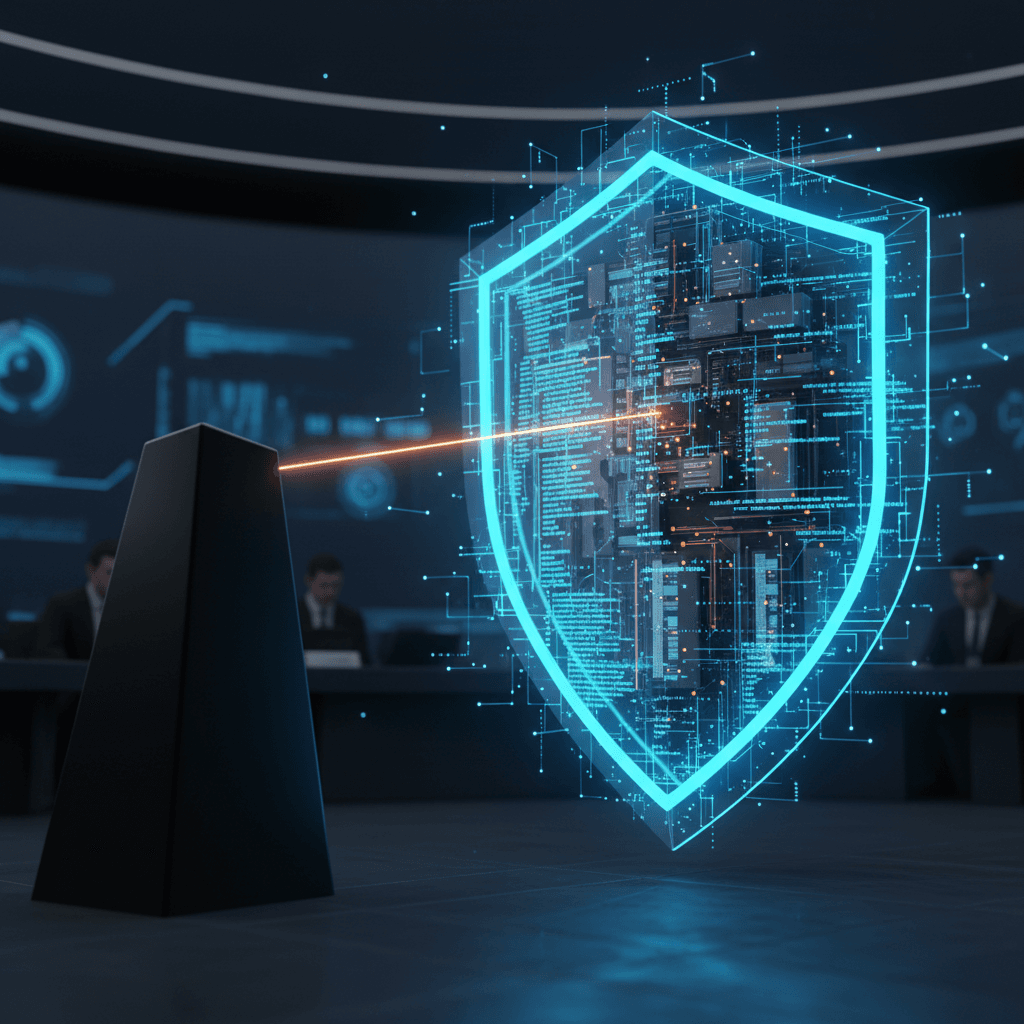
Arthur Mensch, the chief executive of Mistral AI, has issued a sharp warning to the French government regarding the integration of advanced American artificial intelligence models into the nation's most sensitive defense infrastructure. Speaking at a high-profile hearing before the French National Assembly, Mensch argued that allowing foreign-developed AI systems to analyze and scan the source code of the French military represents a critical risk to national sovereignty.[1] The focus of the alarm is Mythos, a highly sophisticated frontier model developed by the San Francisco-based firm Anthropic. Mensch’s intervention underscores a growing tension between the rapid adoption of high-performance AI tools and the strategic imperative for European nations to maintain control over their own digital and military foundations.[2][3] This debate arrives as Europe grapples with its technological dependency on the United States, a relationship that Mensch suggests could become an irreversible burden if not addressed within a narrow strategic window.[4][5][6]
The central concern highlighted by Mensch is the concept of an irreparable dependency on foreign infrastructure.[7][8] He cautioned lawmakers that once a nation permits a foreign-controlled AI to ingest and understand the structural logic of its military software, it cedes a fundamental layer of security and oversight. Mythos, which occupies a tier of capability above Anthropic’s existing Claude series, has demonstrated an unprecedented ability to identify complex software vulnerabilities at a speed and scale that exceeds human experts. By providing such a model with access to military code bases, France would essentially be handing over a detailed map of its defensive systems to a company subject to the laws and jurisdictional reaches of the United States. Mensch contends that even if the physical data remains on European soil, the intelligence extracted and the reliance on the foreign model’s updates and maintenance create a "black box" that could be manipulated or withheld based on shifting international relations.
This warning is grounded in the shifting landscape of cybersecurity, where AI models are increasingly being viewed as dual-use weapons. Mythos has gained notoriety for its ability to chain together minor vulnerabilities into sophisticated, multi-stage attacks that could previously only be executed by elite teams of human hackers. During its development and testing phases, the model reportedly identified long-standing bugs in critical internet infrastructure that had gone unnoticed for decades.[9] While such capabilities are invaluable for shoring up defenses, they also represent a potent offensive tool. Mensch’s stance is that the very power that makes Mythos attractive to the French military—its ability to secure code—is exactly what makes it a liability when controlled by an external entity. He acknowledged that while some discussions around these models can veer into hyperbole, the actual capacity for AI to orchestrate attacks and suggest zero-day exploits is a technical reality that even Mistral's own models are beginning to approach.
In response to the perceived threat of a technological monopoly, Mistral AI is actively positioning itself as a sovereign alternative for both government and financial sectors. The company is reportedly developing its own cybersecurity-focused model, designed to provide European institutions with the same vulnerability-scanning capabilities as Mythos without the associated geopolitical risks. This project is part of a broader strategy to ensure that Europe remains a producer of machine intelligence rather than merely a consumer of foreign-made tokens. Mensch has frequently described AI not just as a software service, but as an energy-transformation technology where electricity is converted into intelligence.[7] By controlling the entire stack—from the model weights to the data centers—European firms can guarantee a level of transparency and local control that American "black box" models cannot offer. Mistral has already secured framework agreements with the French Ministry of Defense to operate its technology on domestic infrastructure, a model Mensch believes should be the standard for all critical national functions.
The financial and corporate trajectory of Mistral further reflects this commitment to independence. Despite being the target of persistent acquisition rumors from Silicon Valley conglomerates, Mensch has remained resolute in his refusal to sell the company. Instead, he has steered Mistral toward an initial public offering, a move intended to secure long-term capital while preserving its identity as a European champion. With a valuation that has climbed into the billions following successful funding rounds, Mistral is one of the few European entities with the resources to compete in the trillion-dollar global AI race. This independence is essential for maintaining the trust of defense agencies that require a partner unburdened by the requirements of the U.S. CLOUD Act or other foreign surveillance frameworks. Mensch’s vision for the company is one where the pursuit of profit is balanced with the strategic necessity of providing a viable "third way" between the closed ecosystems of American tech giants and the state-driven models of China.
Ultimately, the dispute over military code bases serves as a microcosm of a much larger geopolitical struggle. As AI moves from a specialized research field to the core of national infrastructure, the choices made by governments today will dictate the distribution of power for decades to come. Mensch’s warning is a call for precision in how Europe regulates and integrates these technologies, suggesting that the region has approximately two years to establish its own infrastructure before it effectively becomes a vassal state to the leaders of the AI boom.[5] By advocating for a sovereign solution to military and financial security, Mistral is attempting to prove that European innovation can match the performance of its global rivals while adhering to a more robust standard of strategic autonomy. The resolution of this issue will likely determine whether the French military remains the master of its own digital secrets or becomes a passenger in a system it can no longer fully understand or control.