
Midjourney V8 Alpha delivers 5x faster speeds while quadrupling costs for high resolution features
Experience 5x faster rendering and native 2K resolution as Midjourney V8 Alpha introduces a quadruple cost for professional features.
March 18, 2026
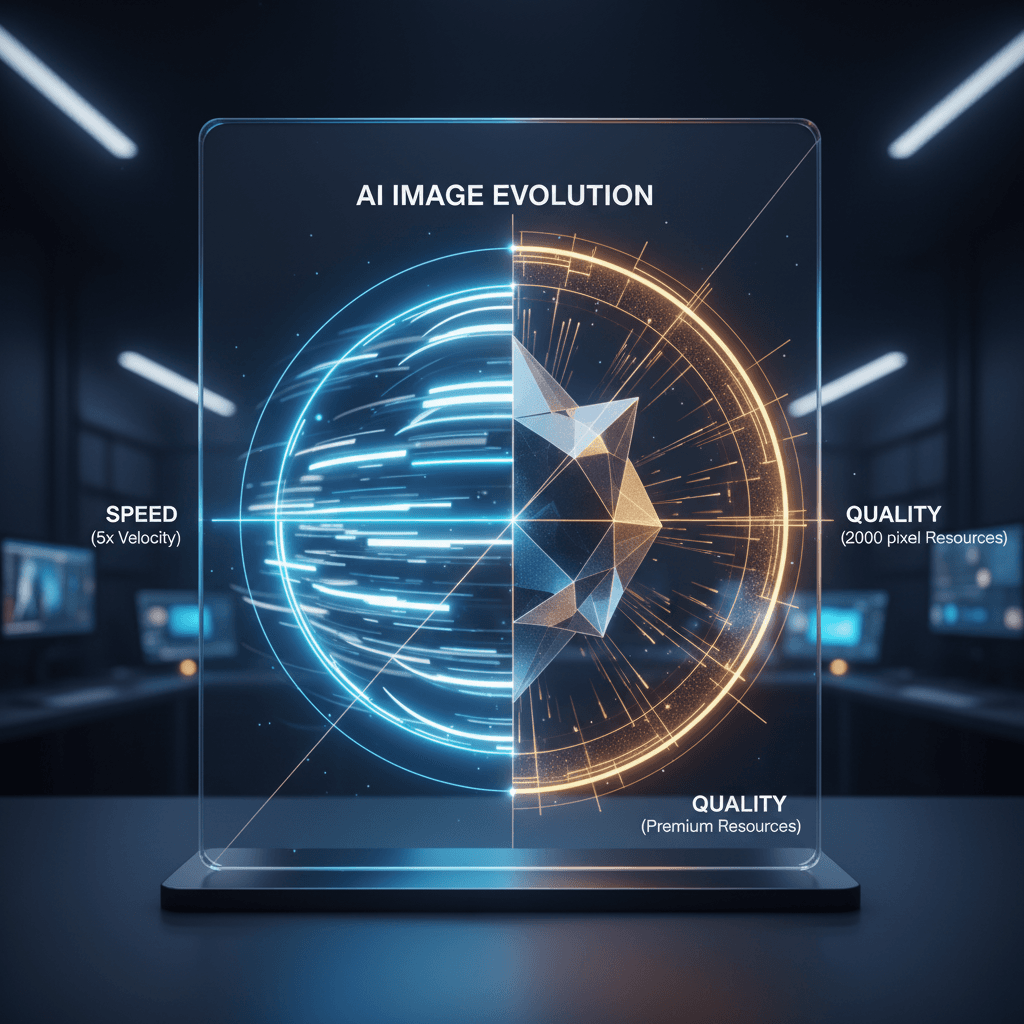
Midjourney has officially entered the next phase of its evolution with the rollout of the V8 Alpha model, a significant update that emphasizes extreme processing speed and higher native resolution while introducing a more aggressive pricing structure for its most advanced capabilities.[1] Available initially through the companys dedicated alpha website, the new model represents a fundamental shift in how the platform balances accessibility with professional-grade performance.[1] Early testing data and community feedback indicate that while the base generation process is roughly five times faster than its predecessor, the computational cost of utilizing the systems flagship features has quadrupled, signaling a new era of high-stakes, high-output AI artistry.
The primary technical achievement of V8 is its dramatic improvement in rendering efficiency.[1] For years, the trade-off in high-end AI image generation was between aesthetic quality and the time required to denoise an image.[1] Midjourney V8 appears to have bypassed this bottleneck, delivering standard 1K images in a fraction of the time previously required.[1] This speed boost is not merely a convenience for casual users; it fundamentally alters the iterative workflow for creative professionals who often generate hundreds of variations to find a specific visual direction.[1][2] By reducing the wait time from nearly a minute to mere seconds, Midjourney is positioning itself against competitors like Black Forest Labs and OpenAI, whose recent models have also prioritized near-instantaneous output.
Beyond raw speed, the V8 model introduces a native 2K resolution mode that renders high-definition images directly from the initial prompt without the need for traditional upscaling.[1] This --hd parameter allows for 2048 by 2048 pixel outputs that retain a level of fine-grain detail, such as skin texture and fabric weave, that was previously lost or distorted during post-generation enlargement. The model also boasts significantly improved text rendering capabilities.[1][3][4] While previous versions often struggled with legible typography, V8 handles quoted text with a degree of precision that rivals dedicated graphic design tools. This improvement is complemented by a more sophisticated understanding of complex, multi-subject prompts, reducing the frequency of "hallucinations" where different elements of a description would blend together incorrectly.
However, these technical leaps come with a notable shift in the platforms economic model. While standard generations remain covered under existing subscription GPU hours, the features that define the V8 experience—specifically Style References, Moodboards, the native HD mode, and the --q 4 coherence parameter—now consume four times the GPU time of a standard job. For power users, this change is compounded by the fact that V8 Alpha does not currently support "Relax Mode," the unlimited, lower-priority generation tier that many subscribers rely on to manage costs. This means every high-fidelity generation in the V8 environment directly depletes a users "Fast" hours at an accelerated rate, effectively raising the price of professional-grade production.
This pricing strategy reflects the increasing cost of the specialized hardware required to run models of this complexity. As the AI industry moves away from the "move fast and break things" phase toward sustainable monetization, Midjourney is clearly segmenting its audience.[1] The faster base model serves the needs of hobbyists and rapid prototyping, while the expensive premium features are targeted at enterprise users and high-end illustrators for whom the cost of compute is outweighed by the value of the final asset.[1] Industry analysts view this as a necessary pivot; as the quality gap between open-source models and proprietary platforms narrows, the ability to offer exclusive, resource-heavy features like consistent style referencing and native 2K rendering becomes the primary way to justify a subscription-based ecosystem.
The rollout also includes a substantial overhaul of the user interface on the Midjourney web platform.[1] The traditional Discord-based interaction, which served as the foundation of the community for years, is increasingly being treated as a secondary entry point. The new V8 web interface features a "Conversation Mode" that allows users to refine images through a natural language flow, as well as a "Grid Mode" designed for managing large batches of high-speed generations.[4][1] These changes suggest that Midjourney is preparing to transition from a specialized bot to a comprehensive creative suite, likely integrating video and 3D asset generation in the near future.[3][1] The interface now includes persistent sidebars for settings, allowing users to toggle between different versions and parameters without interrupting their creative focus.[4][1]
In the broader context of the AI industry, Midjourney V8 arrives at a moment of intense competition.[1] OpenAI’s GPT Image 1.5 and Google’s recent updates to the Gemini ecosystem have focused heavily on prompt adherence and integration with broader productivity tools.[1] Meanwhile, the Flux series has set new benchmarks for open-weights performance and technical realism. Midjourney’s response with V8 is to double down on its reputation as the "aesthetic king," prioritizing visual "wow factor" and artistic coherence over purely literal interpretations. By introducing the 4x cost multiplier for its best features, the company is betting that its unique "soulful" output is distinctive enough that users will pay a premium to access it at high speeds.
For the creative industry, the implications of V8 are twofold. On one hand, the 5x speed increase and improved text rendering lower the barrier to entry for high-quality content creation, potentially disrupting traditional stock photography and concept art workflows. On the other hand, the increased cost of the most powerful features could create a tiered landscape where only well-funded studios can afford to use the platform at its maximum potential. This democratization of speed coupled with the professionalization of cost suggests that the AI art market is maturing, moving toward a model where time and quality are both quantifiable commodities.[1]
Ultimately, Midjourney V8 is a bold statement of intent. It acknowledges that in 2026, speed is the most valuable currency in the AI space, but it also asserts that premium quality cannot be offered for free or even for "standard" prices indefinitely. As the community continues to test the Alpha version, the feedback gathered will likely determine whether the 4x cost structure remains a permanent fixture or if the company will find more efficient ways to deliver high-resolution art.[1] For now, users are left with a powerful new toolset that is faster and more capable than ever before, provided they are willing to pay the price for the best the technology has to offer.[1] The transition from V7 to V8 is not just a version update; it is a recalibration of the relationship between the creator, the machine, and the cost of computation.[1]