
Meta signs historic multibillion-dollar deal with Nebius for Nvidia next-generation Vera Rubin AI hardware
Securing Nvidia’s Vera Rubin architecture through a historic cloud partnership, Meta builds the massive infrastructure required for agentic intelligence.
March 16, 2026
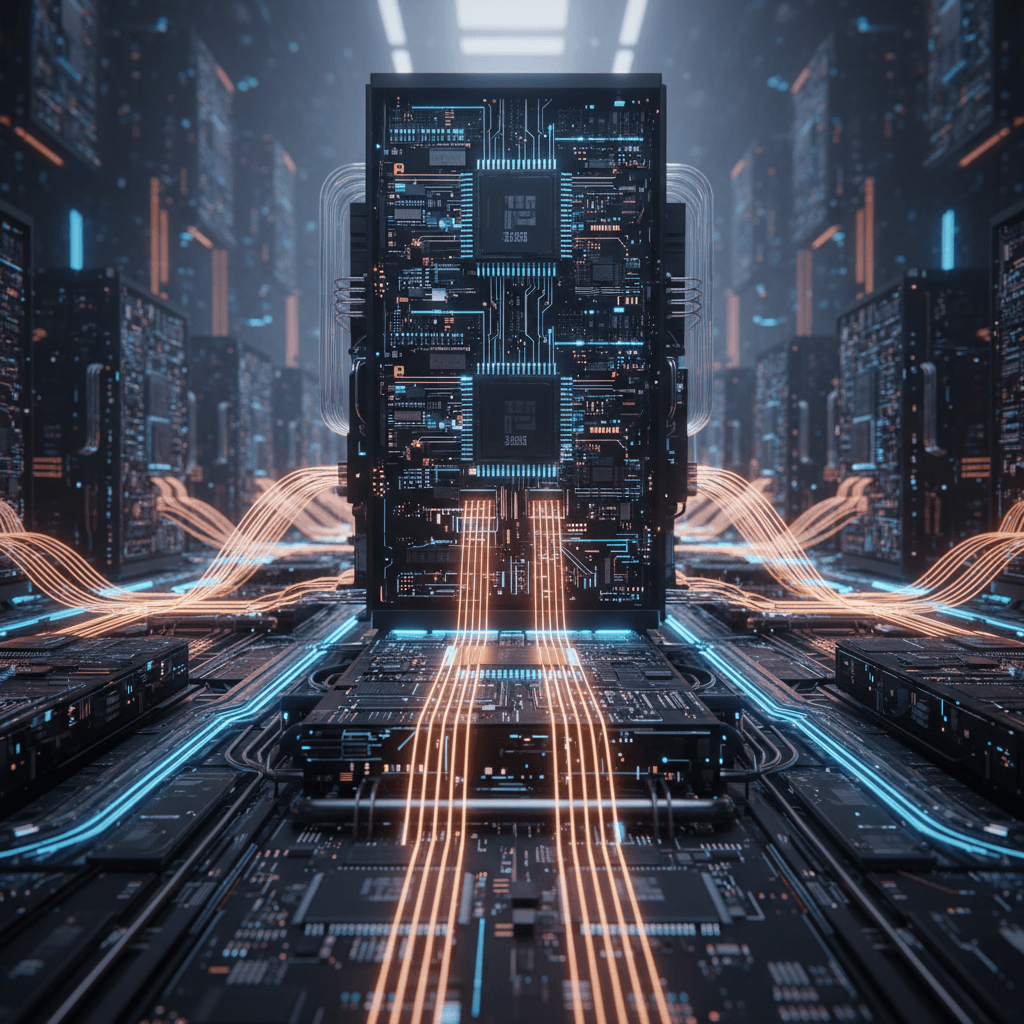
Meta Platforms has signaled its intent to dominate the generative artificial intelligence landscape through an unprecedented infrastructure partnership with the Dutch cloud provider Nebius. This agreement, which stands as one of the largest single cloud procurement deals in the history of the technology sector, centers on the deployment of Nvidia's next-generation Vera Rubin architecture. As the competition for computational supremacy intensifies among Silicon Valley’s elite, Meta’s decision to commit such a staggering sum highlights a strategic shift toward massive, specialized clusters capable of training the world’s most sophisticated large language models. The move underscores a long-term vision of transforming the social media giant into a premier AI powerhouse, securing the raw hardware necessary to maintain a lead in the open-source AI community and fuel the development of increasingly complex multimodal systems.
The technical foundation of this multi-billion-dollar bet rests on the transition to Nvidia's Vera Rubin platform, which represents a significant architectural leap over the previous Blackwell generation. Designed specifically for the demands of the "agentic" era of AI, where models move beyond simple text generation to autonomous reasoning and multi-step task execution, the Vera Rubin chips integrate specialized CPUs and GPUs into a unified supercomputing rack. Industry analysts note that this architecture is expected to provide a fivefold increase in inference performance and a tenfold reduction in the cost per token compared to its predecessors. By securing early access to one of the first large-scale installations of this hardware, Meta is effectively future-proofing its research pipeline. The hardware features advanced high-bandwidth memory and a three-nanometer manufacturing process, allowing Meta to train models with trillions of parameters more efficiently than ever before. This level of compute density is critical for the next iteration of the Llama family of models, which requires increasingly vast amounts of power to achieve higher levels of logical reasoning and cross-media intelligence.
The selection of Nebius as a primary infrastructure partner marks a significant evolution in how hyperscalers manage their hardware needs, moving beyond exclusive reliance on internal data centers or traditional cloud giants. Nebius, an Amsterdam-based "neocloud" operator that emerged from the international divestiture of the technology firm Yandex, has rapidly positioned itself as a specialist in high-performance AI environments. Unlike general-purpose cloud providers, Nebius builds its architecture from the ground up for GPU-intensive workloads, focusing on the complex interconnects and cooling solutions required for massive AI factories. This specialization recently attracted a separate multi-billion-dollar strategic investment from Nvidia, further validating Nebius’s role as a critical link in the global AI supply chain. For Meta, partnering with a nimble, European-based provider offers a way to diversify its geographic footprint and bypass the potential bottlenecks associated with building and permitting its own massive facilities. This "gigawatt-scale" strategy allows the company to rapidly scale its available flops without the traditional delays of real estate development and power grid negotiations.
The financial magnitude of the deal is structured to provide both stability and flexibility in an increasingly volatile market for high-end silicon. Of the total commitment, a significant portion is dedicated to long-term GPU capacity that will be exclusively available to Meta. The remainder of the agreement serves as a strategic backstop, where Meta has committed to purchasing additional compute resources that Nebius initially intends to market to third-party enterprises.[1] This arrangement benefits both parties by providing Nebius with the guaranteed capital needed to fund massive hardware orders from Nvidia, while ensuring Meta has a priority claim on any surplus capacity in the event of a training breakthrough or a sudden surge in consumer demand for its AI services. This massive capital allocation is part of a broader spending cycle in which the company’s annual expenditures are projected to exceed one hundred billion dollars, a figure that has sparked both awe and caution among investors.[2][3] The company is betting that the resulting efficiencies in ad targeting and the creation of new AI-driven product categories will eventually outpace these historical levels of investment.
Beyond the immediate hardware procurement, the partnership represents a major escalation in the global AI arms race, setting a new benchmark for what is required to compete at the frontier of machine intelligence. By locking in such a massive portion of the world’s future compute capacity, Meta is creating a high barrier to entry for smaller competitors and pressuring other tech titans to respond with similar investments. This deal is not merely about maintaining current services but is focused on the realization of artificial general intelligence and the deployment of digital assistants capable of interacting with billions of users in real-time. The sheer scale of the Vera Rubin deployment suggests that Meta is preparing for a world where AI agents are integrated into every facet of its ecosystem, from messaging and social feeds to wearable hardware. As the industry moves toward these hyper-intelligent systems, the ability to control and optimize the underlying infrastructure becomes the primary differentiator between those who lead the market and those who merely utilize it.
The strategic implications for the broader semiconductor and cloud industries are profound, as the deal signals a shift in power toward specialized AI infrastructure providers. The rise of neoclouds like Nebius, backed by massive commitments from the world’s largest software companies, creates a new tier of the technology stack that operates independently of traditional enterprise cloud models. This ecosystem is characterized by deep engineering collaborations where the hardware manufacturer, the cloud provider, and the model developer work in concert to optimize every component from the chip to the algorithm. For the industry, this signifies that the "Year of Efficiency" has transitioned into a "Decade of Infrastructure," where the winners will be determined by their ability to convert billions of dollars of silicon into reliable, scalable intelligence. This deal serves as a definitive statement that Meta views AI not as a feature set, but as the fundamental core of its future business, worth any price to secure.