
Meta Launches $65 Million State Election Campaign to Influence Future AI Regulation
Meta bypasses federal gridlock with a record $65 million initiative to secure business-friendly AI laws across U.S. statehouses.
February 19, 2026
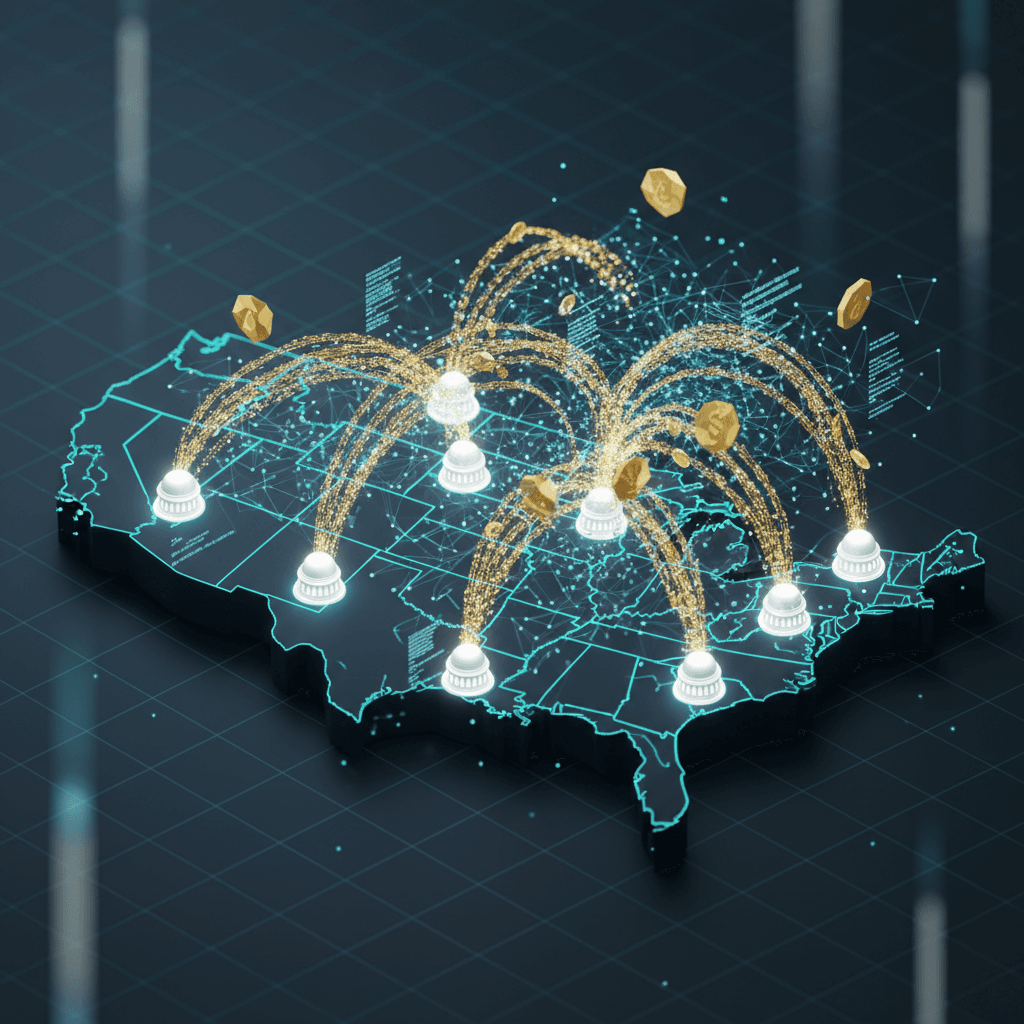
Meta Platforms has launched a massive 65 million dollar initiative to influence state-level elections across the United States, marking a decisive shift in how the technology industry attempts to steer the future of artificial intelligence governance.[1][2] This unprecedented financial commitment represents the company’s largest-ever political investment and signals a move away from the gridlock of Washington, D.C., toward the state houses where the most impactful AI regulations are currently being drafted. By funding a network of super political action committees, the social media giant aims to install and support politicians who embrace a business-friendly approach to AI development, ensuring that emerging laws do not stifle the progress of its open-source models or impose a fragmented landscape of conflicting rules.[3]
The strategic pivot to state-level politics comes at a time when federal efforts to pass a comprehensive AI framework have largely stalled in Congress. While national lawmakers continue to debate the ethical and safety implications of large language models, state legislatures have moved aggressively to fill the vacuum. In 2025 alone, more than 1,100 AI-related bills were introduced across the country, covering everything from algorithmic discrimination in hiring to the deployment of deepfakes and the safety requirements for "frontier" models. Meta’s leadership has expressed growing concern that a patchwork of inconsistent regulations across 50 different jurisdictions could hinder the development of homegrown innovation. Brian Rice, Meta’s vice president of public policy, has noted that the company is engaging in this level of spending because state lawmakers are now uniquely positioned to decide whether America remains a global leader in technology or cedes that advantage through overly restrictive local mandates.[3]
To execute this influence campaign, Meta has established a sophisticated infrastructure consisting of four primary super PACs designed to appeal to both sides of the political aisle. Two of these groups are newly formed: Forge the Future Project, which is dedicated to supporting Republican candidates, and Making Our Tomorrow, which focuses on Democrats.[1][4] These organizations are joined by existing entities such as the American Technology Excellence Project and a California-specific group titled Mobilizing Economic Transformation Across California.[5][1][2] Because super PACs can raise and spend unlimited sums from corporations and individuals, they provide Meta with a high-capacity vehicle to run advertising campaigns, fund grassroots mobilization, and support candidates who align with the company’s vision of permissionless innovation. This bipartisan strategy suggests that Meta is less concerned with party affiliation than with a candidate’s willingness to defend the tech industry against what it views as regulatory overreach.
The initial wave of spending is already materializing in key battlegrounds like Texas and Illinois, reflecting Meta’s specific industrial and regulatory interests in those regions.[2] In Texas, where Meta is currently constructing three massive AI-focused data centers, the company is funneling resources to Republican incumbents and candidates who support the infrastructure necessary for the AI boom, such as reliable energy grids and favorable zoning. Simultaneously, the company is active in Illinois, where a new human rights law recently expanded protections against AI-driven discrimination in the workplace. By engaging in these specific legislative races, Meta is attempting to shape the "responsible AI" narrative at its source, advocating for laws that encourage growth rather than those that grant citizens a private right of action to sue companies over algorithmic bias.
A central pillar of Meta’s political agenda is the protection of its open-source AI strategy, particularly its Llama family of models. Unlike competitors who keep their most powerful models behind proprietary interfaces, Meta distributes its AI "weights" more freely, a move that has made it a target for safety advocates who fear such powerful tools could be misused by bad actors. Consequently, Meta is backing politicians who resist safety bills that would hold developers legally liable for how third parties use their technology. The company argues that burdensome liability laws would effectively kill the open-source movement, centralizing power in the hands of a few "closed" AI firms and slowing down the democratization of the technology. This effort to frame open-source AI as a matter of national security and economic competitiveness is a core message being amplified by its various PACs.
The broader implications of this 65 million dollar infusion of capital into local politics are profound for the AI industry as a whole. Meta’s aggressive spending sets a new precedent that other tech titans like Google, Microsoft, and OpenAI are likely to follow as they realize that the regulatory center of gravity has shifted to state capitals. This could lead to a scenario where state elections become proxy wars between different philosophies of AI governance: one favoring strict safety guardrails and another prioritizing rapid deployment and market dominance. Critics of the initiative argue that such massive corporate spending could lead to regulatory capture, where the laws meant to oversee the industry are essentially drafted by the companies they are intended to regulate.
Furthermore, this movement toward statehouse influence highlights an "anti-Brussels" effect within the United States. While the European Union has moved toward a rigid, risk-based regulatory framework with the EU AI Act, the U.S. technology sector is using its financial muscle to ensure that the American approach remains flexible and focused on industry growth. Meta’s investment is effectively a bet that by supporting a specific class of "AI-friendly" politicians, it can create a domestic environment that is the polar opposite of the European model. The company’s focus on the 2026 election cycle suggests that it views the next two years as the critical window during which the foundational rules for the AI era will be set in stone.
As the 2026 midterm elections approach, the success of Meta’s initiative will be measured by its ability to prevent the passage of bills similar to California’s controversial SB 1047, which sought to impose strict safety testing and "kill switches" on large-scale models. By successfully backing moderate or pro-growth candidates, Meta hopes to steer statehouses toward the adoption of a unified national policy framework that would eventually pre-empt state laws and provide a single set of rules for the entire country. This "big tech flex" represents a new era of corporate political engagement, where the world’s most powerful companies no longer just lobby the government—they actively participate in selecting the individuals who will govern the most transformative technology of the 21st century.
Ultimately, Meta’s 65 million dollar gambit is about more than just avoiding regulation; it is about defining the legal and cultural climate in which artificial intelligence will exist for decades to come. By moving early and with significant force into state elections, Meta is attempting to ensure that the legal landscape remains as open and permissive as the code it releases. Whether this results in a flourishing of American innovation or a dangerous erosion of public oversight remains a subject of intense debate among policymakers, but what is clear is that the battle for the future of AI has officially moved from the laboratory to the ballot box.